


Championing Arab Women’s Voicesــــ A Conversation with Hoda Elsadda
For decades, the knowledge produced by Arab women has suffered from erasure. Founded in 1995, the Women and Memory Forum (WMF) emerged as a powerful counterpoint. This feminist archive founded by a group of women researchers self-defined as academic-activists gradually developed into a research and documentation center and a feminist organization that reinserts women into Arab cultural history, making the history of women available and accessible.
“Knowledge production is the backbone of a strong social movement. One of our goals is to reread Arab cultural history from a gender-sensitive perspective. This alternative knowledge counters stereotypical representations of women and men, making this information available to a new generation to challenge discriminatory concepts and practices, and to rewrite our cultural history from a gender perspective in Arabic.” – Dr. Hoda ElSadda
***
How did literature bring you to feminism?
My awareness of women’s rights issues stemmed from three critical junctures: my studies and reading of literature, particularly by women authors; Hagar, the literary journal I co-edited; and, lastly, my work on the ground as an activist for women’s rights.
As a teenager, I devoured fiction in both Arabic and English, from detective stories to classics. The works of Arab and English feminist writers like Latifa al-Zayyat and Virginia Woolf broadened my perspective and challenged the limitations of my sheltered upbringing.
I studied English and comparative literature as an undergraduate, and my readings were supplemented with theoretical insights from feminist and postcolonial studies. I owe my department for introducing me to theoretical literature. While studying for my MA, I read Edward Said’s Orientalism in 1979, a year after its publication, which highlighted the politics of representation—a key issue for feminists. Said didn’t specifically talk about feminists, but he drew attention to the feminization of the colonized and the significance of this act of discursive violence.
Together with my engagement in literary analysis, I became aware of the power of gender discourses in sustaining the subordination of marginalized groups, including women. This introduction to the politics of representation guided me to explore the origins and roots of ideas and traditions that have obstructed paths for women.
In 1992, I co-edited an annual feminist journal in Arabic called Hagar هاجر, conceptualized as a specialized journal in women’s studies to promote research and knowledge production in Arabic, focusing on the cultural history of women, particularly in Egypt. We published literary texts by women authors and managed to publish six issues, with the last one in 1998. It was the first specialized journal in Arabic in the field aimed at encouraging research and challenging stereotypical representations of Arab and Muslim women. We had a publisher but no institutional support, so we eventually stopped.
Lastly, in 1993, I joined a campaign organized by women’s rights activists to revise the marriage certificate in Egypt, a year before the International Conference on Population and Development (ICPD) in 1994. This campaign aimed to leverage an international platform to lobby for legal changes to Egypt’s regressive personal status law. What seemed impossible suddenly became probable because we focused on raising awareness by advocating for including conditions within the marriage contract itself. Culturally and within Islam, it was perfectly acceptable to insert conditions since marriage in Islam is a contractual arrangement. We rallied around changing the marriage certificate issued by the Ministry of Justice and travelled around the country, explaining the idea and listening to women’s issues. This experience highlighted the scarcity of easily accessible knowledge and the struggle over power, authority and dominant narratives.
It made me realize that knowledge alone is not enough; there’s a need to address who has the authority to tell the story or create the dominant narrative. This experience cemented the “power question” central to everything I do.
I constantly ask myself how to challenge power dynamics and advocate for change.
These three experiences– encountering feminist literature, engaging with feminist theory, and participating in activism – have all shaped my path in feminism.
What connected the Women and Memory Forum (WMF) group, and how has this group evolved over the years and created a sustainable structure?
We began in 1995 as a dynamic research organization with a core group of nine members, most of us identifying as academic-activists. Our involvement fluctuates depending on the year and individual’s availability. We all maintain careers outside of the WMF.
Over time, we evolved into a research and documentation center and a full-fledged feminist organization. Our initial goal wasn’t immediate organizational formation. The core mission was to create alternative knowledge, counter stereotypical representations of gender, and provide accurate information to a new generation. This meant challenging discriminatory practices, re-examining cultural history through a feminist lens, and doing all of this in Arabic.
The Women and Memory Forum functions as an intellectual project with clear activist goals. We believe serious knowledge production is the backbone of a strong social movement.
Our research projects stem from the expertise and interests of the WMF members. This focus ensures we speak from a position of knowledge, addressing inquiries that align with our core competencies. With the aim of rereading Arab cultural history from a gender-sensitive perspective, we highlight the contributions of female pioneers by republishing their works.
For example, we republished the memoirs of Malak Hifni Nasif and Nabawiyya Musa, among others. We also organized conferences emphasizing remembrance and the importance of preserving history. It’s odd how easily things are forgotten. For instance, when we held a conference about Malak Hifni Nasif in 1998, even intellectuals expressed a lack of familiarity with her work. Malak was a significant figure, renowned in her time, with published articles and references to her work in school curricula. Sadly, like many other women, she faded from memory, and this is the story we aim to change.
In addition to these archival initiatives, the WMF has organized workshops introducing gender concepts and theories to university students, activists, and cultural workers. We’ve also translated seminal English-language texts on gender into Arabic. While we haven’t achieved everything we set out to do, the WMF has played a vital role in documenting, preserving, and sharing knowledge on gender and women’s issues in the Arab context over the past few decades. The political realities have shifted, but our commitment to this work continues.
This year marks a period of exciting growth—we’ve successfully recruited three new members and are actively seeking more. Our core philosophy revolves around long-term, programmatic research instead of project-based work. We believe in fostering a sustainable institutional framework rather than relying on short-term, grant-driven projects that often have rigid deadlines and deliverables. Unfortunately, our current financial situation necessitates some project-based recruitment until we achieve long-term financial stability
Tell us about the specialized library in Women and Gender Studies in Arabic
Looking back, the Library and Documentation Center was one of our key initiatives. The goal was to create a specialized resource on gender and women’s studies in the Arab region, collecting otherwise inaccessible materials. We managed to amass over 5,000 books in Arabic, conference proceedings, and other publications — mainly from Egypt but also from Tunisia and other Arab countries.
Our idea was not just to collect books but to provide a space for all the material without ISBNs, gray literature like conference proceedings, or material created by independent organizations to be housed in one space.
I would say that 80% of the knowledge produced on women and gender studies in Arabic is created by independent organizations.
Since there is no centralized distribution across the Arab world and no Arabic Amazon for ebooks, finding sources is still challenging, especially since many books are products of independent publishing. Therefore, it was crucial for us to discover and collect what had been published on these topics across the Arab world.
What is a feminist archive?
Archiving is a form of activism, and preserving and understanding our stories is a key component to resistance and countering the dominant hegemonic narratives.
A feminist archive is a virtual/online or physical place that curates documents, historical sources, people, and materials in diverse forms and genres.
But it’s also a metaphor now used by cultural theorists to signify knowledge and knowledge production in the context of the workings of power and power struggles.
Power is central to any discussion of archives; that’s why there are currently so many discussions about contested-archives, alternative-archives, and counter-archives. That is why a feminist archive has become a metaphor for knowledge that is in perpetual contestation with power.
The Women and Memory is a feminist archive because of the oral history archive and the documentation center, which we discussed, but we also have private collections.
WMF is very interested in collecting private collections of papers of Egyptian women.
The first collection was given to us by Wedad Mitry, the famous unionist and feminist. Before she passed away, Mitry approached Women in Memory and offered to gift us her archive, her private collection. She actually helped us index, gather, and organize the collection. At that time, we were lucky to have the resources to digitize her collections; some physical copies are still in our library. We really have a number of fantastic private papers by our Egyptian women.
I see this as an essential resource that can be made available to researchers who want to either know more about a particular person or period.
Tell us more about the creation of an oral history archive
WMF is the first women’s archive in the region. Our first oral archive was in 1999 when we interviewed women aged 75 or more— these women represented the first graduates of Cairo University and the pioneering professional women of the 1930s, 1940s, and 1950s. This collection preserves invaluable stories and perspectives.
We created the Archive of Women’s Voices because oral history is an essential part of feminist research by diversifying the whole idea of historical sources. Oral history is not just the document; it’s also the story a person tells.
When I do oral history, I’m creating a historical source through a planned interview. I’m creating a space for different types of life stories, and life narratives.
Of course, there are biographies, memoirs, autobiographies, and then, there is also something in between. They are all different ways of telling your story. Oral history refers to two things: the discipline and methodology of interviewing and the purpose of documenting the life story.
Our purpose is clear: we create and place these oral history sources in our feminist archive and make them public for future researchers. This distinguishes it from sociology and/or anthropology, where interviews might not be publicly available.
Oral interviews rely a lot on personal connections, I was able to reach Kawkab Hefni Nassif, who is the sister of Malak Hefni Nassif, and I managed to interview her a year before she passed away, so this was at the end of the ‘90s. It was a fantastic interview. She was 94, had a great story, and had difficulty remembering what happened the day before. Still, she had an ironclad memory of everything else.
We interviewed many other women, which was all very interesting. And, of course, their stories gave us insights into not just their lives but social history in Egypt in the first half of the 20th century.
These women spoke about challenges and constraints they faced, either because of social norms or stereotypes about gender roles. Obviously, not all interviews are about success. Some of them are about defeat, perseverance, weaknesses, and regrets. These interviews give us novel insights into our understanding of Egyptian political and social history.
This year, we completed the oral history project on women and business. We’re currently completing oral histories of women in the cinema industry, which will be launched soon.
Another important oral history collection was inspired by the 2011 Egyptian revolution, in which we interviewed women who participated in the revolution or were inspired by it. Some of them were newcomers to activism. These life stories were collected between 2013 and 2014, providing a different take on events.
Are there similar oral histories of the other Arab Spring revolutions?
I don’t think there’s something like this in particular. I’ve been advocating for oral history for a very long time. And I know that, for example, at one point in time, there was an attempt by a group of Tunisian women. One of them was a colleague and a friend. She started a Women and Memory group in Tunis, and I was invited to join her. But unfortunately, the project stalled after her passing.
Other groups in the region make oral history in different ways. An excellent group in Lebanon, a group of young feminist activists, is called the Knowledge Workshop/ورشة المعارف. We work very closely with them and see them as a sister organization.
I have also coordinated and supervised a project with the American University of Beirut to interview and conduct oral histories with women from the 1970s generation who witnessed historical events like the 1967 War and the Arab Spring. This collection of interviews published this year will be available online for free through the American University of Beirut. There are interviews with women from six Arab countries; it’s a fantastic collection of over twenty interviews with women from Syria, Lebanon, Jordan, Iraq, Palestine, and Egypt. A book with the edited interviews will also be published this year.
You mentioned how the production of specialized feminist knowledge in Arabic is a fundamental part of the WMF archive. How much is translated, and how can we better support translating Arabic scholarship?
Language is vital for knowledge production. Most students in Egypt are educated in Arabic, so producing knowledge in Arabic reaches a wider audience. Arabic allows us to express our needs and experiences, countering the dominance of Eurocentric paradigms. However, translating from Arabic to English is challenging due to funding issues. Our aim is to create a translation center to bridge this gap.
Despite these funding challenges, we still manage to publish in both Arabic and English to ensure our work reaches international circles. Efforts like those by the Arab Council for Social Sciences support this mission to counter this clear funding bias toward translating between English and Arabic.
My colleagues and I consciously work in both languages whenever possible. For instance, my book Gender, Nation, and the Arabic Novel was initially published in English. I’m fortunate to have had my colleague Hala Kamal translate it into Arabic. While individual efforts are important, a more systemic approach is needed. We must find ways to encourage and support the translation of Arabic scholarship into English.
Can you elaborate on the significance of the Arabic language in knowledge production and cultural preservation?
The WMF prioritizes Arabic for several reasons. Firstly, it fosters connections with other Arabic-speaking countries. Secondly, most Egyptian students may not be fluent in foreign languages. Using Arabic allows us to reach a wider audience within the region. More importantly, Arabic is not just a communication tool; it’s a vehicle for creating new knowledge based on our experiences and addressing our own needs. This aligns with the current discussions on decolonizing knowledge production and challenging Eurocentric dominance in academia. The current system heavily favours English publications and established Western scholars, creating a cycle where knowledge produced in Arabic is often overlooked. The WMF tackles this by using Arabic while strategically publishing in English to maintain access to international circles.
My current project, “Gendering the Arabic Archive,” stems from a workshop I organized two years ago. It’s a compilation of the finalized papers; some were originally presented in English and then translated into Arabic.
How have your roles at various universities and on numerous editorial boards shaped your approach to women’s rights activism and the goals of the WMF?
From the outset at the WMF, we’ve been deeply concerned with the connection between research and activism, particularly how to make our research accessible to a broader audience.
Our 2003 bestseller, Women’s Issues in Words and Images, is a prime example of this approach. This book aimed to introduce feminist issues to a new audience using humour and visually appealing content, including photos and cartoons. We tried to create something beautiful that people would want to pick off the shelf that is attractive to laymen. We produced a few things along these same lines, not as many as we would like; at the end of this particular book, we thought a lot about what we would like to advocate for. A decision was made to highlight a key advocacy point, the concept of “guardianship/الولاية,” specifically challenging the notion that women lack control over themselves and their children.
Then, in February 2021, a leaked draft proposal for a new personal status law revealed a significant step backward. This draft, far worse than the existing law, reinforced the discriminatory principle of perpetual male guardianship over women. Under this system of guardianship, a mother, regardless of her age, experience, or education, would require permission from a male relative for basic actions like opening a bank account for her children or transferring them between schools. Oddly, this applied not only to Muslim women but also to Coptic Christians.
Faced with this injustice, WMF members launched a social media campaign titled “Let’s Tell our Stories/يلا نحكي حكايتنا ” under the hashtag “Guardianship is My Right.” The campaign encouraged women to share their experiences with the guardianship system. To our surprise, the campaign went viral within a week, becoming the second most popular trend on X/Twitter. Women who had been hesitant to speak out due to social stigma began sharing their stories of humiliation and frustration.
The campaign exposed the absurdity of a system where a woman could be a government minister yet lack control over her finances or the ability to manage her children’s education. I believe that when numerous women were able to be very frank about their own experiences, it touched the core of the injustices. It really touched a nerve with a lot of women.
Although many women were annoyed with the constraints, they managed to forget about it, live in denial, and justify that this didn’t happen to them. Still, of course, it’s happening to everybody.
We provided many examples of how women were suffering from this law. When the social media floodgates opened, there were stories that we had no idea about. We discovered stories about how women couldn’t access online requests for their children, student school tablets were only given to the father, mothers unable to change their children’s schools. Women, on a day-to-day basis, suffering from discriminatory practices, and bizarre situations because they don’t have guardianship over their children. When these stories surfaced, people became agitated and encouraged to participate.
The campaign’s success stemmed from two key factors. First, by sharing personal narratives, women “defamiliarized the ordinary,” making the familiar unfamiliar, forcing people to confront what they had managed not to see for a very long time. Generations of women had perceived themselves as independent and strong but somehow, they had accommodated these illogic regulations. This was very powerful.
Second, the campaign sparked a broader societal debate about justice, gender roles in the 21st century, and the role of religion in society. The widespread media coverage and public engagement ultimately led to the withdrawal of the proposed law, demonstrating the power of activism.
This is your mission. You began by stating that you are all academics who are also activists. This is a pure example of that success. An issue which WMF brought to the forefront became a movement on social media, reached the masses, and transformed into a societal discussion that halted a draconian law. WMF put the brakes on something that would have otherwise passed. This moment wouldn’t have been possible without your history and all the work you have done up till now. You’ve always been interested in power, and we often think that power is absolute, but it isn’t, right? There are always cracks, nooks, and crannies, and there are ways to force their hand.
It’s hard to believe how it was picked up by every single newspaper and TV channel. I remember there was a week when, honestly, my colleagues at Women in Memory and I were literally unable to sleep because we had telephone calls, invitations to speak and write, and so on. It was quite a busy time, but it was a good time.
Political cartoons and art play a crucial role in moments of crisis, often influencing mainstream discourse from the margins. This fascinating space enjoys a certain level of freedom by staying on the fringes. Yet, Doaa Eladl’s art can sometimes infiltrate the mainstream and become central to the conversation, as it did with this campaign. This creates a dynamic power struggle. Many artists leverage the margins for creative expression, carving out a space and reaching an audience, even if their work might not be published in traditional outlets. This was the case with Eladl’s cartoons, which were powerful enough to find an audience through social media and were eventually published in a booklet by WMF.
This moment wouldn’t have been possible without your commitment and dedication. What did you like most about the campaign?
One of the things I liked most about this campaign was that it was about social problems. I insisted that I was not going into religious interpretations whenever I was interviewed. This is a social problem, so let’s discuss it and analyze its implications. I recall a story of a young woman who couldn’t attend her chosen university because her father wasn’t available. She was from one of the distant governorates, and they—at Cairo University— required her father’s presence as a guarantor to access university housing. Unfortunately, her mother, though present, couldn’t fulfill that role, and she lost her seat.
Final thoughts?
On a positive note, our situation recently has significantly improved. We’re in the process of moving back to our original location, a much more spacious office. This move will allow students and researchers to fully utilize our library again. We’re excited to return to a space that fosters collaboration and knowledge sharing.
What you’ve done with your group of academic-activists through the Women in Memory Forum is an incredible achievement. It is a precedent that can be modelled across the Arab world and the global South on how to create a feminist archive that provides different types of historical sources that can actually lead to social change. This idea of linking academics and activism is what all academics aspire to; they want to impact society.
It’s a success story. It’s happening. It can be done. Whether preventing discriminatory laws from passing or workshops, the library, the oral history, translation, or collectively researching women’s history, these building blocks create a continuum of resistance and decolonized knowledge.
I’m always trying to find new terminology, like archiving as activism, archiving is a powerful form of activism. Especially in our current historical moment, we must archive, document what’s happening and understand our stories.
By documenting what’s happening and preserving diverse narratives, we gain a deeper understanding of the past and present. This act of preservation becomes crucial, particularly when considering the experiences of marginalized communities. Understanding these diverse narratives empowers marginalized voices and fosters a more just and inclusive future. Let’s all become archival activists by documenting and preserving the stories that matter!
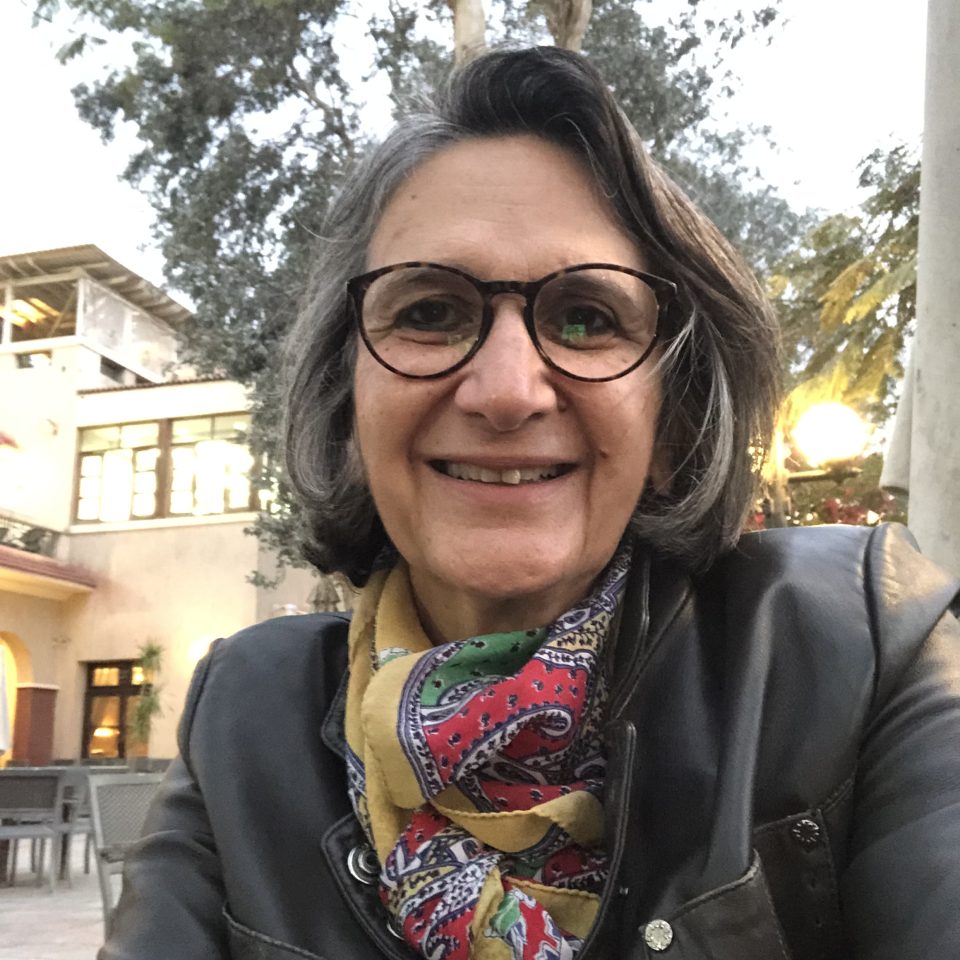
Hoda Elsadda is a scholar, activist, and Champion of Women’s Voices. A passionate feminist and advocate for women’s rights, she co-founded the Women and Memory Forum (WMF) in 1995. Elsadda previously held a prestigious chair in the Study of the Contemporary Arab World at Manchester University and co-directed the Centre for the Advanced Study of the Arab World in the UK. She’s the author of Gender, Nation and the Arabic Novel: Egypt: 1892-2008, published by Syracuse University Press in 2012. She has also co-edited Oral History in Times of Change: Gender, Documentation and the Making of Archives (Cairo Papers in Social Science, AUC. Vol. 35, no. 1, 2018), further solidifying her commitment to preserving and amplifying women’s narratives.