




taken after “The Teapot” story by Hans Christian Anderson
Dedicated to my grandmother Zeinab El-Sedawy who was a Storyteller
Ever since I came into being under the gifted hand of Bernard Palissy, the French potter and craftsman, best known for his rustic ware, I have never known a place that I can call “Home” other than Dubara Palace.
I can proudly trace back my home to Egyptian royalty, Dubara Palace in Cairo, under the tutelage of Queen Amina Hanem Elhamy and her spouse, King Tawfiq.
I loved Queen Amina’s eyes, soft brown, like warm caramel sauce, exuding both sweetness and inner strength.
A round, delicate and petite figure, in elegant royal dresses, her shoulder length hair although loose had defined waves. Her smile lit up the palace, but most captivating were her enchanting stories, especially those she recounted of me and this extravagant palace.
Dubara Palace was simply magical, like something out of a fairy tale. It had tall white marble walls that sparkled in the sun, and giant wooden doors carved with geometrical designs. Inside, crystal chandeliers lit up the rooms with a warm glow, big windows showed stunning views of the Nile River, and the grand ballroom was perfect for royal parties, with mirrored walls and floors covered in shiny, black and white marble tiles, as if coming out of a chess board, ready for dancing.
The palace was surrounded by beautiful gardens full of rare flowers, singing birds, and dancing fountains. Every corner of Dubara Palace whispered stories of ancient kings, queens and me, making it a truly marvellous home.
No one was allowed to handle me other than Her Majesty, while serving tea to the most influential women of that era.
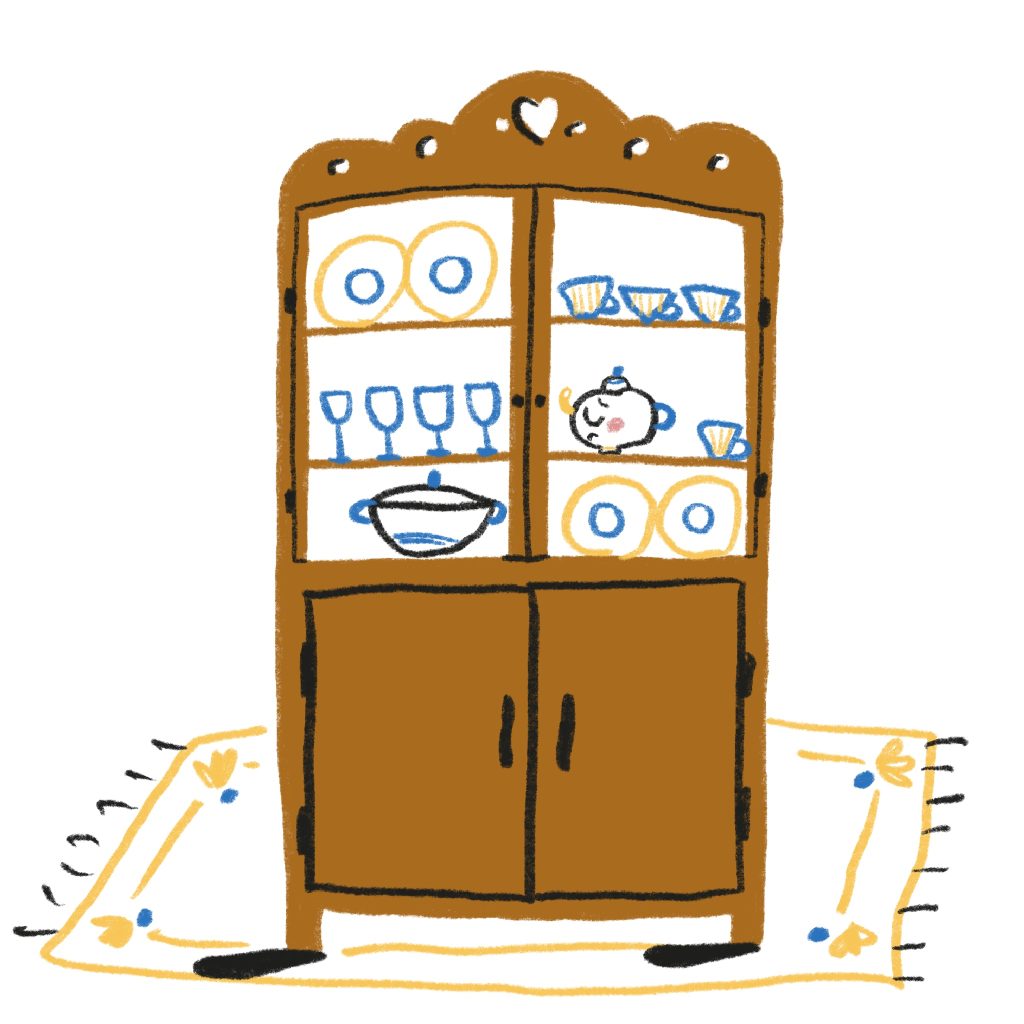
At the end of each day, Her Highness returned me to my vintage antique vitrine, which we had all been handed down between the generations of monarchical aristocrats.
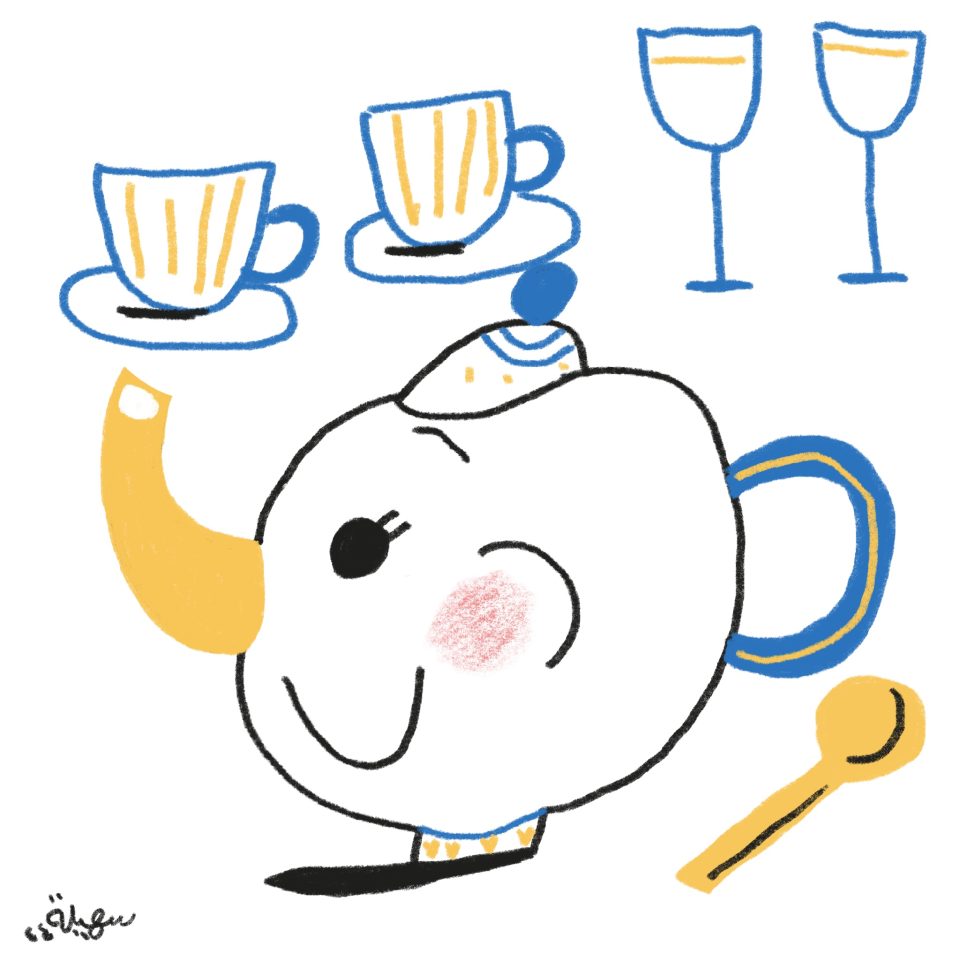
I, Farida, as the queen herself called me, the one and only teapot, spent the rest of my day boasting about my fine porcelain, my rosy cheeks and my golden spout, in front of the rest of the tea set.
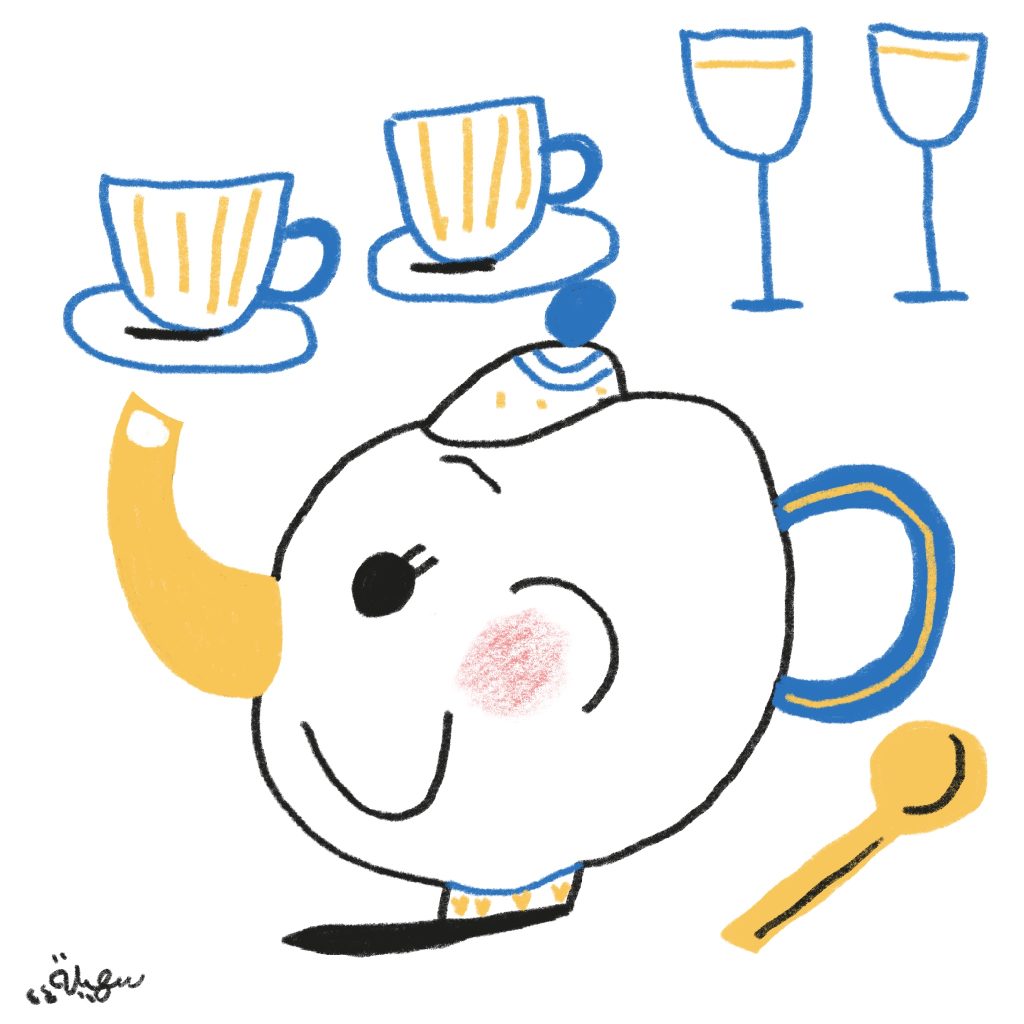
Nowadays, my home is in a grandiose villa, surrounded by lush trees, red roses and jasmine florets, in New Giza, Cairo. Here I am, placed in Soheir’s care, my new owner’s vintage vitrine, facing the garden.
Through the large glass window in the spacious villa’s ground floor, in the guest’s room, across my vitrine, I can spot Malika playing in the villa’s garden, Sohair’s only child. The seven-year-old is a powerhouse, running around with her toys, pretending to be a superhero, a princess, or sometimes a beauty specialist, just like her mother, mimicking every gesture she makes.
Malika looks nothing like her fair-skinned mother with silky long hair. Instead, she resembles her father, with her afro short hair and dark skin, though I barely see him around due to his workload as a businessman. However, little Malooka has the same alluring smile as her great-great-grandmother.
Like her Royal Highness Queen Amina, God rest her soul, nobody handles me except for Soheir, as she serves her signature jasmine tea to her friends in the garden, she inherited the enchanting storytelling style of her great grandmother, and proudly tells them tales of my royal lineage. The ladies always ask Sohair for recipes for silky hair like hers and glowy skin, while discussing their diets. Meanwhile, Malika runs around with extra energy as that’s her time to play with other children.
One evening when everyone is gone, she stands in front of the garden window, pulling her hair angrily.
“What’s wrong Malika?!” Sohair says.
“I don’t like my hair, it’s so messy,” Malika says.
“Oh, don’t say that Malooka, your hair is gorgeous!”
“Why isn’t my hair like yours, mommy?”
“I love your hair; it’s beautiful,” Sohair says.
“I hate it!”
Malika runs to her room and slams the door.
As Soheir quickly returns me to my vitrine, I catch sight of my reflection on its surface: scratches on my cheeks, peeled spots on my golden spout, and cracks all over my lid.
“I couldn’t care less!”
I stare at the rest of my tea set, and state with gravitas, “I’m not perfect, so what? But I am Farida, one of a kind, and that’s what endures.
Cups have handles, while sugar bowls have their tiny lids, yet I’m blessed with both!”
The same night, a small hand opens the cupboard, pulls me out, and I hit the ground.
Soheir rushes towards me, she hugs Malika who is sitting next to me in tears. Although, I’m the one with the broken golden spout! But Soheir doesn’t seem to bother!
Instead, she looks Malika in the eyes and says,
“It’s ok, Malika! It’s just a teapot!”
Soon after, I, Farida, the teapot, am just a forgotten teapot, left in Malika’s toy box in the garden. Sometimes I’m a funny hat, other times, I’m a bowl of fruit. Malika and her friends have such a wild imagination.
Malika wears a long dress and says, “I’m Queen Amina Elhamy.”
“Queens don’t have messy hair,” Maya says.
Maya is her friend, but she isn’t very nice. I don’t like it when she visits.
“Mom says my hair is gorgeous.”
“Yes and no!”
“What do you mean?” Malika says!
“Yes, because you are my friend and I love you, but no, because honestly, I have never seen queens with messy hair, never.” Maya says and holds out her hand to Malika.
The girls hold hands together and then go look up queens on the computer.
Maybe I was wrong about Maya.
Malika takes off her dress furiously, throws it back in her toy box and runs to her room.
The next morning, Malika takes me out and puts me in her school bag. I find myself in her classroom in front of the science teacher, Mr. Selim, a young man with big eyeglasses.
They planted me with soil and a little seed next to the window. Every day, Malika and Mr. Selim water me while he tells her interesting facts about rare plants and flowers throughout history.
“There are no queens with messy hair like mine!” Malika says all of a sudden.
“Who told you that?” Mr. Selim says as he nervously takes off his glasses.
“Maya did, and I did my research as well, so I’m sure.”
Mr. Selim takes out his phone and shows Malika pictures of some famous people.
“This is Sameera Mousa, the first Egyptian atomic scientist, who was killed in a tragic accident for political reasons. And this is Maria Ylagan, a Filipino food technologist, who invented over 700 food recipes that saved people’s lives during world war two. Unfortunately, she also died in a tragic bombing.”
” They are like rare plants, aren’t they?” Malika says
“Those are the real queens kiddo!”Mr. Selim affirms with pride.
After a while, a rose blooms through me.
Malika, takes me back home, shows me to her mom. Soheir is fascinated by me again, as she tells Malika her great grandmother’s story.
“I heard grandma’s story a million times!” Malika says.
“Do you know why Amina Elhamy was an Egyptian queen?”
“Yes, because she got married to the king,” Malika says.
“No!” Sohair says.
“What do you mean?” Malika says.
Sohair pulls out an old magazine, its papers folded and shows it to Malika. Right under the family picture where Amina Elhamy is in the centre surrounded by her children, Sohair reads out loud:
“The mother of generosity has passed away. With her departure from Egypt, her radiance, which was a means of life for many of the poor, also faded. She died after a long life in which she set an example of generosity.”
Malika squints her eyes and brings the old magazine close.
“You have exactly the same smile as your grandmother.”
As Sohair looks closely at me, she sees the cracks are now all over my porcelain.

“Malooka, I have a new pot for your flower.”
And they put my flower in a new pot.
Malika stands in front of the mirror and smiles.
As she begins to embrace her unique beauty, I, too, am ready for a new chapter.
By now, she understands how her family see her and how her caregivers and friends define beauty.
“But what about my story?” She asks with wonderous eyes.
“They may think my story is over, but I’m telling you, my story is about to begin, yet in a new form.” Farida
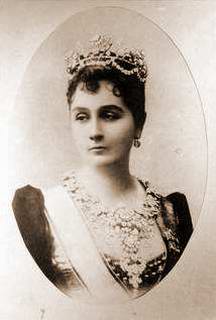
Amina Al-Hamy, known by Egyptians as “The mother of generosity,” was an Ottoman princess who became an Egyptian princess. She was the first khediva from 1873 to 1892, as the wife of Khedive Tawfik Pasha. She was also the mother of Abbas II Hilmi, khedive from 1892 to 1914.