



        We have on this earth what makes life worth living.


             Where should we go after the last frontiers?
             Where should the birds fly after the last sky?

- Mahmoud Darwish
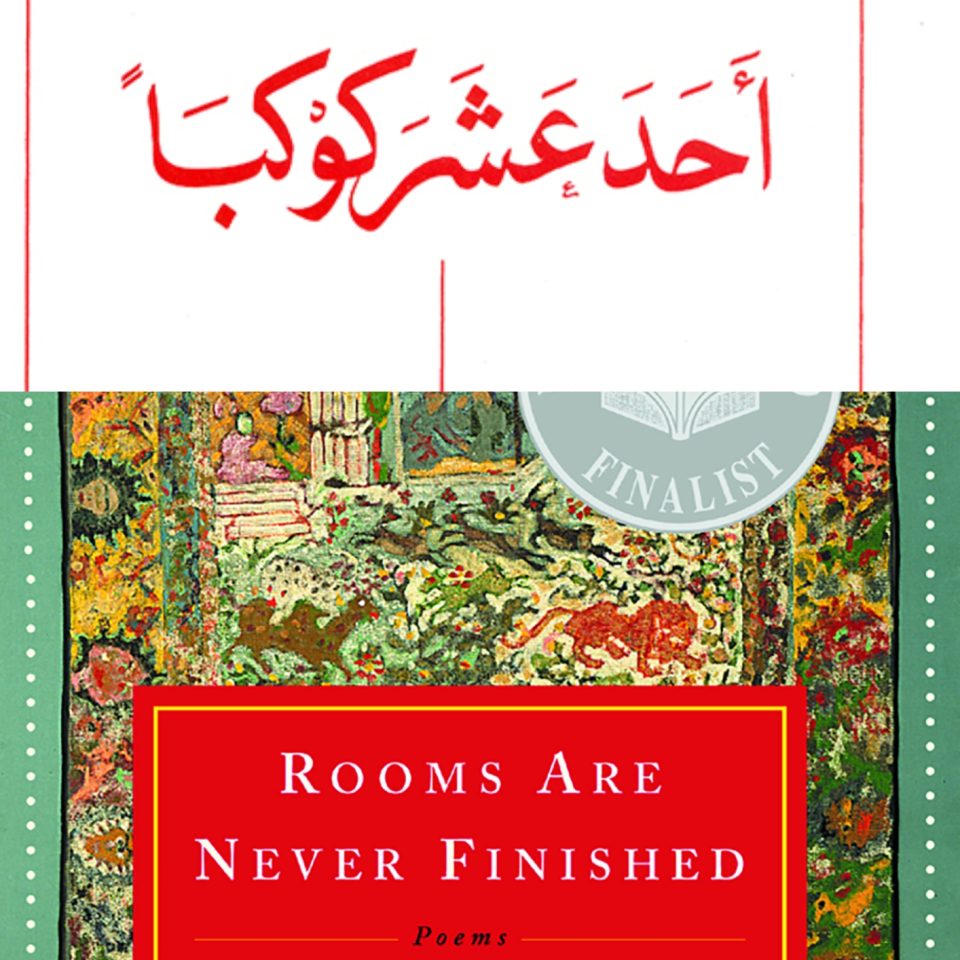
In early February, during the first eleven days of the month, a small circle of us gathered in Cairo to sit with Mahmoud Darwish’s luminous sequence أحد عشر كوكبًا على آخر المشهد الأندلسي.
We read from the Arabic diwan published by Dar Al Jadeed in Beirut in 1999, and from the English translation in Rooms Are Never Finished by Agha Shahid Ali (New York & London: W. W. Norton & Company, 2001). Between the two texts, the poems opened themselves to us in different registers — across languages, across geographies, across time.
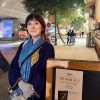
This gathering was also our way of commemorating and celebrating the presence of Rahat Kurd, one of Rowayat’s past managing editors, whom we had the joy of hosting in Cairo for a writing residency and a series of literary events.

The small circle consisted of Rowayat’s managing editor Fatima ElKalay, myself, Rahat Kurd, and Nesma Gewily, our past Arabic-in-translation editor. For eleven days, we convened together, recording the cycle poem by poem, voice by voice.
What began as a simple act of reading slowly became something else — a vigil, a listening, a way of holding Darwish’s words and Shahid’s translation in the present moment. Each day, we recorded one poem, allowing the constellation of Darwish’s eleven planets to unfold.
Now, during the last eleven nights of Ramadan, we share these recordings with you.
Things often arrive in threes. Ramadan. March 8 — International Women’s Day. And today, the birthday of the late Aida Nasr, one of Rowayat’s published authors.
Three quiet convergences — less coincidence than a reminder of what we have been trying to build all along: a kinship forged through presence. Rahat’s presence among us in Cairo. Her initiative to gather around these poems. And the decision now to release them into the world during these final nights of Ramadan.
Beginning tonight, one poem will be released each evening until the cycle is complete—our way of bringing Issue 13: Forged Kinship full circle.
At Rowayat, we return again and again to the quiet work of gathering—extending an invitation to listen, to create, and to hold one another through poetry. Across languages, across distances, even across these times of war and destruction.
Rowayat’s writers and poets give us a way to listen to one another, to remember that we are not alone, to resist the violence that surrounds us, and to reflect beauty back against it.
May these eleven poems travel with you through these final nights of Ramadan, like small stars lighting the way.
Ramadan Kareem.
May their light remain with us.
— Sherine Elbanhawy
Why Eleven Stars over Andalusia?
“What gives the poem its artistic coherence is not so much its topicality as the way it extends the most recent phase of Darwish’s poetry into new situations and imagery, a great deal of which is caught by this excellent translation…”
According to Edward Said, when Mahmoud Darwish first wrote the poem “Eleven Stars” in 1992, the original Arabic text was published in Al Quds, “a Palestinian daily edited in London”. In 1994, in the New York-based literary magazine Grand Street, Edward Said wrote a short essay, “On Mahmoud Darwish”, excerpted above, to accompany the publication of the poem’s English-language translation by the Kashmiri-American poet Agha Shahid Ali.
Having first read “Eleven Stars Over Andalusia” in Shahid’s posthumously published collection of poetry, Rooms Are Never Finished, in 2003, I found myself turning to it again and again. I wanted to be reminded of how the most meaningful forms of solidarity draw their strength from the same reserves as the poetic imagination; both depend on the ability to imagine oneself as another, to consider another’s experience as if it were one’s own.
Through every renewal of war of the past twenty years, and every expansion of occupation and land theft, whether in Palestine or in Kashmir, the poem lost none of its devastating clarity and profound emotional charge.
Only recently, however, the questions “Eleven Stars” raises for me have begun to shift. Instead of constantly asking, “What can poetry teach us about the displacements and losses of our past?” it may be time to consider just where we have arrived, and the means by which we persevere in spite of them. Since the deaths of first Shahid, then Said, then Darwish, as the conditions and futures of Palestinians and Kashmiris have only become more tightly, inexorably intertwined, it may be time to consider the ways poetry itself generates the means of perseverance. Said, commenting on Darwish’s late style, suggested that its “strained and deliberately unresolved quality…provide an astonishingly concrete sense of going beyond what anyone has ever lived through in reality”.
Earlier this winter, I approached the Rowayat Editorial Family with an idea to bring together the original Arabic text with its English translation for the last eleven nights of this Ramadan. We hope these recitations might be a generative and affirming place for us to gather, to listen, and to begin again.
- Rahat Kurd
LISTEN:
أَحَدَ عَشَرَ كوْكبَاً على آخر المشهد الأندلسي
محمود درويشْ
written by Mahmoud Darwish read by Nesma Gewily نسمة جويلي
اليوم الأوّل
القاهرة، ١ فبراير ٢٠٢٦
في المساء الأخير على هذه الأرض I
نُشر في ١٨ رمضان ١٤٤٧
اليوم الثاني
القاهرة، ٢ فبراير ٢٠٢٦
كَيْفَ أَكْتُبُ فَوْقَ ٱلسَّحاب؟ II
نُشر في ١٩ رمضان ١٤٤٧
اليومُ الثالث
القاهرة، ٣ فبراير ٢٠٢٦
… لي خَلْفَ ٱلسَّماءِ سَماء III
ُنُشر في ٢٠ رمضان ١.١٤٤٧
اليومُ الرابع
القاهرة، ٤ فبراير ٢٠٢٦
أَنا واحِدٌ مِنْ مُلوكِ ٱلنِّهايَة IV
نُشر في ٢١ رمضان ١٤٤٧
اليومُ الخامس
القاهرة، ٥ فبراير ٢٠٢٦
سأجلِسُ ذاتَ يومٍ، فَوْقَ ٱلرَّصيف V
نُشر في ٢٢ رمضان ١٤٤٧
اليومُ السادس
تسجيل: القاهرة،٦ فبراير ٢٠٢٦
لِلْحَقيقَةِ وَجْهانِ وَالثَّلْجُ أَسْوَد VI
نُشر ٢٣ رمضان ١٤٤٧
اليومُ السابع
القاهرة، ٧ فبراير ٢٠٢٦
مَنْ أَنا… بَعْدَ لَيْلِ ٱلْغَريبَة؟ VII
نُشر في ٢٤ رمضان ١٤٤٧
اليومُ الثامن
القاهرة، ٨ فبراير ٢٠٢٦
كُنْ لِجيتارَتي وَتَراً أَيُّها ٱلماء VIII
نُشر في ٢٥ رمضان ١٤٤٧
اليومُ التاسع
القاهرة، ٩ فبراير ٢٠٢٦
… في الرَّحيلِ ٱلْكَبير أُحِبُّكِ أَكْثَرِ IX
نُشر في ٢٦ رمضان ١٤٤٧
اليومُ العاشر
القاهرة، ١٠ فبراير ٢٠٢٦
لا أُريدُ مِنَ الْحُبِّ غَيْرَ ٱلْبِدايَة X
نُشر في ٢٧ رمضان ١٤٤٧
اليومُ الحادي عشر
القاهرة، ١١ فبراير ٢٠٢٦
ألكَمَنجات XI
نُشر في ٢٨ رمضان ١٤٤٧
Eleven Stars Over Andalusia
translated by Agha Shahid Ali, read by Rahat Kurd
Day 1: Cairo: February 1, 2026
I. On our last evening on this land
Published on the 18th of Ramadan 1447
Day 2: Cairo: February 2, 2026
II. How can I write above the clouds?
Published on the 19th of Ramadan 1447
Day 3: Cairo: February 3, 2026
III. There is a sky beyond the sky for me
Published on the 20th of Ramadan 1447
Day 4: Cairo: February 4, 2026
IV. There is a sky beyond the sky for me
Published on the 21st of Ramadan 1447
Day 5: Cairo: February 5, 2026
V. One day I will sit on the pavement
Published on the 22nd of Ramadan 1447
Day 6: Cairo: February 6, 2026
VI. Truth has two faces and the snow is black
Published on the 23rd of Ramadan 1447
Day 7: Cairo: February 7, 2026
VII. Who am I after the night of the estranged?
Published on the 24th of Ramadan 1447
Day 8: Cairo: February 8, 2026
VIII. O water, be a string to my guitar
Published on the 25th of Ramadan 1447
Day 9: Cairo: February 9, 2026
IX. In the exodus I love you more
Published on the 26th of Ramadan 1447
Day 10: Cairo: February 10, 2026
X. I want from love only the beginning
Published on the 27th of Ramadan 1447
Day 11: Cairo: February 11, 2026
XI. Violins
Published on the 28th of Ramadan 1447