


Selected for Rowayat Issue 8: Connect & Sustain by Guest Editor Rahat Kurd
THE THRESHOLD brings the poems of Iman Mersal from four different Arabic-language collections, written since the 1990s, into the English language for the first time. I asked Iman Mersal about the allusions to influential voices from Arabic literature in “Love”, a poem that struck me with its remarkable clarity and candour of thought. Mersal explained, “The poem is an attempt to understand, accept, and reconcile with the language expressing “Love”, as if love does not exist elsewhere, or, as if love will not exist without the language to speak it. This can’t happen without a dialogue with so many existing languages about it. [The 7th century caliph] Ali ibn Abi Talib’s saying, “Contentment is an inexhaustible treasure”, and [9th-10th century mystic and poet Mansour] al-Hallaj’s “I am you and I you are me” come naturally to the dialogue. I don’t think I was aware of these “languages” while writing this poem; the italicized quoted lines from the past are able to survive outside their homelands of “religion” or “mysticism”, and live again not as “citations” but as fragments”.
I also asked Mersal about her choice of the Arabic word “al-gharaam” for her poem’s title, as distinct, for example, from the more familiar, warm/positive associations of the word “al-hubb”. Mersal responded: “Love in Arabic has more than 40 synonyms, including “al-gharaam”. From my own observations, the most frequently used words in pre-Islamic poems as well as the ghazal poetry written in the 7th and 8th centuries are Hubb, Hawa, and Hayam. The word “al-gharaam” fascinates me; I always felt it as a dusty word, an exploited word that needs to be cleaned or freed from its users’ tongues. It occurs frequently in modern Arabic music, especially in the first half of the 20th century, for example in the songs of Umm Kulthum, Mohamed Abdel Wahab, and Farid al-Atrash, among others. To me, “al-gharaam” had become a tired cliché, overused through constant repetition in the music carrying romantic poetry. By playing with this word, the poem is questioning the entire culturally inherited language of love.”
Listen to Iman Mersal recite the original Arabic text of her poem “Al-Gharaam” (“Love”) here:
Read “Love”, translated into English by Robyn Creswell, with translator’s remarks, here
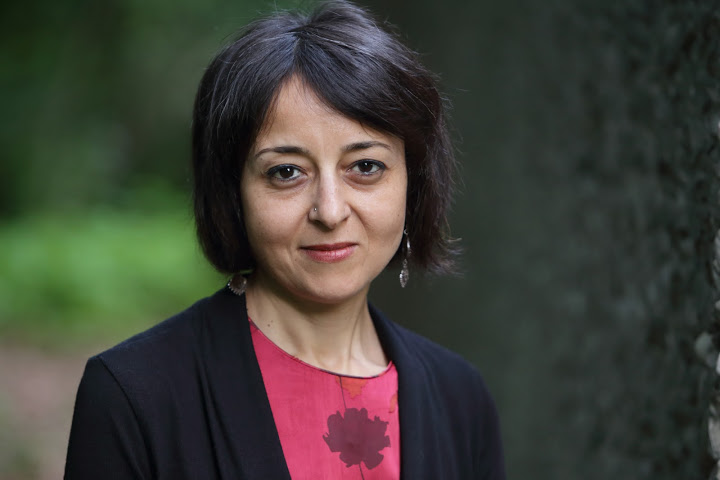
Iman Mersal is a distinguished, award-winning Egyptian-Canadian poet, essayist, translator, and literary scholar. She is an Associate Professor of Arabic Language and Literature in Modern Languages and Cultural Studies at the University of Alberta. Mersal has authored five books of Arabic poetry, with selections translated into numerous languages and published in renowned publications worldwide.
Her poetry collection, The Threshold, translated by Robyn Creswell, was published by Farrar, Straus, and Giroux in 2022. It won the 2023 National Translation Awards (NTA) in Poetry and Prose and was shortlisted for the Griffin Poetry Prize in 2023.
Mersal’s most recent nonfiction, Fi Athar Enayat al-Zayyat (2019), was translated into French by Richard Jacquemond as Sur les traces d’Enayat Zayyat, published by Actes Sud, Paris, and Traces of Enayat, translated by Robin Moger, was the winner of the 2024 James Tait Black Prize, In recognition of her literary contributions, Mersal was awarded the prestigious Sheikh Zayed Book Award for literature in 2021, making her the first woman to win the Literature category.
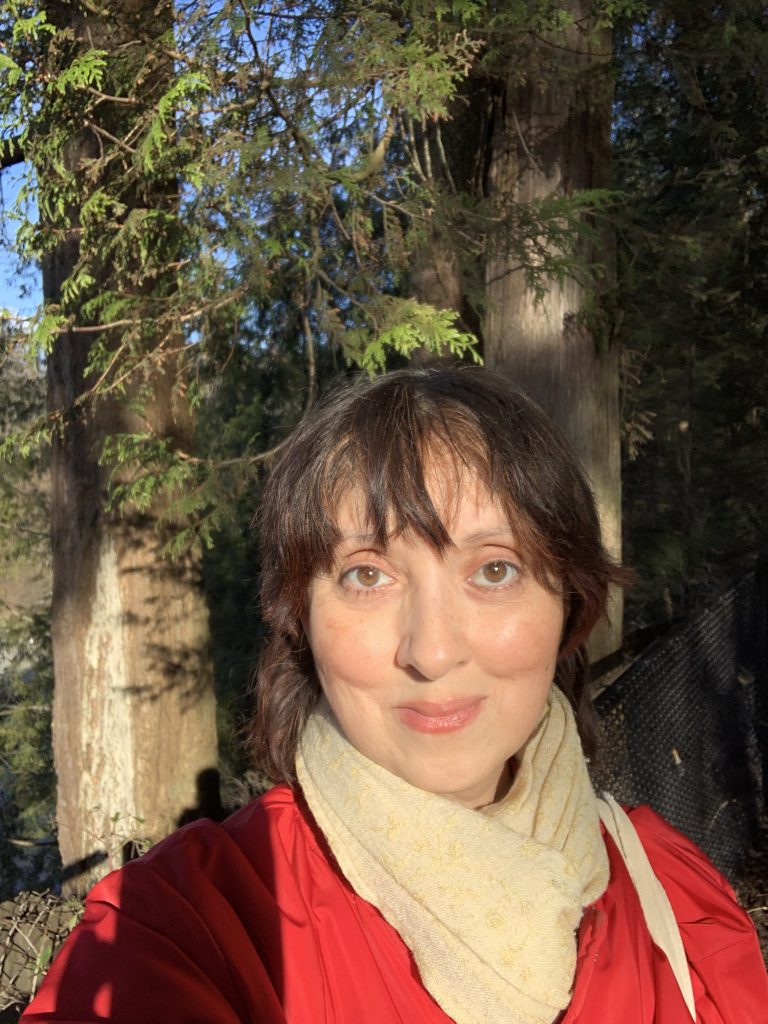
Rahat Kurd, Rowayat’s managing editor for Issue 8, is a writer and poet based in Vancouver, currently at work on her second book of poetry. Kurd draws on multilingual poetics and is especially interested in the ghazal tradition in Urdu and Persian literature. Her most recent publication, The City That Is Leaving Forever: Kashmiri Letters (Talonbooks 2021), is a hybrid of correspondence and poetry exchanged between Vancouver and Kashmir over a five-year period with poet Sumayya Syed. Her first collection of poems, Cosmophilia, was published by Talonbooks in 2015.