


He lives in Dubai, where the sun polishes glass until it becomes a thought. Towers lift their mirrored faces to a white sky and the desert breathes just beyond the freeways, old as patience. In the mornings, he holds a cup of tea at the window and watches the city arrange itself into brightness. He is Indian—raised on long conversations, on the belief that feeling is a language you must learn to speak. Warmth sits easily in his sentences, so does philosophy. He thinks about meaning the way others think about weather.
She lives in Europe. He remembers her best in Colmar: canals like quiet mirrors; facades the color of sugared almonds; a river that seems to move by choosing not to. She is European—French by geography, continental by temperament. Her gestures are spare: a smile that says “yes,” a pause that says “no,” a silence that lets a feeling survive without declaring it. She trusts restraint the way he trusts articulation. Each is fluent in a different courage.
They met there, in that little town that looks painted into being. They walked without an agenda and discovered that the mind can lean toward another mind the way a branch leans toward light. They spoke about belief—God as an atmosphere rather than a person; strength as kindness with a spine. They spoke about the dignity of not naming things that will bruise if handled. Between their sentences, the day kept offering them an unwritten page, and they did not rush to fill it.
There was a hug—closer than courtesy and cleaner than hunger. There was a kiss—on the cheek, brief and careful, but carrying a pressure that meant I recognize you. To him, Indian in his emotional grammar, the kiss was a blessing of nearness: affection with the door left open to light, not to claims. To her, European in her discipline, the kiss was a precise touch whose meaning would be chosen later, in private, where meanings are safer. The same gesture traveled two continents inside their bodies.
Afterward the world resumed its distances. He returned to the city of escalators and sky; she returned to a room where morning arranged itself like a gentle teacher. They promised nothing. Each knew promises are the first things time eats. Still, the town stayed with them like a faint perfume on a winter coat—quiet, specific, and difficult to name.
One morning, months later, she lifted her coffee to the window and remembered the exact temperature of their silence on a small bridge in Colmar. The question was simple and human, therefore, hard to ask a human. She opened a laptop instead.
What does it mean when an Indian man kisses a woman on the cheek?
The AI arrived with its tidy strengths. It spoke of regions, customs, probabilities, and uses. In parts of India, it wrote that cheek-kissing is uncommon in public, thus, it carries intentional intimacy; in cosmopolitan spaces, it can be affectionate without being erotic. It supplied citations like paving stones. It made a path where her feelings had been a field.
She smiled—not at the answer, but at the relief of having one. Language can cool a blush. Categories can lower the fever. She closed the tab and let the warmth shrink so she could carry through the day.
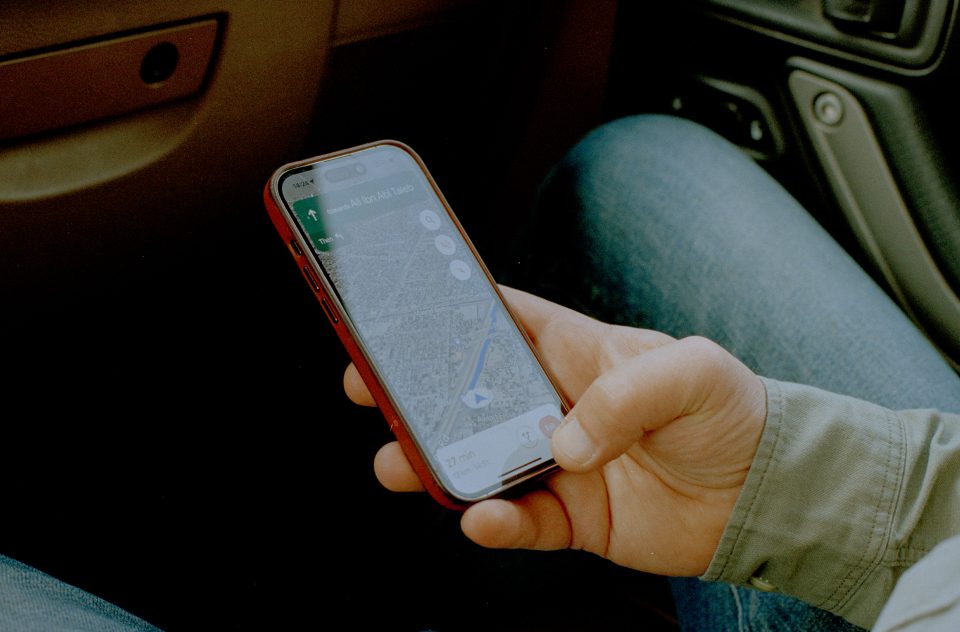
That evening, in Dubai, he finished work and watched dusk sharpen the skyline into silhouettes. The air-conditioning hummed its neutral mercy. He placed his phone face down, then face up again, then opened his own small oracle.
What might a European woman think about an Indian man’s cheek kiss?
The AI spoke with a fluency that did not know the cost of fluency. It listed cultural frames: continental norms of greeting; the European preference for boundaries written in pencil but obeyed like ink; the Indian habits of familial nearness; the cosmopolitan exceptions that disprove rules and build new ones in the same motion. She may remember it kindly, the machine suggested. She may prefer to protect kindness from further definition.
He leaned back until the chair asked him to stop. He understood—both the answer and its failure. The machine had placed the furniture in the room; it had not entered the room.
This is how connections travel now: across continents, across architectures of light and stone, across the glass of our devices and the circuitry behind them. Not to replace presence, but to let meaning have company.
Their messages followed the tempo of people who are careful with each other. He sent notes that smelled of thought more than longing. She replied as one chooses words not to build a bridge but to keep one from collapsing. They shared an article about friendship in ancient societies, a photograph of light on water, and a sentence that admired a sentence. They did not rename what had happened. They let it be the kind of thing that can be damaged by being explained.
He learned to love her boundaries as if they were art: a minimalism that keeps a room honest. She learned to love his warmth as if it were architecture: a geometry that holds when weather changes. Each kept a vocabulary that the other could not, and would not, fully adopt.
That is one way to keep the peace.
Sometimes, memory rewrote Colmar. Tourists evaporated. The weather softened into a mood. The canal grew more reflective than water typically allows. He realized memory is not a recording but a curator; it selects what the soul can carry and places the rest in gentle storage. He also realized that desire, loud and acquisitive, would have ruined what they had made. What he felt was quieter than wanting. It was recognition—the relief of discovering that someone else’s inner weather matches your own.
She discovered a parallel truth. The frightened flutter that comes from being seen slowly settled into respect. Not the dry, distant kind, but the kind that lets the heart remain awake without arguing with the mind. She did not want to own the lightning or even name it. She wanted to stand still while it illuminated a landscape and then let the dark resume its work.
The AI remained where it belonged: available, unable to carry what it revealed. It could tell them how cultures kiss and why gestures migrate between cities like myths. It could not tell them why a clean kiss hums under the ribs months later, or why a hug closer than courtesy feels like a promise to the present, not to the future. The power of AI is reach, speed, and recall. Its limitation is that it cannot pay the price of an answer.
They began to practice a shared discipline: the ethics of silence. Not the sulk that punishes, nor the fear that flees, but the kind that holds a fragile thing without fingerprints. Silence became a vessel. They placed tenderness in it and it held. They placed boundaries in it and they did not bruise. The absence of words turned out to be a form of fidelity.
Two facts kept the connection honest. One was distance—unfashionable in an age that wants everything everywhere at once, but faithful in its way. The other was truth—the agreement, never spoken, that this would remain unpossessed. The hug would remain a hug. The kiss would remain a kiss. Both would remain clean.
On certain mornings, he watched himself multiply and diminish in the elevator’s mirrors and thought of Colmar’s little bridges. On certain evenings, she caught her reflection in a shop window and glimpsed—briefly—the person she had been walking beside him: quieter, and in that quiet somehow more alive. They did not chase those versions. They let them pass like friendly ghosts.
If he drafted a message, he asked whether it wanted to be sent or merely seen. If she composed a reply, she let it rest until its temperature matched the room. They became caretakers of a tone.
What does a human connection become when it refuses to harden into a role? Perhaps it becomes a form of knowledge— not of the other, but of what each is capable of feeling with honor. Perhaps it becomes a shelter— not a house you move into, but a roof you could stand under if the weather turned.
He thinks of that as the wind shifts outside his Dubai window, hot air rising against glass. She feels it too, in Colmar, where late light drifts across the canal and pauses on her cup. They are still translating one another, without words, across an ocean that has stopped being a distance.
The AI remains silent now, obediently asleep inside their screens. The world, once interpreted, has returned to texture— to light, to sound, to the soft motion of memory.
If there is a philosophy here, it is small, and therefore, difficult: not every bond must become a story, not every tenderness a plan.
Outside, the city brightens. The desert breathes. And in Colmar, the river keeps its slow rhythm— as if even water understands that some connections flow best when left unnamed.
Artwork courtesy of Youssef ElNahas