



I do not have autism. I am autistic.
Autism is not an illness, like the flu, nor is it something that disappears quickly with a bit of rest and a cup of tea; it is a disability, an integral part of who I am and always will be. Most people think autism has a single face. It doesn’t. It is a spectrum. This blissful ignorance might feel harmless to some, but it leaves neurodivergent people—those whose brains work differently—misunderstood and sidelined.
If the idea of autism that prevails is that of a boy, mostly non-verbal, except when it comes to dinosaurs and trains, and whose empathy is non-existent, then only a small number of autistic people will be able to receive the help they need.
An eighteen-year-old girl, like me, who has only ever heard of this stereotypical form of autism, would never think about getting diagnosed, even if it is the simplest, most accurate solution to the difficulties I am experiencing. Supposing that, by some miracle, I do think about it, doctors are likely to give many different and wrong diagnoses before considering autism. They usually write down Sensory Processing Disorder, because neon lights and loud noises make me physically sick. Or Obsessive Compulsive Disorder, since if my bed isn’t set up right, I get up multiple times in the middle of the night to fix it. Maybe Social Anxiety Disorder gets brought up simply because meeting new people equals being held at gunpoint in my mind. Most of the time, medical professionals do not know any better.
And shocker, my own story isn’t any different.
It began when I was sixteen. I was diagnosed with OCD. My psychiatrist had jotted it down in my file as soon as I told her I had a strict routine I needed to follow, or else I would crash out. There wasn’t much conversation about it.
Autism was only brought up when I turned eighteen. It was my psychotherapist who first suggested the possibility of autism, and since by then I had already spent a year talking to her weekly, I trusted her instinct. She didn’t have the knowledge or the possibility to diagnose me officially, but she directed me to an autism centre she had already worked with.
She informed my mum that, on top of the three hundred euros we paid each month between my psychologist and psychiatrist, we also had to start paying another doctor, which wasn’t easy to hear. For my mum, getting an autism diagnosis felt like pouring coins into a slot machine that only spat out yet another random three-letter acronym. But when I offered to pay out of my own money, mum agreed.
It took two months to book my first appointment at the autism centre. My mum only needed to be there for that initial visit, and in a sense, I was glad of it. It felt less real without her there. The doctor who guided me through the diagnosis process was a kind woman, a bit too bubbly for my liking, but she managed to put me at ease.
“Pretend to brush your teeth.”
“Play with these dolls in front of me.”
Once the part of treating me like a five-year-old ended, I had to start filling out questionnaires, loads of them. It took hours because the questions were complex, and the answers I could choose from were even more confusing.
“Are you a sympathetic person?”
-
- True now, and when you were young.
- True only now.
- True only when you were younger than 16.
- Never true.
“Do you sometimes talk too loudly or too softly, and are you not aware of it?”
-
- True now, and when you were young.
- True only now.
- True only when you were younger than 16.
- Never true.
Half the time, I couldn’t tell if they were diagnosing me or just testing how good I was at guessing what past-me was or wasn’t aware of.
That was only the warm-up; what came next was an entire catalogue of tests with names I could barely pronounce. There was the RAADS-R, which investigated the distribution of autistic characteristics across language, limited interests, sensory-motor, and social domains. Then, there was the GQ-ASC for Women, which focused on play between the ages of five and twelve, friendship and social situations, abilities and interests, and sensory profile and medical history.
Around that time, I began to question whether all of this was worth it. But I kept going; after all, I had already paid, and it felt like I needed to hold on, keep pushing, and not give up right before the finish line. The CAT-Q tested social camouflaging behaviours in adults, while the AQ evaluated the number of autistic traits manifested. More broadly, the EQ measured empathy in adults, and the TAS-20 identified difficulties in recognizing and describing emotions. By then, I was sure I was excelling in all of these tests in a way that no one would want to. But even that wasn’t the end of it; there was the SCL-90, which assessed psychological problems, and the VIA-IS, which was intended to identify one’s character strengths.
I know, a lot of strange and overwhelming names. Even now, I can’t believe how many hoops I had to jump through. All my scores from those questionnaires were over the clinic cut-off for the autism spectrum, this phantom threshold that separates a clinical condition from a non-clinical one.
The entire process consisted of seven sessions spread over three months, costing a total of five hundred euros. Then, I had to wait three weeks for the results.
***
After finishing high school, I decided to move to Ireland for university. I loved English Literature, and Ireland was the perfect place to study it while staying close enough to home. There, I met many new and different people; among them were two autistic women, one from Ireland, Saoirse, and one from the United States, Elle.[1]1
When I asked them some questions, their answers only confirmed what I had learned the hard way: getting diagnosed is an uphill battle, and the false stereotypes surrounding autism make it even steeper. Saoirse explained that she first became aware of her autism when she was fourteen, which was already well past the age of an average autism diagnosis. She only received “the autism diagnosis” when she turned sixteen. Why had it taken her two entire years to get diagnosed?
“I didn’t even follow a traditional path. A private diagnostic clinic was my best option. If I hadn’t done that, it would probably have taken me another extra couple of years to get diagnosed.”
Hearing this made me realize just how widespread these obstacles are and why many people feel discouraged from seeking an official diagnosis. Not only is it expensive, but it also takes years. Although once someone receives a diagnosis, certain necessary privileges become available, such as extra time during exams, access to special sensory rooms in airports, and even financial assistance. But the problem is that such benefits are only given to those whom specific doctors have diagnosed.
I remember so clearly when I received my diagnosis. I was with my friends at the park, it was the middle of summer, and we were all excited, thinking we were finally done with high school. My phone rang, and the autism centre’s receptionist asked me to check my email and have a wonderful day. There was not much written in the email, just the test results and a brief conclusion.
“From an overall assessment and clinical observation, a general situation of emotional malaise emerges characterized by anxious and depressive experiences within a framework that falls within the Autistic Spectrum with the need for level 1 support (F84.5).”
I could hardly wrap my head around what I was feeling. I wasn’t necessarily happy, nor was I surprised. An intense wave of relief swept through my body. All the things that made me think I was a bad person, a flawed human being, someone wired wrong, became, with a few words written on the stark white background, simply something that wasn’t my fault. Without words, I turned my phone toward my friends to show them the email, then I called my mum, half sobbing and half laughing.
And since then, everything has changed.
Despite this late diagnosis, I think of myself as lucky because, using my savings, I was able to afford the private path.
Not everyone can do that; they deal with doctors’ unwillingness or inability to diagnose.
But a diagnosis, even a relieving one, is only the beginning of understanding what it truly means to be autistic. Receiving or not receiving a diagnosis is just one of many hurdles I face. Masking is one of these hurdles. It is a strategy autistic people use to imitate neurotypical manners, using memorized ‘scripts’ for social chatter, forcing themselves to make eye contact, or suppressing repetitive behaviours.
I first encountered this term after my diagnosis, while reading the materials my therapist recommended. We spent a long time trying to identify all the times I masked, which was in itself an exhausting process. Masking, or trying to pass as neurotypical, is something that is so deeply ingrained in autistic people that often, I had no idea I was even doing it.
And once I understood what masking was, I began to see it everywhere in my past. These strategies were beneficial in both professional and personal contexts, but they required considerable effort. Often, I was unaware that I was masking my true feelings until it was too late, and burnout became inevitable.
When someone today asks me why eye contact is such a struggle for autistic people, I always like to tell them how my six-year-old self-learned masking—without knowing the word for it—to ‘do it like everyone else’.
At the time, I was, like almost every other child, obsessed with different cartoons. My all-time favourite character was Flora from Winx Club, always calm and soft spoken. Watching them, I noticed something. Usually, the cartoon characters maintained eye contact for three to six seconds, looked away for two seconds, and then repeated the process. For years after that, the background noise for every conversation I had was my voice counting the seconds inside my head, “one two three four five, look away one, two.” As one might imagine, this counting technique often made me miss a big part of what was being discussed, but at least I looked like everyone else, right? For me, eye contact was not natural, almost harmful, but if I had to force myself to maintain it, there was a good chance I was not listening to a word of what was being said.
Even now people think that if I’m not looking into their eyeballs, I’m not paying attention. Not to mention the fact that I don’t even know which of the two eyes I’m supposed to look at. Or whether I should concentrate on the person’s crooked nose which makes their face asymmetrical. And honestly, after all the internal debating—left eye, right eye, or the crooked nose in between—I have no clue how I’m supposed to assimilate their words AND stare into their soul in a non-creepy way.
I like to look around while discussing something with someone, and I still don’t understand why everyone makes such a big deal about it. The number of times a teacher scolded me because, in their mind, I wasn’t listening or I was being disrespectful is almost laughable.
It never seems to occur to anyone that they could adapt to me rather than cling to their outdated social operating system. It is maddening how neurotypical people suggest that we mask all the time because it can make us look ‘normal.’ They make the request without realizing the tremendous effort behind it. After a day of being forced to mask, I can barely speak. All of the abilities I usually have regress, and my support needs rise.
***
Everyone is burned out now. Office burnout. Social burnout. Life burnout. But autistic burnout doesn’t come from doing too much—it comes from surviving too much. It comes from navigating a world built for someone else. Unlike non-autistic burnout, depletion in autism results primarily from the cumulative effect of navigating social norms designed by and for neurotypical people. Some autistic people experience an overwhelming sense of physical exhaustion; some have more difficulty managing their emotions than usual and may be prone to outbursts of sadness or anger.
Burnout can lead to an increase in autistic traits and sometimes an inability to speak: I, for example, have found myself unable to speak for days at a time. Although I usually have good verbal skills.
I remember the first time it hit me, it didn’t feel like a “burnout” at all—it felt like my body knew something was wrong. My shoulders tensed, hunched, like I was already bracing for something. I was fourteen and about to start my first year of high school in Vicenza, a much bigger city than the one I was used to. Like every other teenager, I was terrified about everything, from how to talk to my new classmates to understanding how the buses worked in the new city. The fear sat in my body before it ever reached my thoughts.
My mum had the fantastic idea of taking trial trips to show me where I was supposed to take the bus, how to scan my card, and which stop to look out for. The first time we went together, I was exhausted afterwards; it felt like I had completely burned out. It was only a one-hour bus ride with my mum, something most people my age could do without a second thought. But I was still recovering from the day before, hours in a loud, crowded shopping centre while we shopped for my brothers. My system was overloaded, but I had kept going.
Everything came crashing down the next day when I had to do it on my own.
The bus was late.
When it arrived, there were so many people that I had to stand next to the driver, an undoubtedly kind lady who, however, could not shut up for a second. Her voice was continuously mixed with other people’s words.
When I finally met my mum at the bus stop, she asked me how it went. I couldn’t answer. Words felt out of reach.
I do not remember much about the next three days. Nods and head shakes were all I could muster to communicate; my mind was empty, my throat was knotted.
I could barely think, let alone talk.
***
As Elle pointed out, masking is a depersonalizing experience—not just because we’re playing a part, but because, over time, we start becoming that part. We move through the world as someone else: someone who speaks differently, reacts differently, even feels differently in their body. And after a while, it’s hard to remember where that performance ends and where we begin.
It is exhausting.
For someone, anyone, to suggest it as a solution is inhumane.
It is easy for people to compare autistic meltdowns to tantrums or meltdowns that neurotypical individuals can have. This lack of understanding needs to be worked on.
People often mistake autistic meltdowns for tantrums—as if we’re being dramatic or trying to get attention. But that kind of comparison shows just how little they understand. A meltdown isn’t a choice. It’s what happens when the world piles on too much—too much noise, too much light, too much everything—it’s when autistics accumulate too many stimuli and do not have the opportunity to rest or shelter. It’s a system crash like a computer with too many open tabs. The body locks up. The brain overheats. I can’t control it—only endure it. It’s not a tantrum. It’s not emotional manipulation. It’s physiological. Involuntary. A blue screen of death.
***
Alexithymia is a term used to describe difficulty identifying, understanding, and expressing one’s own emotions. Many autistic people experience it. I do too.
When most people feel overwhelmed or sense danger, they recognize that feeling and instinctively move away from what’s hurting them. But with alexithymia, that emotional warning system doesn’t always function correctly. This means that the body can be screaming for relief long before the mind understands why.
As a result, we may feel anger, exhaustion, or anxiety without even knowing it. The signals are there—tightness in the chest, headaches that don’t go away, a sudden urge to retreat—but they don’t register as emotions. Not yet. So, they build, layer after layer, until the pressure is too much. Eventually, we explode—not out of nowhere, but out of everything we couldn’t name in time.
And sometimes, there’s no escape at all. For all kinds of reasons—school, work, family, simply existing in a world not built for us—we’re forced to stay in environments where the noise never stops, the lights never dim, and the pressure never lets up. We simply cannot escape the constant accumulation of adverse stimuli. It all just keeps coming, with nowhere to go and no time to recover. It wears us down quietly until our body says no.
Sometimes meltdowns happen because we can’t communicate what’s happening. That might be the case for children or non-verbal autistics, or simply because they find themselves stuck in situations where they can’t physically leave, trapped, even when every part of them wants out. When emotions go unrecognized for too long, they don’t fade or disappear. They build. And eventually, they break through and turn into meltdowns.
Meltdowns vary for every autistic person. For me, everything feels brighter and louder. The texture of my favourite sweater all of a sudden makes me want to rip off my skin. The smell of whatever my mum is cooking in the other room clings to me like smoke—I can taste it, feel it in my throat—and I start gagging, like I need to vomit. When overwhelmed, some people scream. Some shout, some lash out, some drop to the floor, and others hurt themselves. For instance, I’m a head-hitter, which doesn’t exactly look so great in public.
Most of the time, I can feel a meltdown coming— the static under my skin, the pressure behind my eyes, the heaviness in my limbs. So, I try to get home as fast as possible and create a safe space there. Close the blinds, lock the door, put on noise-cancelling headphones, wear comfortable clothes, and grab the weighted blanket. By then, I am a crying mess in the corner of my room, sobbing, rocking my body and my head already pounding from my own hands hitting it. It’s the body trying to release what the mind couldn’t process in time.
Elle, on the other hand, says she often doesn’t realize a meltdown is coming until she is extremely irritated or ready to cry. For her, it shows up suddenly, one minute, she feels “off,” and the next, she’s unravelling. By the time she notices she isn’t okay, it’s already too late to stop it. What seems to hold true across most autistic meltdowns is that they are caused by overstimulation. Too much sound, too many people, too many places in a row. Both Elle and Saoirse told me that crowded environments, especially when they last for hours or happen multiple times a day, are what push them over the edge. Their bodies absorb every sound, every voice, every flicker of movement until there’s no room left. The crash is inevitable.
But everything they described felt uncomfortably familiar—especially what came after. After a meltdown, it usually felt like I had just run a marathon—except no one cheered at the finish line. I’m exhausted. Completely drained. I cannot process anything, and the post-meltdown recovery process takes, almost always, longer than I expect. I have to be careful not to try to move on too fast. I learned the hard way that pushing through too soon only made it worse. Then, once the noise faded and I was able to think again, I realized what had happened. That other feeling crept in: guilt. Regret. A voice in my head told me I was selfish, that I was an attention seeker. Why does that voice show up—especially when we were the ones hurting the most?
Because the world’s judgment has a way of echoing inside us, and even my inner critic runs on society’s worst stereotypes. And believe it or not, there is a word for it: internalized ableism. The process by which disabled people absorb and begin to believe society’s negative beliefs about disability. It is the voice that tells me my needs are too much, that my suffering is inconvenient, that my pain is a personal failure.
***
In addition to all this happy stuff, different research shows that autistic people are more likely to experience eating disorders. There’s no single, simple and straightforward reason for this; there are several. For starters, food is a massive sensory minefield. It’s unpredictable. The texture, taste, smell, and even the temperature can shift depending on how something is cooked, its brand, or how long it’s been in the fridge. Some foods have a different consistency every time.
Take strawberries. One day, they are soft and sweet; the next, they are firm and sour. That kind of variation might seem harmless—or even enjoyable—for neurotypicals. A little surprise, a bit of variety. But for many of us, it’s the opposite. It feels unsafe. It feels wrong. That inconsistency alone can be enough to make a food completely off-limits. It’s a very real source of distress for a lot of autistic people.
Then, there’s interoception, our ability to sense what’s going on inside our own bodies and provide ourselves with information about our needs. Many autistic people struggle with it. I do. I’ve gone entire days without drinking a drop of water, simply because I didn’t feel thirsty. Not because I was trying to ignore my needs, but because my body didn’t send the signal in a way I could understand.
But food can give a sense of control over a system not made for us. It can become a way to regain some of that control. My relationship with food is complicated, even a bit toxic, to be honest. And I am not trying to say it is only because I am autistic. However, because I am, indeed, neurodivergent, everything in my life is inevitably affected by it and runs through that filter. A couple of years ago, I lost ten kilos in just over a month without even noticing. Not until my favourite trousers wouldn’t stay up, they were so big that they fell to the ground even with a belt. I was overwhelmed, stressed; it was a difficult time in my life, but I lost the weight truly without realizing it. I was focused on other things, and my body just stopped telling me it was hungry and needed food. The most dangerous part was what that period taught my brain—that disappearing was possible, that shrinking myself felt disturbingly achievable.
Saoirse also struggled with disordered eating, and for her, it was life-threatening. She spent years in and out of hospitals, fighting to survive it. She faced many challenges there, mainly because, unsurprisingly, I might say, eating disorder treatment teams didn’t know how to treat an autistic person’s eating disorder. Someone like her. Someone autistic. Someone living in a world that constantly overwhelms and misunderstands her. These are some of the consequences of being neurodivergent in a neurotypical world.
And the consequences weren’t abstract—they shaped every part of her treatment. The system failed her in ways that were painfully predictable. They expected her to eat foods that clashed with her sensory sensitivities. They also tried to break her reliance on safe foods—mistaking them for symptoms of the disorder, rather than a core part of how she regulates and survives as a neurodivergent person. It wasn’t resistance. It wasn’t avoidance. It was a need.
And part of the harm lies in how little people understand what our bodies are actually doing. Interoception is what tells any person that they are hungry, thirsty, or even need to go to the toilet. But when that system’s out of sync—which it often is for autistic people—it becomes easy to miss meals entirely or, on the flip side, to keep eating past the point of fullness without realizing it. That disconnect feeds into the cycle of disordered eating, making it feel never-ending and hard to untangle.
Then, there is the fact that meals usually mean small talk, eye contact and pressure. If I’m sitting at the table trying to come up with something to say that is appropriate, while forcing myself to ignore the texture of the food, praying that it tastes tolerable and doesn’t throw me over the edge. I’m also mentally counting in my head how many seconds I’ve been making eye contact, and trying not to spiral about that damn kitchen light that my dad just changed—that is as bright as the sun—it’s not just a meal anymore. It’s a test of endurance. And most of the time, it’s just too much, too overwhelming.
***
Being autistic is often an experience shaped by loneliness.
Everyone else seems to understand social cues like it’s second nature, but for some reason, I never could.
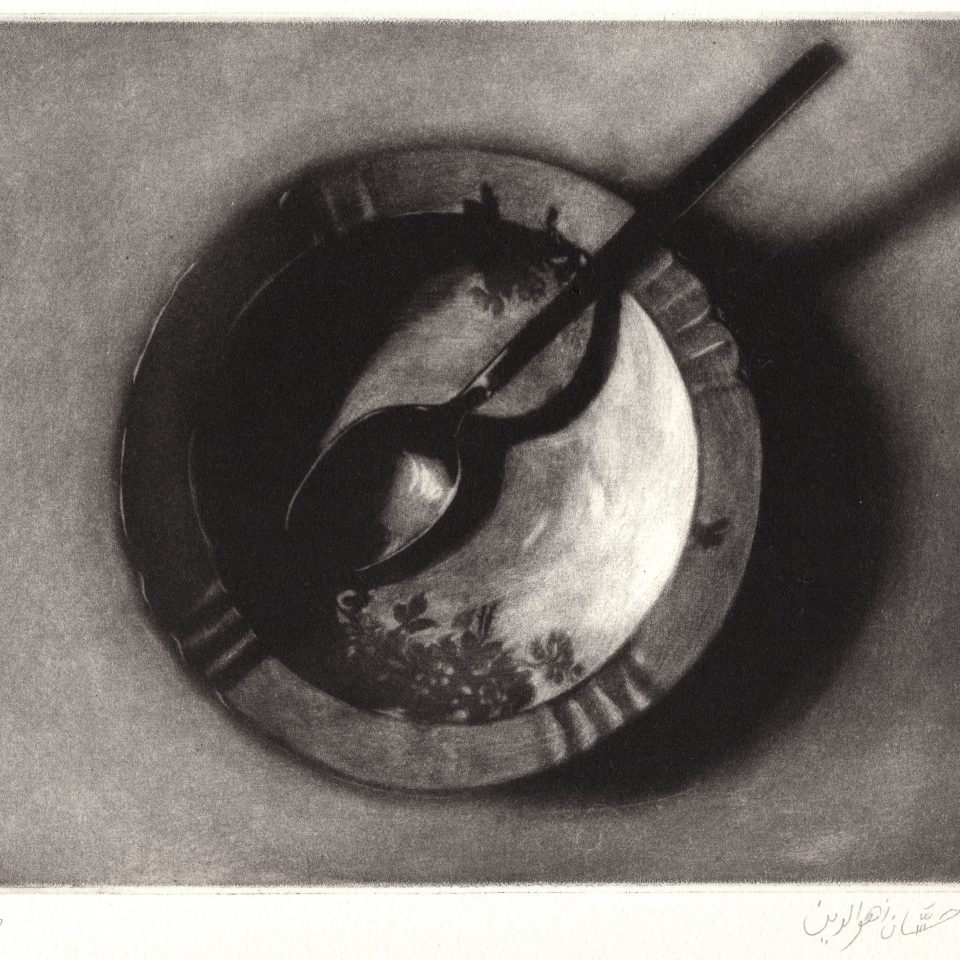
All around me, everyone is eating soup with a spoon, but in my hands, I only have a fork.
Social expectations are already heavy for most people. The pressure to look a certain way, to fit a certain mould, to have the ‘perfect body’ is everywhere in society today. But when added to that the feeling of being the odd one out—too quiet, too intense, too strange—it becomes easier to believe that maybe changing your body could fix everything else. Maybe if I skip some meals and lose a bit more weight, I will not feel as left out. Maybe, if I look thinner, I will be more easily accepted. Maybe, they won’t notice everything else that makes me different.
Maybe, maybe, maybe.
It doesn’t start as self-hate. It starts as hope. A desperate kind. The kind that tells me if I had just tried hard enough, maybe I’d finally belong.
In a world where routine—the one thing most autistic people crave—is hard to hold onto, where everything triggers sensory issues and where everyone else seems to have memorized a book of social rules that we didn’t even know existed, feeling out of control becomes a constant, inescapable state.
I’ve always agreed that being autistic doesn’t define every part of who I am. But at the same time, no one can help me—not really—if everyone keeps ignoring the fact that my needs, my triggers, my ways of coping aren’t the same as everyone else’s. It’s not just the eating disorder, It’s everything. My wiring can’t be treated in isolation, and it can’t just be ignored or brushed away because it makes people uncomfortable. We need people to educate themselves, to care, to understand that our autism is part of every second of our lives.
Because for me, for Elle and for Saoirse, none of it ever existed in isolation to begin with.
[1] Made up names to respect the interviewees’ desire to stay anonymous.
Artwork Courtesy of Hassan Zahreddine
References
| ↑1 | 1 |
|---|