



If I had to identify one key factor that shaped my early relationship to Israel society, it would be an inferiority complex. I was an Iraqi boy in a land of Europeans. Perhaps surprisingly, in my early years, this did not engender a rebellious streak. On the contrary, the status quo seemed the natural order of things: I unquestioningly accepted the social hierarchy that placed European Jews at the top of the pile and the Jews of the Arab and African lands at the bottom. Nor did I believe that I had any special abilities or talents that Israeli society failed to recognise. I entirely lacked the burning sense of injustice that may propel some marginalised children to prove themselves. I saw myself as an ordinary boy with some handicaps and limitations and no prospect of a bright future. I was lazy, apathetic, alienated from my environment but at the same time resigned to my fate. The notion of pulling myself up by the bootstraps was totally alien to my whole way of thinking.
At that time, I had no idea that being an Iraqi in Israel might have advantages as well as disadvantages. The main advantage for me, in later life, was the ability to transcend national stereotypes and to take a more balanced, if not detached, view of the Arab-Israeli conflict.
This is no ordinary conflict. It is one of the most bitter, protracted and intractable conflicts of modern times and spawns intense passions and partisanship on both sides of the divide. Israeli schools and the media to this day promote a skewed version of the conflict in which Israel can do no wrong and the Arabs can do no right. Arab schools and the Arab media similarly purvey a black-and-white picture which casts the Palestinians as the innocent victims and the Jews – a term often used interchangeably with Israelis – as selfish, cruel and unscrupulous villains, as uniquely evil. Both sides believe fervently in the justice of their cause. Both adhere to a narrow narrative of history which, like most nationalist narratives, is often simplistic, selective, self-righteous and self-serving. Having lived as a young child in an Arab country, I was aware of the possibility of peaceful Arab-Jewish coexistence. I could see Arabs not just as an enemy but as a people, worthy of recognition and dignity. My Iraqi background thus helped me, as I grew up, to develop a more nuanced view, based on empathy for all the parties locked into this tragic conflict.
In this respect, I was not typical. A significant number of Iraqi Jews who moved to Israel became Arab-spurning, right-wing nationalists. In my youth, I flirted with right-wing ideas, as I shall describe later.
There is no way of telling how I might have developed politically and ideologically had I stayed in Israel. In any case, the right-wing phase in my life was short-lived. Distance from Israel bred in me a more independent and reflective attitude towards Israeli society. The years I spent as a university student in England, in the aftermath of the June 1967 war, enabled me to see beyond simple certainties and to acquire a more critical perspective on nationalism in general, and a more sophisticated understanding of the diverse ingredients that make up the Arab- Israeli conflict. Nationalism, it gradually dawned on me, lies at the heart of most international conflicts. The trouble with nationalism, as Marilyn Monroe wrote in her scrapbook, is that it stops us thinking.
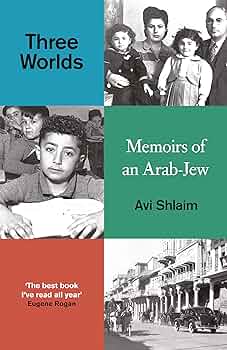
This book is a personal story of a young Iraqi-Jew told by a professional historian. It recounts my early life up to the age of eighteen, in Iraq, Israel and England, but from the vantage point of a scholar of the Arab- Israeli conflict. Virginia Woolf observed that many memoirs are failures because they leave out the person to whom things happened? Here the impressionable little boy and the troubled teenager are at the centre of the story but the backdrop to the drama is filled in by the mature scholar. My personal experience is used to illustrate and illuminate a much bigger story, the story of the Jewish exodus from Iraq following the establishment of the state of Israel in 1948. The result is an autobiographical fragment, a family story and, hopefully, a glimpse into the rich and lost world of the Iraqi-Jewish community.
I aim to recover and reanimate a unique Jewish civilisation of the Near East which was blown away in the first half of the twentieth century by the unforgiving winds of nationalism. The detached lens of academic analysis does not suffice here, and so I delve into a more intimate history: my family’s. We were an upper middle-class Iraqi-Jewish family displaced from Iraq by the combined pressures of Arab and Jewish nationalism, by the push of Iraqi xenophobia and the pull of the newly born Jewish state. We were part of the mass exodus of Jews from Iraq to Israel in 1950. Our departure from our homeland was due to forces that were completely beyond our control, and even beyond our comprehension.
This book began as an attempt to make sense of my early life and to piece together the fragments of my family’s history. It ended up as a narrative of family drama during an exceptionally turbulent period in the history of the Middle East.
Our family fortunes mirrored that of an entire community, one that was uprooted from a world in which it felt at home to one in which it had to make painful adaptations. Our family story is placed within the broader context that framed it the history of the Jewish community in Iraq. The story revolves around the settled and mostly contented life we led alongside Muslims in Iraq; the anguish and pain of displacement; the problems of adjusting to a new life in the Promised Land’; my poor performance at school in Israel which led my parents to send me to study in England; and the three mostly unhappy years I spent in London in what amounted to a second exile.
What lends our story some broader interest is the fact that we belonged to a branch of the global Jewish community that is now almost extinct. We were Arab-Jews. We lived in Baghdad and we were well-integrated into Iraqi society. We spoke Arabic at home, our social customs were Arab, our lifestyle was Arab, our cuisine was exquisitely Middle Eastern and my parents’ music was an attractive blend of Arabic and jewish.
What do I mean by the term Arab-Jew? I do not mean Arab as a national identification in the sense of pan-Arabism, a nationalist ideology as young as Zionism. I use the term as a shorthand for describing a shared cultural heritage and language.
For all I know, my family tree may stretch back to the exile of the Jews from Judea to Babylon two and a half millennia ago. Psalm 137 of the Bible expresses the yearnings of the Jewish people during their Babvlonian exile to return to Zion (one of the biblical names for Jerusalem as well as the Land of Israel as a whole): ‘By the waters of Babylon, there we sat down, and there we wept, when we remembered Zion? For my family, however, Zion held little lure. We had struck deep roots between the two rivers of Babylon and we had no reason to want to tear them up.
We were Iraqis whose religion happened to be Jewish and as such we were a minority, like the Yazidis, Chaldean Catholics, Assyrians, Armenians, Circassians, Turkomans and other Iraqi minorities. Relations between these diverse communities before the age of nationalism, despite inevitable tensions, were better characterised as a dialogue rather than a clash of civilisations. Baghdad was known as the city of peace and Iraq was a land of pluralism and coexistence. We in the Jewish community had much more in common, linguistically and culturally, with our Iraqi compatriots than with our European co-religionists. We did not feel any affinity with the Zionist movement, and we experienced no inner impulse to abandon our homeland to go and live in Israel.
In one respect, however, we were not a typical Iraqi-Jewish family: on my mother’s side we were subjects of the mighty British Empire. My maternal great-grandfather had left Iraq as a young man to go to Bombay, where he had made his fortune and become a British subject. He returned to Iraq to retire and built a synagogue that was named after him. My maternal grandfather was a British subject by birth who moved from Bombay to Iraq with his parents when he was 16. He later worked as an interpreter for the British consulate in Baghdad. Two of his three sons were recruited by the British Army during the Second World War and served as officers in the intelligence corps. The whole family lived in Iraq, a state founded by the British Empire, after the First World War, on the ruins of the Ottoman Empire. And in the end the family was forced to leave the country because, among other reasons, by facilitating the Zionist takeover of Palestine, Britain had helped to fuel Muslim hostility towards the Jews throughout the Muslim world.
My father’s family were all Iraqi Jews. My paternal and maternal grandmothers, who came to Israel with us, felt great nostalgia for the old Iraq and frequently referred to it as “Jana mal Allah”, ‘the Garden of Eden. For them Iraq was the beloved homeland while the Land of Israel was a place of exile. Their true feeling could have been expressed by a reversal of Psalm 137: ‘By the waters of Zion, there we sat down, and there we wept, when we remembered Babylon. Their personal predicament pointed to a fundamental paradox at the heart of Zionism. Zionism emphasised the historic connection of the Jewish people to its ancestral homeland in the Middle East, but it spawned a state whose cultural and geopolitical orientation identified it almost exclusively with the West. Israel saw itself, and was regarded by its enemies, as an extension of European colonialism in the Middle East, as being ‘in’ the Middle East but not of it. In this Eurocentric state, it was impossible for people like my grandmothers to feel at home.
My mother, who died aged ninety-six in Israel in 2021, often talked about the many close Muslim family friends who used to come to our house in Baghdad. One day, when she was over ninety, I asked her whether we had any Zionist friends. She gave me a look that implied this was an odd question, and then said emphatically: No! Zionism is an Ashkenazi thing. It had nothing to do with us. This, in essence, had been my elders’ view of Zionism before we were catapulted into Israel.,…..?
its principal political progeny. Zion was a small, faraway country of which we knew little. Our migration to Zion was one of necessity, not an ideological choice. It is no exaggeration to say we were conscripted into the Zionist project. Moreover, migration to Israel is usually described as Aliyah or ascent. In our case the move from Iraq to Israel was decidedly a Yeridah, a descent down the social and economic ladder. Not only did we lose our property and possessions; we also lost our strong sense of identity as proud Iraqi Jews as we were relegated to the margins of Israeli society.
In my later career in England, as a specialist on the international relations of the Middle East and as a public intellectual, I took issue with two dominant narratives: Samuel Huntington’s ‘clash of civilisations thesis and the Zionist narrative about the Jews of the Arab lands. The former implicitly rules out the possibility of a Jewish- Arab identity. The Zionist narrative maintains that antisemitism is inherent in Islamic religion; that Islam has been relentlessly persecutory towards the Jews: that hostility to Jews is endemic to all Arab countries; that the Jews of these countries faced the threat of annihilation in another Holocaust; and that the infant state of Israel valiantly came to the rescue and offered them a safe haven. The Zionist narrative further asserts that Arab antisemitism is an unmovable impediment to a peaceful settlement of the conflict between Israel and its Arab neighbours. In this reading, the migration of the Jews from Arab lands to Israel is attributed primarily to the persecution and prejudice they allegedly encountered in their country of origin; and their hard-line political positions once in Israel are traced to their lived experience among the Arabs. It was only in recent years, however, that I began to reflect on the extent to which my own personal experience helped to shape my worldview and led me to challenge the ‘clash of civilisations’ as well as the Zionist narrative.
Samuel Huntington’s ‘clash of civilisations’ thesis was one of the buzzwords of the early 1990s. The Harvard professor believed that after the end of the Cold War and collapse of the Soviet Union, the world would revert to its normal state of affairs, characterised by cultural conflict. The most important distinctions among people, he argued, were no longer political or ideological but cultural. Human beings are divided along cultural lines-Western, Islamic, Hindu, and so on. Islamic culture was presented as basically hostile to the West. People in the Islamic world were said to reject the values of the West. Their primary attachment, Huntington claimed, was to their religion rather than to their nation-state. And their religion was incompatible with liberal Western ideals such as individualism, pluralism, freedom and democracy.
The now largely discredited ‘clash of civilisations’ has been a major influence on the approach of some Zionist historians to the Arab- Israeli conflict. These historians view the conflict as rooted in Islamic dogma and hatred of the Jews. Echoing Huntington, they place the emphasis on the religious and spiritual dimension of the conflict.’ What Huntington and these Zionist historians have in common is an Orientalist mind-set. They deal in stereotypes of the East. They explain Muslim hostility towards the West, and by extension Arab hostility towards Israel, as the inevitable product of their religion and culture rather than of specific historical circumstances. The clash is said to be between Judeo-Christian civilisation and Islam. An essentialist view of what it is to be Muslim leads to a reductionist account of the Muslim approach towards the outside world in general and towards Jews in particular. This kind of analysis is hopelessly ahistorical. It collapses the diversity of the Muslim world into one angry, ignorant monolith. And it fails to put into the equation the very real, not imagined, grievances that Muslims have against the Western powers and Israel.
This simplistic Eurocentric worldview has a parallel in the worldview of some radical Islamic activists. Radical Islamists maintain that the story of Arab and Jew is the story of a fundamental clash of religion and culture. According to them, the Jews were never part of the fabric of Arab society; they were aliens, a hostile element, even a fifth column in Dar al-Islam, the House of Islam. The state of Israel is seen by them as an illegitimate entity, planted by the colonial powers in their midst with the aim of dividing and weakening them. Both Zionists and Islamists thus use the history of Muslim- Jewish relations selectively to serve their respective secular and religious agendas. Both groups urge mistrust of the enemy and call for constant mobilisation in the struggle for supremacy and domination.
The story of my family does not sit well with either the Zionist or the Islamist narrative of the Jewish experience under Islamic rule. At a deeper level it conflicts with the clash of civilisations’ premises that underpin both narratives. The story of my family is thus not only interesting in and of itself; it contains possible implications for our understanding of the course of modern Middle Eastern history. More specifically, it serves as a corrective to the Zionist narrative which views Arabs and Jews as congenitally incapable of dwelling together in peace and doomed to permanent conflict and discord.
Zionism was a nineteenth-century European movement: it offered a solution in the form of a Jewish state in Palestine to the Jews who suffered discrimination and persecution in Europe. In Iraq, by contrast, there was an old tradition of religious tolerance and a long history of relative harmony between the different segments of society. The Jews were neither newcomers nor aliens in Iraq. They were certainly not intruders. The Jewish connection with Babylon goes back to the time of Abraham the Patriarch who migrated from Ur, south of the city of Babylon, to the land of Canaan. Jews lived in Babylon since 586 BC when King Nebuchadnezzar destroyed their kingdom in Jerusalem and drove them into exile. Centuries later, Babylon became the spiritual centre of the Jewish Diaspora and the seat of its most distinguished religious academies, Nehardea, Sura and Pumbedita (modern Fallujah). It was there that the Babylonian Talmud was compiled, and Jewish halacha law was codified.
The Jews were thus firmly settled in Babylon long before the rise of Islam in the seventh century CE. After Iraq became a majority-Muslim state, the Jews remained an integral part of Iraqi society. At the time of the First World War, the Jews constituted a third of the population of Baghdad and it was often described as a Jewish city. After the war, Jews continued to play a prominent part in the social, economic, literary, intellectual and cultural life of the Kingdom of Iraq. It was precisely that prominence that fed Muslim antagonism towards them in the age of nationalism and growing sectarianism.
Under the Ottoman Empire the Jews had the status of a protected minority with the same rights and obligations as the other minorities.
One of the saving graces of the Ottoman Empire was the considerable autonomy it extended to its minorities. Although Islam was the official religion of the empire, Islamic law was not imposed on the non-Muslim communities. The Jews flourished under this pluralist system and they also benefited from the Tanzimat, the reforms of the late nineteenth century. They had representatives in the Ottoman parliament, and they played a prominent part in the finance, trade and commerce of an empire that stretched from the Gulf of Aden to the eastern edge of Europe. In the modern Kingdom of Iraq, which was formed from three Ottoman provinces following the collapse of the Ottoman Empire, the Jews continued to enjoy the same rights as the other minorities.
In Europe, by contrast, the Jews were the minority seen above all as the “other” and therefore constructed as a problem. Europe had what was often referred to as the “Jewish Question”. The Nazi final Solution to this question led to the extermination of six million European Jews.
Unlike Europe, the Middle East did not have a “Jewish Question” – antisemitism was a European malady that later infected the Near East.
Antisemitic literature had to be translated from European languages because there was so little of it in Arabic.
In political terms, as Edward Said pointed out, Europe’s nineteenth-century Jewish question became the twentieth-century Palestinian question.
Iraq’s Jews did not live in Ghettos nor did they experience the violent repression, persecution and genocide that marred European history. It was not without reason that Mark Mazower called his history of Europe’s twentieth-century Dark Continent. It took Europe much longer than the Arab world to accept the Jews as equal co-citizens. In Iraq, there were stresses and strains and one infamous pogrom against the Jews in June 1941. The overall picture, however, was one of religious tolerance, cosmopolitanism, peaceful coexistence and fruitful interaction. Undeniably, the status of the Jews of Islam could be contentious at times. But it is both confused and confusing to lump all these issues together under the umbrella of the Jewish Question.
My family did not move from Iraq to Israel because of a clash of cultures or religious intolerance. Our universe did not collapse because we could not get along with our Muslim neighbours. The driver of our displacement was political, not religious or cultural. We became entangled in the conflict between Zionism and Arab nationalism, two rival secular ideologies. We were also caught in the crossfire of the conflict between Jews and Arabs over Palestine. This conflict developed in the aftermath of the First World War and intensified in the wake of the Second World War. In 1948 the Iraqi army participated in the Arab war against the newly proclaimed state of Israel. As a result of the Arab defeat, there was a backlash against the Jews throughout the Arab world.
Zionism was one of the primary causes of this backlash. It gave the Jews a territorial base for the first time in over two thousand years. This made it easier for Islamic fundamentalists and Arab nationalists to identify the Jews in their countries with the hated Zionist enemy and to call for their extrusion. What had been a pillar of Iraqi society was increasingly perceived as a sinister fifth column.
For the Zionists the top priority all along was to bring as many Jews as possible from all over the world to build up a state of their own. Their goal was an independent Jewish state spreading over as large a part of Palestine as possible, with as many Jews and as few Arabs as possible within its borders. Zionism was the negation of the Diaspora. Until the Second World War the activities of the Zionists had focused primarily on the large Jewish population centres of Europe. The Jews of the Middle East were regarded as inferior human material who could make only a limited contribution in the process of state-building. The Holocaust led to a reversal of Zionist attitudes in this regard. By wiping out the principal human reservoir for their project, it forced the leaders of the Zionist movement to turn their attention to the East. In other words, as a result of the Holocaust, the Jews of the Middle East became for the first time a vital element in the Zionist project of building a sustainable Jewish-majority state in Palestine.
In the course of the 1948 Arab- Israeli war, over 700,000 Arabs left or were driven out from their homes in Palestine. In Arabic this fateful year is called the Nakba or the catastrophe. In Hebrew it is called the “War of Independence”. For the Zionists 1948 was not just a military triumph but a historic landmark, the attainment of statehood and sovereignty, the moment when the Jews were written back into world history.
Consequently, we have two radically different national narratives about 1948. One focuses on the dispossession and displacement of the native population by the Zionist aggressors. The other asserts the right of the Jews to national self-determination in their ancestral homeland. Both claim the moral high ground. What is undeniable is that the creation of Israel involved a monumental injustice to the native population.
Palestinians are the main victims of the Zionist project. More than half of their number became refugees and the name Palestine was wiped off the map. But there was another category of victims, less well known and much less talked about: the Jews of the Arab lands. The twin currents of Arab nationalism and Zionism made it impossible for Jews and Muslims to continue to coexist peacefully in the Arab world after the birth of Israel.
My memoir is about the second category of the victims of the Zionist movement as reflected in the history of my family. I repeat, we were Arab-Jews. There is no better way to define our identity prior to our displacement. Yet the term Arab-Jew is fiercely disputed in Israel. You can freely describe yourself as a French-Jew, a Russian-Jew, a Romanian-Jew or even as a German-Jew, despite the grim association between Germany and the Holocaust. But if you describe yourself as an Arab-Jew, as I do, you immediately encounter opposition. The hyphen is significant. Critics of the term Arab-Jew see it as confusing and conflating two separate identities. As I see it, the hyphen unites: an Arab can also be a Jew and a Jew can also be an Arab.
Some Israelis deride the notion of an Arab-Jew as an ontological impossibility. Jews and Arabs are habitually depicted as oppositional figures, locked in a timeless conflict. On the Arab side, the extremists also subscribe to this straightforward, bipolar view. Time and again we are told that there is a clash of cultures, an unbridgeable gulf between Muslims and Jews. The “clash of civilisations” thesis has become entrenched, supplying ammunition for rejectionists on both sides of the Arab-Israeli divide.
The story of my family in Iraq – and that of many forgotten families like mine – points to a dramatically different picture. It harks back to an era of a more pluralist Middle East with greater religious tolerance and a political culture of mutual respect and cooperation between different ethnic minorities. My family’s story is a powerful reminder of once thriving Middle Eastern identities that have been discouraged and even suppressed to suit nationalist political agendas. My own story reveals the roots of my disenchantment with Zionism. It shows how my experience made me sceptical of Zionist discourse and why, many years later, it helped to turn me into a revisionist Israeli historian, a member of the small group of what used to be called the new historians.
In this sense, my memoir is a revisionist tract, a transgressive document, an alternative history, a challenge to the widely accepted Zionist narrative about the Jews of the Arab lands, who after the mass emigration to Israel in the 1950s became collectively known as Mizrahim. I argue that the history of the Mizrahim has been deliberately distorted in the service of Zionist propaganda. This history may be divided into two parts: pre-1950 in the Ottoman Empire and its successor states, and post-1950 in Israel. Pre-1950, Arab-Jewish history was part and parcel of the history of the Middle East as a whole. It is impossible to make sense of this history without the regional context. Post-1950, Arab-Jewish or Mizrahi history becomes part of Israel’s history and as such divorced from its wider regional environment. Zionists are only interested, obsessively interested, in the first phase of Arab-Jewish history; they are profoundly uninterested in the second. Interest in the first phase is driven not by the search for truth but by the propaganda need to portray the Jews as the victims of endemic Arab persecution, a portrayal that is then used to justify Israel’s own atrocious treatment of the Palestinians. A rich, fascinating, and multi-dimensional history is thus reduced to the quest for ammunition to use in the ongoing war against the Palestinians.
This trend reached its climax with the manufacture of the narrative of the “Jewish Nakba”. According to this narrative, the forced exodus of 850,000 Jews from Arab countries after 1948 amounted to a catastrophe, a “Jewish Nakba” at least on a par with, if not more devastating in its consequences than the Palestinian Nakba. Variously called the “Forgotten Exodus”, the “Forced Exodus”, or the Double Exodus, the purpose of this narrative is to create a false symmetry between the fate of the two communities. This narrative is not history; it is the propaganda of the victors.
Honest history has to acknowledge the part played by all the governments concerned in causing this man-made tragedy. The main difference is that the Palestinian refugees, for the most part, were ethnically cleansed by the Israeli armed forces whereas the Arab-Jews, with a few exceptions, were given by the Arab governments the option of leaving or staying.
My book is both a personal record of a complex past and an essay with a political argument. It is a critique of Zionism from a perspective that is rarely heard outside Israel. The three worlds of the title of the book are Baghdad, where I lived up to the age of five; Ramat Gan, from the age of five to fifteen; and London, from the age of fifteen to eighteen. The backdrop to the story is a seismic period in Jewish history which saw the spread of Nazi propaganda in Iraq, the Nazi genocide of European Jewry, the partition of Palestine, the birth of the State of Israel, the origin of the Palestinian refugee problem, the mass exodus of Jews from Iraq and other Arab countries to Israel, and Ashkenazi-Sephardi tensions in the early years of statehood, tensions that in some ways persist to the present day.
The trauma of antisemitism lies at the heart of the master narrative of universal Jewish victimisation. This is Jewish history as a never-ending litany of harassment, discrimination, oppression and persecution, culminating in the Holocaust. American-Jewish historian Salo Baron disparagingly termed it “the lachrymose conception of Jewish history”.
The true history of Jews in Europe, he argued, amounted to more than tragic suffering. But even if one concedes, for argument’s sake, that the lachrymose conception describes European Jewish history, it does not do justice to the history of the Jews in the Near East. Recalling the era of cosmopolitanism and coexistence that some Jews, like my family, enjoyed in Arab countries before 1948 offers a glimmer of hope. Amid the dismal wreck of the contemporary Middle East, it’s the best model we have for a better future.