


Rowayat seeks original writing for upcoming online publications. We accept unsolicited simultaneous submissions and aim to respond within two months. Submission categories are fiction, creative nonfiction, poetry, flash fiction, comics, art, reviews, and interviews—in English, French, or Arabic in translation. Contributors do not need to identify as of Arab/SWANA descent, provided their work is in dialogue with the transnational social realities of the Afro/Arab and Global South regions and their diaspora communities. Contributors may also decide to expand this reality altogether.
We also accept submissions from all Indigenous Peoples of Canada from across Turtle Island. We are located on the unceded Indigenous lands of the Kanien’kehá:ka/Mohawk Nation, a historic place for gathering and trade for many First Nations. These lands and Indigenous Peoples have a long and deep history and legacy, and non-Indigenous settlers have been present on them for more than 375 years.
We are open for Submissions for Issue #14: Mirrors
April 1st to May 5th 2025
         “I am a mirror set before your eyes,

          And all who come before my splendour see

          Themselves, their own unique reality;

          You came as thirty birds and therefore saw

          These selfsame thirty birds, not less nor more;

          If you had come as forty, fifty – here

          An answering forty, fifty would appear;

          Though you have struggled, wandered, traveled far,

          It is yourselves you see and what you are.”

                                              — The Conference of the Birds
Rowayat invites submissions for Issue 14, centred on the theme of ‘Mirrors.’
A mirror reflects, but it can also distort. Before a mirror, the self is doubled, fractured, or returned as an illusory stranger.
We are interested in work that explores mirrors in their many forms: mirrors as reflections of memory and the past, mirrors as surveillance, mirrors as portals between selves, languages, histories, and geographies; mirrors as sites of mystical recognition, mirrors that clarify, mirrors that deceive, mirrors as silent depictions of false fact.
For this issue, we welcome writing that engages with reflection in all its forms: self-recognition and misrecognition, doubling and disappearance, mirroring across generations, borders, and time.
We invite poetry, fiction, hybrid work, translation, CNF, and visual art that responds imaginatively to the mirror as metaphor, form, or encounter.
Send us your best work. In these fractured times of doublespeak, when realities are increasingly mirrored back to us refracted, we await your reflections.
Meet Rowayat’s Guest Editors for Issue #14: Mirrors
Fatima ElKalay is Rowayat’s Issue 14 Managing Editor

Fatima holds an M.Litt in Creative Writing from Central Queensland University, where she honed her craft as both a poet and storyteller. Her work has earned critical acclaim, including being shortlisted for the London Independent Story Prize and the ArabLit Story Prize for short fiction in translation.
Beyond editing, Fatima is a prolific translator of Arabic literature, committed to bridging cultures through words. Most recently, she translated the first two chapters of Mansoura Ez-Eldin’s Akhilat Al-Dhil (Shadow Spectres), which was published for the first time in English in The Markaz Review. Her translation work extends across poetry, fiction, and nonfiction, amplifying voices that might otherwise remain unheard.
In 2022, Fatima published her first collaborative collection, Dessert for Three, a genre-blending exploration of fiction and memoir. She is also the author of Basel’s First Trip, a children’s story featured in issue 9 of Rowayat Gemeza for Young Readers. With her deep literary expertise and editorial leadership, Fatima continues to shape Rowayat’s evolving narrative, ensuring that each issue resonates with powerful, diverse voices from the region and beyond.
Zeina Azzam is Rowayat’s Issue 14 Poetry Editor
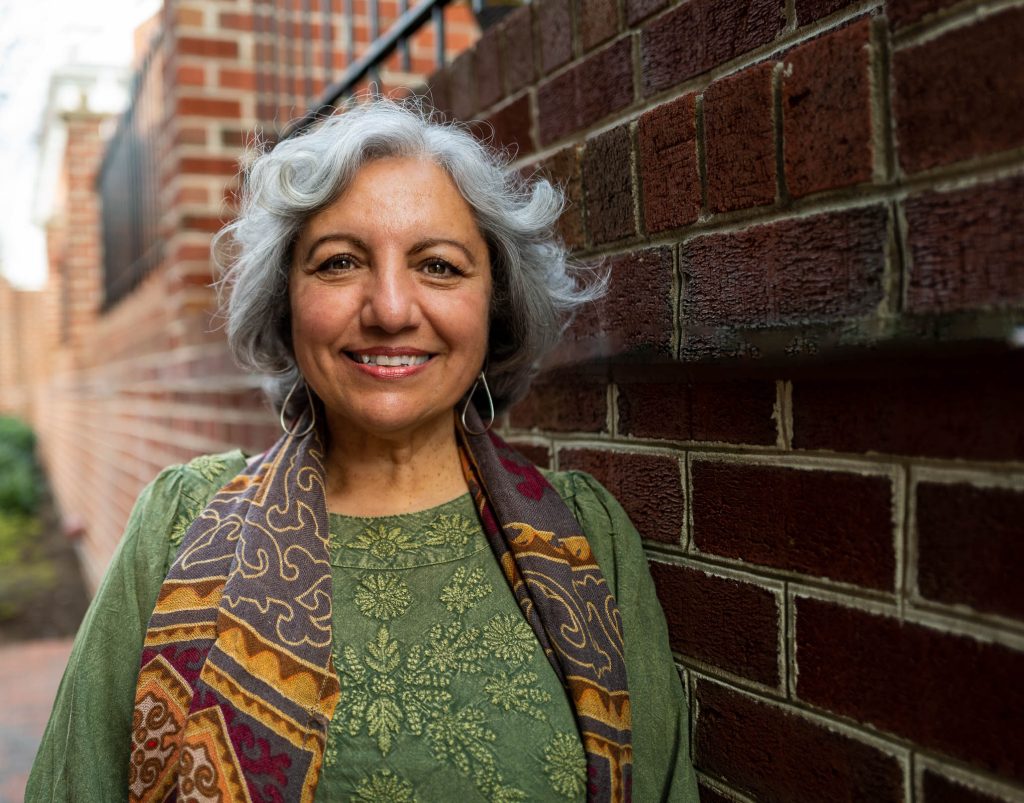
Zeina Azzam is a Palestinian American poet, writer, editor, and community activist. Her publications include the full-length poetry book, Some Things Never Leave You, the chapbook, Bayna Bayna, In-Between, the collection, Poems for Alexandria, and poems in literary journals and anthologies including Prairie Schooner, Pleiades, Mizna, Sukoon, Barzakh, Rusted Radishes, Split This Rock, the Academy of American Poets’ Poem-a-Day, Enemy of the Sun: Poetry of Palestinian Resistance, Bettering American Poetry, Writing the Land: Virginia, Making Levantine Cuisine: Modern Foodways of the Eastern Mediterranean, Making Mirrors: Writing/Righting by and for Refugees, and Gaza Unsilenced.
Zeina has been nominated twice for the Pushcart Prize. Her poem, “You Birth the Seeds,” was set as a choral piece by renowned composer Melissa Dunphy and her poem about Gaza in October 2023, “Write My Name,” went viral internationally and has been translated to over ten languages. A composer in the Netherlands also set “Write My Name,” along with three other poems of Zeina’s, as a choral suite titled “Four Songs for Gaza.”
Zeina served as the poet laureate of Alexandria, Virginia, for 2022-25. She worked in the fields of education and Middle East affairs for most of her professional career, including 27 years at Georgetown University’s Center for Contemporary Arab Studies. Since 2016, she has volunteered as a mentor for We Are Not Numbers, a writing program for youth in Gaza, and is currently WANN’s poetry editor. Zeina holds an M.A. in Arabic literature from Georgetown University. www.zeinaazzam.com
Carol Berger is Rowayat’s Issue 14 Nonfiction Editor

Carol Berger is a Canadian anthropologist and writer. She is a Commonwealth Scholar and holds a doctorate from the University of Oxford. Her work has appeared in the London Review of Books, The Economist, and The New Yorker. She is the author of The Child Soldiers of Africa’s Red Army (London: Routledge, 2022). She lives in Cairo.
Mohamed Seif El Nasr is Rowayat’s Issue 13 Fiction Editor

He is a writer and editor from Cairo, Egypt, with an academic background in history and political science. After over a decade in corporate banking, he changed paths to pursue a career in writing. His work includes several historical and political essays for publications such as Mada Masr, Mondoweiss, Truthout, and others.
Then He Sent Prophets, his debut historical novel, was published by Daraja Press in 2024 and is forthcoming in Arabic from the Arab Cultural Center in 2027. It has been praised in ArabLit, The New Arab, Middle East Monitor, Rowayat, and The Historical Novels Review.
His website is www.mohamedseifelnasr.com, and he can be found on Instagram at @moseifelnasr.
Sunnah Khan is Rowayat’s Issue 14 Poetry Editor
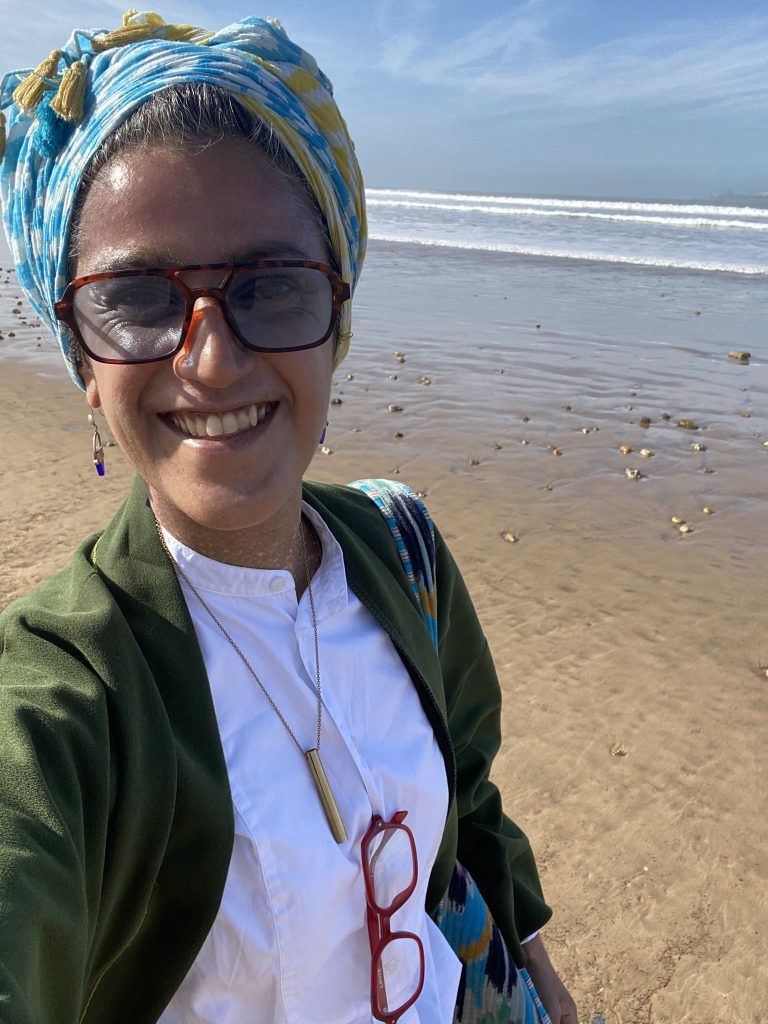
Sunnah Khan is a poet, editor, documentary filmmaker and creative facilitator currently based in Scotland.
Her debut pamphlet I Don’t Know How To Forgive You When You Make No Apology for This Haunting was published by Rough Trade Books (2020). Her poems have been published in Poetry London, The Rialto, And Other Poems and featured in the anthology You’re Gonna Wanna Hear This (Panmacmillan). She was shortlisted for the Aesthetica Poetry Prize (2024) and longlisted for The Daniel Abdal-Hayy Moore Ecstatic Poetry Prize (2025).
She has performed her work in the UK and internationally and was part of the radical London-based collective 4 BROWN GIRLS WHO WRITE (as featured in British Vogue 2021). In 2022, she was selected for Moniack Mhor International Residency. She is passionate about facilitating, making creative space accessible, and amplifying the voices of those facing erasure. She has worked with hard-to-reach communities in partnership with the Women of the World Festival, Glasgow Women’s Library, and the Edinburgh International Book Festival.
In 2025, she worked with Gazan poet Haia Mohammed to develop and help publish her poetry whilst in the midst of the genocide. Haia’s book, The Age of Olive Trees, was since published by Outspoken Press (2025) and nominated for the British Book Awards (2026). Haia is now studying creative writing on a scholarship in London. All sales of Haia’s book go to support her family, who are still in Gaza: https://www.outspokenldn.com/shop/haia
Sunnah’s own work explores the politics of memory and forgetting and the infinite spirit in search of divine return. She is currently completing her debut literary fiction novel & a full-length poetry collection. TM: https://bit.ly/2PVuAgf W: sunnahkhan.com
Nyla Matuk is Rowayat’s Issue 14 Fiction Editor
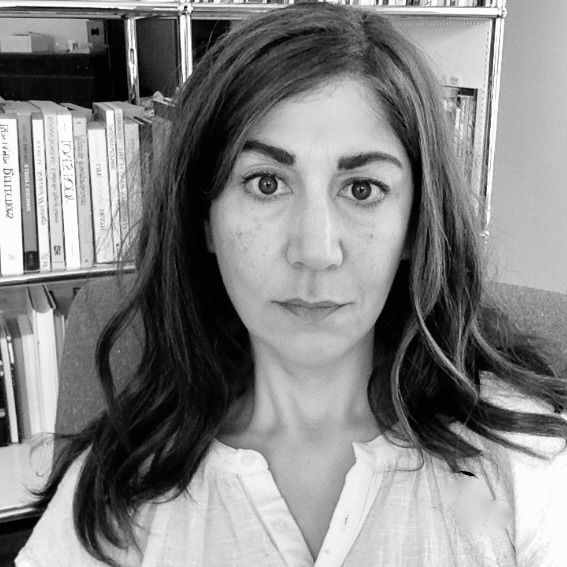
Nyla Matuk is the author of two books of poetry: Sumptuary Laws (2012) and Stranger (2016); and her novel, Leila and Khaled, will appear in August 2026 in Canada and the U.S. with House of Anansi Press. Her poetry and essays have appeared in magazines and anthologies in Canada, the U.S., Ireland, and the U.K., including The Walrus, The New Quarterly, The Poetry Review, PN Review, Poetry Ireland Review, POETRY, The New Yorker and Mizna, among others. She is the editor of an anthology, Resisting Canada (2019), and her poems have been anthologized in New Poetries VI: An Anthology, Best Canadian Poetry in English 2012 and 2020, and The Next Wave: An Anthology of 21st Century Canadian Poetry.
She has been shortlisted for the Gerald Lampert Award for the best first book of poetry in Canada and for The Walrus Poetry Prize, and has been granted residencies at Yaddo, McGill University, Château La Napoule, and Passa Porta, the International House of Literature. She lives in Montreal. www.nylamatuk.ca
https://bsky.app/profile/nylam.bsky.social
Mohsen Mohamed is Rowayat’s Issue 14 Nonfiction Editor
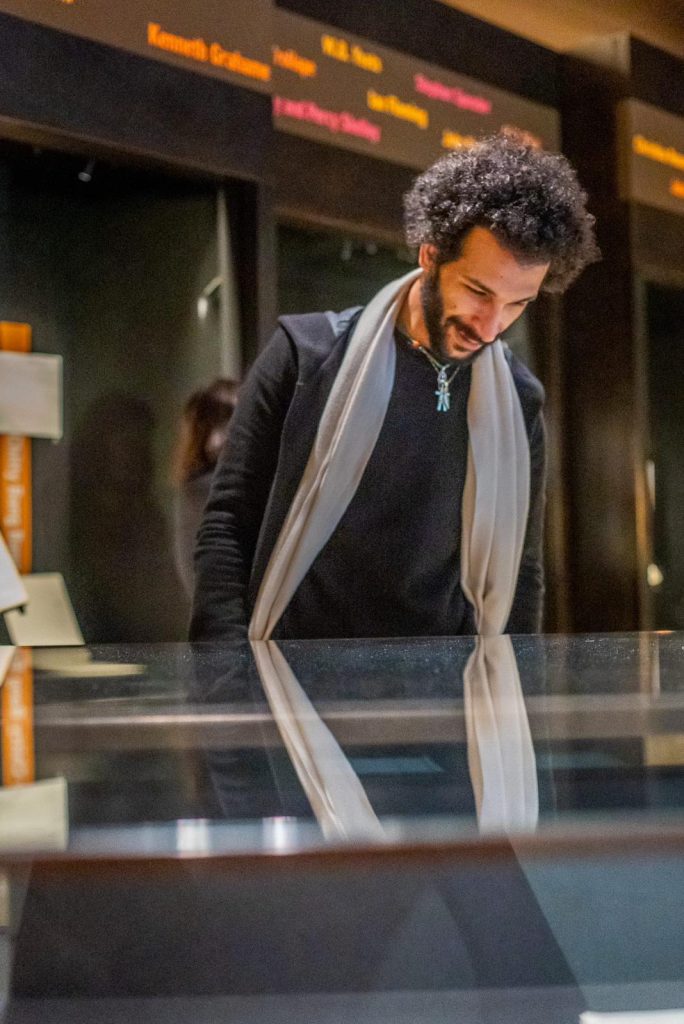
Mohsen Mohamed has been Rowayat’s Arabic Literature in Translation Editor and he is currently the Editorial Communications Coordinator (mohsen@rowayat.org) and nonfiction editor. He is an Egyptian poet born in 1994. His debut poetry collection, مفيش رقم بيرد (No One Is On the Line), was published in 2020 by Dar El Meraya for Cultural Production. It won first prize for vernacular poetry at the Cairo International Book Fair and the Sawiris Cultural Award, and the translation published by Laertes Press in 2024 was a finalist at the Eric Hoffer Book Awards.
In 2014, in the aftermath of a student demonstration, Mohamed was arbitrarily arrested during a campus sweep. He began writing poetry during his imprisonment. His work has appeared in publications including Poetry Magazine, Cordite, Mediapart, and NRC.
He is currently working on a new collection of poems exploring themes of identity, gender, and exile, alongside essays and articles engaging with similar concerns.
Outside writing, Mohsen is drawn to the quiet challenge of mathematics—often unsuccessfully—and to travel, which he sees as a way of reclaiming freedom. He sometimes jokes that when he feels low, he tries to solve a mathematical problem, fails, and fails, and feels worse for it.
banah el ghadbanah is Rowayat’s Issue 14 Poetry Editor

banah el ghadbanah is a former professor and award-winning writer. banah holds a PhD in Ethnic Studies, a Master’s in Ethnic Studies, and graduated as Valedictorian from Spelman College with a dual degree in Sociology and Comparative Women’s Studies. banah is the author of La Syrena: Visions of a Syrian Mermaid from Space (Dzanc Books); the Independent Book Review named La Syrena one of the best books of 2023. banah is also the author of Ululating from the Underground: Syrian Women’s Protests under Siege, forthcoming from SUNY Press, a culmination of fourteen years of research. They worked as a teacher at the Syrian Women’s Association in Amman, Jordan teaching English through poetry. banah taught Comparative Women’s Studies as a tenure-track professor at Spelman College for several years. They also co-founded Arab Youth Collective, an arts-based program for Syrian and Palestinian youth in San Diego (today the Majdal Center). Banah won the Diverse Voices Prize from Dzanc Books, the Woman of Excellence Award from the Faculty Women of Color Association, and the American Islamic Congress’ “Dream Deferred” Essay Contest on Civil Rights in the Middle East. They were a finalist for the Hub City Deep Line Poetry Series, Cream City Review Fiction Prize, and the Feminist Wire Poetry Contest. banah’s writing can be found in Mizna, the Women’s Review of Books, Rowayat, Poetry Northwest, the Feminist Wire, and other sites. https://banahelghadbanah.com/
Elest Ali is Rowayat’s Issue 14 Fiction Editor

Elest Ali is a British Muslim writer of Cypriot and Turkish heritage. She holds a BA in English Literature from King’s College London, and an MA in Comparative Literature from SOAS.
Elest’s writing (mostly fiction) is hell-bent on challenging the tired trope of ‘sob stories from the East’ and other reductive portrayals; to reclaim the empowered Muslim narrative. She lives in Türkiye, where she is (still!) working on her historical lit. fiction novel, The House of Osman. Her middle-grade children’s book, Danny and the Temple Raider of Ur, has recently been acquired by Ketebe Publishing.
Elest works as an editor and writer. Her articles have featured in print and online magazines ranging from Time Out Abu Dhabi to the New Statesman. Sometimes she writes poetry, which rarely sees the light of day. Few have/will appear(ed) in Rowayat, the House of Amal Qur’an anthology, and Create Humanity’s Art for Palestine poetry anthology (coming out soon). Others occasionally wash up on the shores of Substack.
You can follow her on Instagram if you like, though she’s dubious about it and rarely posts anything.
Mai Khaled is Rowayat’s Editorial Operations Assistant for Issue 14
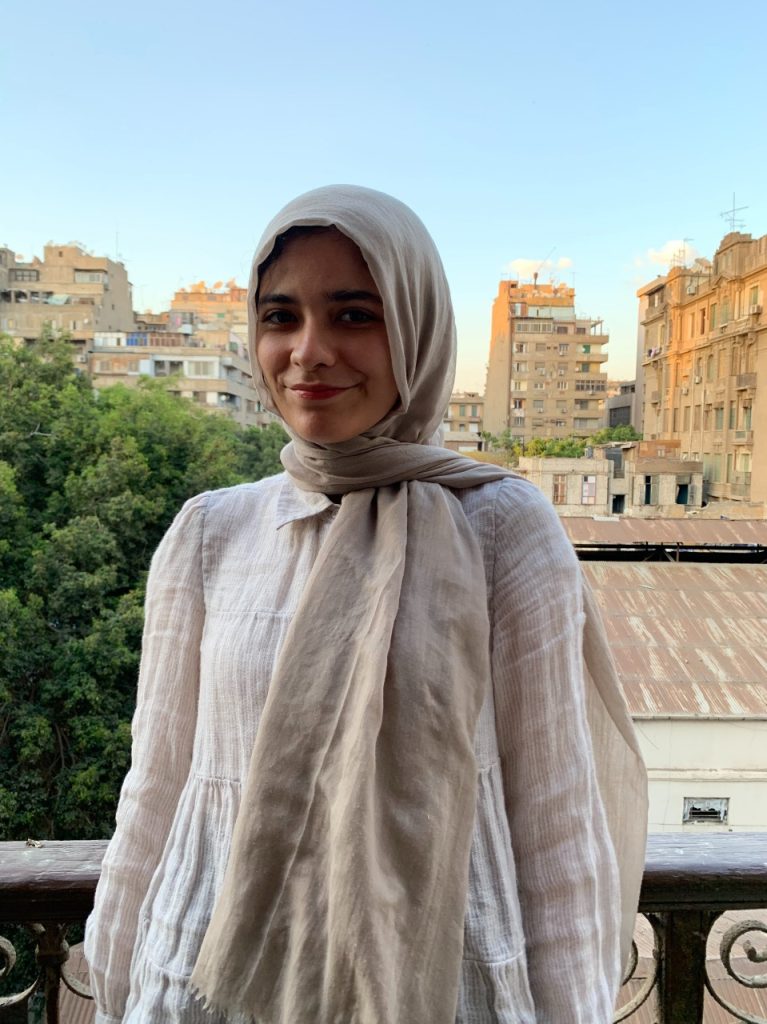
Mai Khaled Abdel-Aala was Rowayat’s Editorial Assistant (Issue 10, Issue 12 and Issue 13).
She is a writer and editor based in Cairo. She has a BA in English Literature from Cairo University. Before returning to academia to pursue an MA in experimental writing, she worked briefly as a photographer. Her non-academic writing can be found in her personal Substack newsletter, *The Ibis Tongue*. Mai’s writing explores questions about poetics and perception, among other things. She’s @jonnibis on Instagram.
Barâa Arar is Rowayat’s Issue 14 Fiction Editor
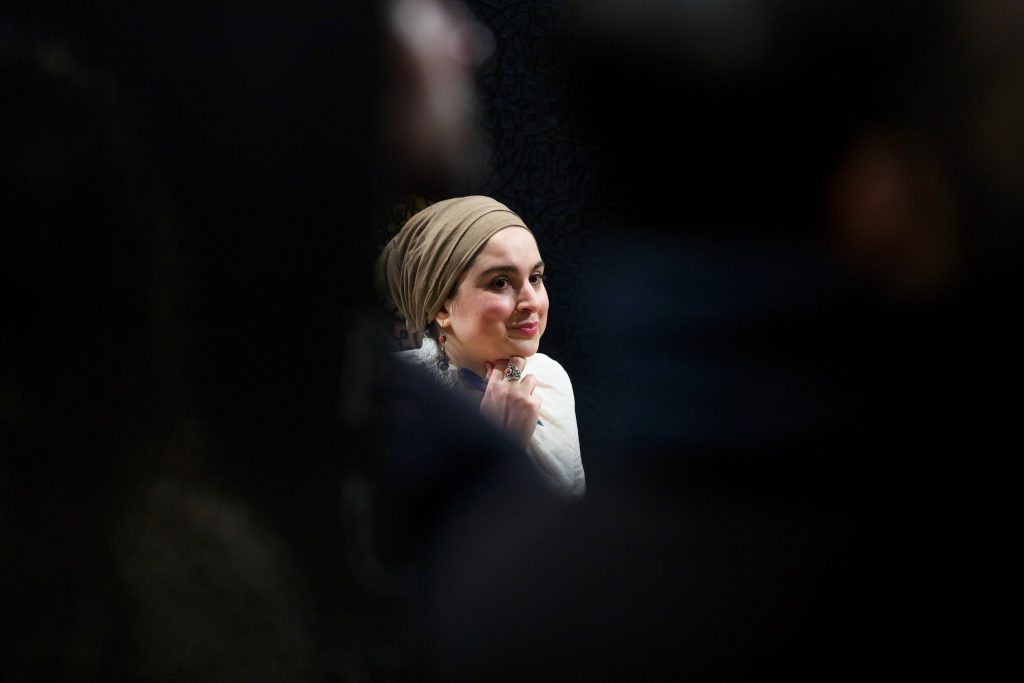
Barâa Arar is a writer and editor based in Toronto, Canada. She holds a Master’s in History from the University of Toronto where she studied colonialism, photography, and gender in North Africa. Her creative and critical writing has appeared in THIS Magazine, cbc.ca, Canthius, Room, Rowayat, Ex-Puritan, and Muslim American Writers at Home. She was selected as a mentee by Zilla Jones for the Writer’s Union BIPOC Writers Connect 2025 and is currently working on her debut novel thanks to grants from the Canada Council for the Arts and the Toronto Arts Council. You can find her at baraaarar.com Instagram: @baraaarar
Photo credit: Talha Tabish
Rana Mourtaja is Rowayat’s Issue 14 Arabic Literature in Translation Editor

Rana Mourtaja is currently a Ghazzawi Palestinian mom in Madrid, generally and personally dealing with toddler tantrums, Spanish lessons, diaspora life, nostalgia, and homesickness, while professionally leading cultural productions and judging other people’s punctuation.
Rana has an academic background in sociology and psychology and has worked for years in humanitarian sector in the Gaza Strip, specializing in Gender-Based Violence (GBV), Child Protection (CP), and Mental Health and Psychosocial Support (MHPSS). Her professional journey with several NGOs has focused on documenting lived experiences, supporting community resilience, and amplifying voices often pushed to the margins.
She left Gaza by coincidence just days before the genocide intensified again on Gaza. Since then, she has been working as a Managing Editor on Past Continuous Anthology (Women’s Testimonies from Palestine and the Diaspora in the Time of the Genocide on Gaza), a project that revisits the First Eastern Women’s Conference (1938) in Cairo and connects historical feminist movements with contemporary voices, with a particular focus on Palestinian women’s perspectives. These contemporary contributions bring together feminist testimonies, essays, poems, and artworks written both before and during the current escalation of genocide on Gaza, within the broader context of ongoing colonial violence against Palestine. Some texts are republished from earlier years, reflecting lived experiences shaped by protracted displacement, siege, and recurring assaults, while others were created in direct response to the present moment. Together, they trace a century of feminist organizing, solidarity, and resistance.
Ghada Emish is Rowayat’s Issue 14 Nonfiction Editorial Assistant

Ghada is an early-career writer based in Cairo, Egypt. She is interested in children’s literature and creative nonfiction. She works remotely as an archival assistant with NYU Abu Dhabi’s al-Mawrid Arab Center for the Study of Art. She loves spending her time doing hobbies like cooking, hiking in the Sinai, and bird-watching.
Salwa Batchi is Rowayat’s Issue 14 Arabic Literature in Translation Editor

Salwa Batchi is a literary translator and English teacher, working between English and Arabic. With a background in English studies and translation, she approaches each text as both a reader and a writer, attentive not only to meaning but also to rhythm, voice, and nuance. Her work seeks to carry words across languages without losing their spirit, allowing each text to resonate naturally in its new form.
https://www.instagram.com/salwa_batchi/
www.linkedin.com/in/salwa-batchi-ba3a79382
Meriem Essaoudy is Rowayat’s Issue 14 Arabic Literature in Translation Editor

Meriem Essaoudy is an emerging Moroccan translator. She holds a Bachelor’s degree in English Studies and is currently pursuing a Master’s in Applied Linguistics. Her work centers on Arabic literature, translation, and cross-cultural storytelling, with a focus on making Arabic literary voices accessible to wider audiences. She has contributed to literary platforms such as ArabLit and Rowayat.
LinkedIn profile link: www.linkedin.com/in/meriem-essaoudy-769a90320
Instagram profile link: https://www.instagram.com/meriemessaoudy?igsh=cWE0Mms5Zmpzb3Fq&utm_source=qr
Habiba ElShoky is Rowayat’s Issue 14 Editorial and Communications Assistant

Habiba Elshoky is a political science student studying at New Giza University. Her fields of interest include international relations, history and literature. She worked as a writer at a media startup, where she wrote articles and interviewed emerging voices across Cairo. Habiba has been an avid reader for as long as she can remember and spent her high school years writing book reviews of her favourite books during her free time. She is the head of the research and education department in her university’s human rights club. Though most of her writing still remains between the pages of her journal, she hopes one day to step into the literary world and get her work across.
Fill the form
Please choose to submit from these categories:
One short story or novel excerpt or script (min. 1500 – max. 10,000 words)
or
Two pieces of flash fiction (no piece longer than 1500 words each)
or
Up to three poems
(or writers can submit one flash fiction piece and two poems)
Fill the formNonfiction/Writing Central
All forms of CNF, essays, memoirs, travel literature, author interviews, and book reviews, as well as Writing Central (writing tips, translation advice, or creative writing lessons).
(min. 1500 – max. 5000 words)
Fill the formArt
Comics: 4-8 pages
Eye Candy/Featured Artist: 10-30 pages of illustrations, photography, paintings, prints, sculpture, mixed media, or design.
Fill the formBefore making your submission, please check:
- Your spelling, punctuation, spacing, and all other formatting.
- You have included your name and social media handles, website, or relevant links.
- You have not exceeded the word count in your category.
We currently do not offer any compensation for submission, but we hope to bring you the fortune of readership. We plan to pay for contributions in the future.
The Rowayat team will look into your submission and get back to you as soon as possible.
- Online submissions must be in a single file in .doc, .docx, or PDF format.
- Your submission title must be in the following format: YourSurname_SubmissionTitle
- You must include a cover letter with your submission on the first page with the title of the piece, its category, word count, your name, contact details, website/social media links, and a 50-word bio
- Fiction must be double-spaced. Indicate stanza breaks in poetry.
- Include page numbers on prose or multi-page poems.
Rowayat was first published in Cairo, Egypt (2012), in the aftermath of the Arab Spring, to encourage through creative writing and artistic expression the values of inclusiveness, democracy and the tolerance of social and individual differences. As Rowayat transitions to a more global readership, our focus remains on hybrid, diverse and pluralistic voices. For that reason, we will not accept any work we deem racist, homophobic, misogynistic, transphobic, ableist, fat-shaming, Islamophobic, antisemitic, Christophobic, orientalist, colonialist, fetishizing of cultures and peoples, appropriation of individual or community experiences of others, denigrating a culture, such as by favouring settler over Indigenous culture or favouring one cultural or religious community over another.
Rowayat has a NO AI POLICY. Rowayat as a literary journal and indie publisher is devoted to publishing creative work from human writers and artists only. Although AI text and image generation have achieved a remarkable likeness to writing and art created by humans, we are not open to works that include artificial intelligence in their creation. This includes art or texts, such as articles or prompts, titles, names, outlines, dialogue, plot elements, descriptive passages, etc. Violators of this policy will be permanently banned from our pages.