


The orange trees were the scent of my girlhood. I grew up in the house of loquat, mango, guava, fig, and mulberry trees.
One afternoon I stepped out of the French doors onto the porch. A warm breeze blew on my cheeks and bare arms, ruffled my hair. The white tiles of the porch shimmered rose in the sun. I hopped on pink squares I drew with colored chalk and barreled through the garden in the lull of the afternoon. Afternoons were restful. Murmurs sounded around the house like the susurrus of the river: “After the afternoon.” It was a moment of rest, the lull that followed lunch when the heavens opened for prayers and the devout could rest or run errands. In the afternoon, Fairuz and I rode our bikes and clambered up trees.
When I came to the house, the garden was full of hoopoes and crows. Hoopoes swooped down, trotted, and pecked at the grass. Pigeons cooed on the windowsills. Windows opened into an inner courtyard where doves cooed in the empty fountains. A plump, speckle-feathered owl hooted on the orange-leaved tree.
There was the occasional gardener. Scarecrows dressed in overalls in patches of fruit and rows of cabbage. Green hoses on the grass like resting snakes. Small tin watering cans scattered on water basins. Garden rakes upturned on the grass.
When I squirreled out into the garden and sauntered up the footpath, I stumbled upon three swings. I sat on one of a pair of green swings and swayed in the guava orchard. Pairs of sofa swings everywhere. One or so had capsized on the grass.
The flowerbeds in spring were full of pansies, morning glory, and roses. The white orange-flowers flowered on the orange trees. The fragrance hung in the orchard as I passed through and plucked a sprig of white flowers.
Fairuz and I picked mulberries. We climbed atop a barrel and hoisted ourselves onto the roof of the henhouse. Ripening mulberries abounded. We plucked them from the tangled branches of the mulberry tree. We feasted on the sweet, picturesque fruit. Soft, birthmark berry-colored. We plopped the berries in a tin can we found on a water basin in the garden, rinsed them, tipped the can, and the water swished. Afterward, we plopped down on a spot in the garden and popped them into our mouths. The summers were warm freshly picked berries. We feasted on them year-long, or so it seemed to me.
Nearby was a pretty green cottage. I cleared and dusted the cottage so we could rest on the wicker chairs in the afternoon.
We plucked flowers and collected berries. We climbed a ladder and plucked sweet plump guavas in the guava orchard. We scoured the fountains for pigeons. We peeled the husk of sugar cane with our teeth. We nibbled at white cheese and tomato sandwiches. We chewed ears of roasted corn. We climbed trees and plucked loquats. They were our favorite trees. Loquats were a prized fruit. The season short and sweet. We scrambled down the trees with palmful of loquats. We rested in the shade of the fig trees. We built flower houses. We made paper boats and beaks. We played blindman’s buff in the orange orchard. We played the piano. We collected walnuts with tiger stripes in a patch of walnut trees. We played in the sun. We ran wild in the garden. We pored over books in our favorite spot. We were sick and pined for the garden. An owl perched on a tree. Nightingales swooped across the garden at dusk. Crickets chirped in the morning. A blackbird chirped a fluty song in the trees. We fed the chickens in the chicken coop. We leaned over a wall to look at the sheep bleating in the pen. In Ramadan, we sipped sweet tamarind and feasted on our grandmother’s sweets. We feasted on Eid sweets and cakes. Our grandmother fed us pomegranates like sweet poems. We sipped tea with condensed milk and lumps of sugar. We cracked the shells of sunflower seeds between our teeth and looked wide-eyed at the images projected in color on a large white screen.
In Sham al-Nessim, our grandmother spread a long table in the garden and the family flocked for breakfast at seven in the morning. There were colored eggs, ful, ta‘miyeh, and brioche. Our grandmother’s homemade golden brioche, braided with raisins and sprinkled with sugar. The loquat trees burst into fruit.
We went on picnics by the river. When we went on outings, we bought soft jasmine necklaces from street peddlers. We hung them on the dressers in our bedrooms.
Every day, the family gathered around the table at three. The cook bounced through the orange orchard. He wore a cotton shirt and crisp white apron, his sleeves rolled up and pants hoisted. Lunch was ready, he hooted, and we scampered down the footpath. Family lunches of molokheyya.
One Friday, there was a pot of warm molokheyya. Molokheyya was a proverbial family dish. How we crowded around a table and eight green leather upholstered chairs was a mystery. The children were rambunctious, and the grown-ups fluttered around the table.
The grown-ups ladled molokheyya into our bowls. I scooped rice, cut pieces of chicken, heaped salad, topped with meatballs, and swirled sauce into a bowl.
One Friday, there was a delicate meat on the table. I spooned a piece onto the rice and molokheyya. “It’s rabbit,” my mother said. Molokheyya with rabbits. A morsel so soft I gagged. My mother coaxed me. It was a traditional family meal.
After lunch, I scrambled through the orange orchard. Every day I passed dozens of boxes with wooden legs and mesh roofs. Others in the enclosure that housed the henhouse and sheep pen. Some stacked atop one another. I rattled the legs of a rabbit hutch, pulled the door, clutched the mesh, and peered inside. The door fell open. I rooted inside. There was a mound of dust, and my palms were blackened.
I felt sorry for all the empty rabbit hutches. Invisible balls of pure white yarn sniffing grass and nibbling lettuce. I felt a prickle of grief.
I looked around me. There was the abandoned cottage, the dusty courtyards, the empty fountains. There was no sign of gardeners. I thought of the Singer sewing machine stowed away in a corner. No clatter of the Singer. An army of thief ants on the parquet floor. No songs from the transistor radio. No humming of Umm Kulthum. No tap-tapping on the typewriter.
I fled to the orange orchard where flowers bloomed and crumpled beneath an orange tree. The garden thrummed with a minaret. The muezzin crooned for prayer. As dusk fell, lampposts flicked on, and dogs barked. A nightingale trilled in the garden.
My father was in the herb garden. I strolled past the sycamore tree. The shutters were drawn. Shuttered, the house looked blind. Jasmine bloomed on a wooden trellis like stars. Hoopoes landed on the lawn, heads bobbing up and down with black-and-white striped plumage and fan-shaped crests. Crows cawed and dipped into the water basins.
I had come to the orange orchard and nearby was the herb garden. My father knew the bunches and pots of herbs: basil, molokheyya, parsley, dill, coriander, mint. He knelt by a plant and said, “Arugula.”
When I looked at him quizzically, he said, “My father loved arugula. Once, I came home and there was a strange dish on the table. It was neither molokheyya nor mallow leaves. It was a strange herb he and his battalion came upon near the Faluja camp in 1948. It sprouted like weeds. That day they ate arugula with relish.”
When they had no food or rations, and none had been sent to his battalion. Years later, on Mondays his father would come home to a plate of home-made arugula. Years later, my father planted arugula in the herb garden.
He snipped a bunch of arugula for the dish he fancied. It was Monday. He wore a broad smile. Pigeons cooed in the walled garden.
It was paradise. I had not heeded the decrepitude. The garden had fallen to ruin but hummed with nightingales and hoopoes, trees flowered, and fruit ripened. I stood in the orange orchard. Pigeons cooed a prayer in the orange trees. I turned to the herb garden. He had been there amidst the rows of herbs. There were sprigs of arugula on the footpath. The orchard was fragrant with the aroma of whorls of orange-flower. Nightingales warbled.
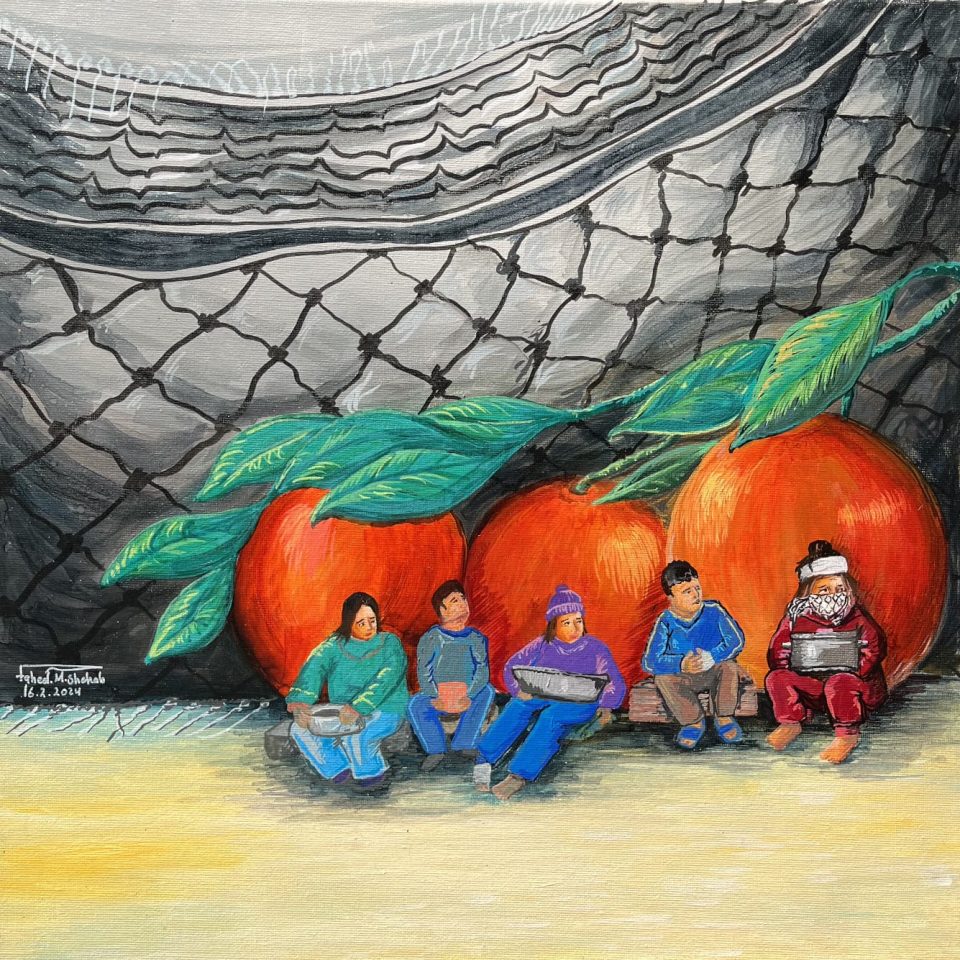
Painting Courtesy of Our Featured Artist Fahed Mohammed Shehab