What the Road Promised
Leave.
Listen to what the road says,
it screeches the name of my people,
a throat of stone,
all gravelled with lymph and blood —
Tomorrow is a lump of congealed history, it says.
Leave.
And we packed home in a single suitcase,
stuffed it in our pockets,
decanted it in Mason jars.
Our mothers bulged with the past,
fat with yesterdays that now pass for flesh.
We had frayed photos for fathers,
portable shadows,
splinters we hammered into bones.
Bet God is somewhere up there tying up our sagging prayers,
His hands all gooey with the sludge of our faith.
Bet the Heavens buckle under the strain of wails,
grow soggy with sweat and tears,
a different kind of rain.
You should’ve seen the sky on those days,
greasy with our fingerprints,
the clouds all covered in skid-marks.
The map is our prayer mat now.
We bend and break, bend and break, and for what?
A sliver of geography. A crumb of home.
Not wholeness. Not safety. Not a sky oozing with future,
but a new wreckage we can claim as our own.
Leave. Leave. Leave.
And of a sudden, home has the smell of fresh sweat.
My skin peels away roads,
sloughs off silt,
borders forming like scabs.
This loss is mine.
This loss imitates feet, stomps everything flat.
And then, the road stretches like a relaxed muscle.
And death starts to look so much like land.
Bless our Mothers’ Feet
The idea was to point my fractured home toward God,
prop it on the edge of the prayer rug,
beg the angels to hold the sky still
while I unclogged my throat.
But, you see, there’s mud in my mouth.
There’s mud in everything.
And the angels droop from my ceiling like stale sheets,
stinking of blood and puke.
They come from my country.
I can tell by how many teeth they have.
We must chew steel.
We must bite into borders, spit entire maps.
Blood means nothing until you start calling it something else:
“Home.”
“Family.”
“The reason we never make it anywhere whole.”
Every house has at least a god like this,
lumbering with history,
a sky smeared with bowels,
headstones instead of pews.
Only our mamas know how to pray,
more religion on their callused backs than in any temple.
It is clearly how we’re meant to worship,
always mistaking skin for God,
hair for gospel music.
No matter which way our mamas point,
it’s always a prayer.
It’s always a choreography of rot and blood,
just another method to recycle home.
“Just a beautiful shattering,” Mama would tell me,
“Wholeness is out of the question.”
And so, we never aimed for it.
We just pretended to be too preoccupied with breaking,
too drunk with splinters,
made it our hobby to collect wounds.
And amid the ruins, we never needed more than rhythm,
the soundtrack of our soles.
Only our mamas know how to pray,
how to sniff the air for a bit of God.
It’s because of this:
While they clutched the tendrils of Heaven,
they never washed their feet of home.
And while they recited their prayers,
their teeth balanced entire cities.
Apparently, nothing much happens beyond the body.
Nothing much happens beyond the waltz of blood,
the lyrics of skin.
A hallelujah you can touch.
My feet begin to itch.
The angels grin through the plaster.
I start all over.
The Hunger No One Talks about
I am somebody’s idea of home,
what home would’ve looked like
without all the unnecessary running.
I am somebody’s Gaza,
Jerusalem,
my tongue a crinkled map,
sputtering cities and skylines,
a whole slice of Palestine in my mouth,
a slime of history on each syllable.
Eventually, that’s what the men come for.
Everything they know about homeland
they’ve learnt through skin.
The body is all the hope there is in the room.
It is the only thing with roots,
the only kind of destruction they can trust.
We often tend to forget:
Hunger is just another word for pain.
Maybe one of these days, I’ll know what to do
with the dead people on my skin.
I’ll know how to love
without their graves getting in the way.
Or else, I’ll keep plying bones into borders,
flesh into a makeshift sky.
For now, I let home decide
which parts of my body to trade:
Hair for flag,
Sigh for anthem,
brown for death.
And a voice suddenly goes: “Careful,
you’re showing the man too much land,
too much home.
The worst piece of clothing a girl can wear
is her own history."
The only reason I believe it is because I’m too scared
of having no broken parts left,
of ending up
a body.
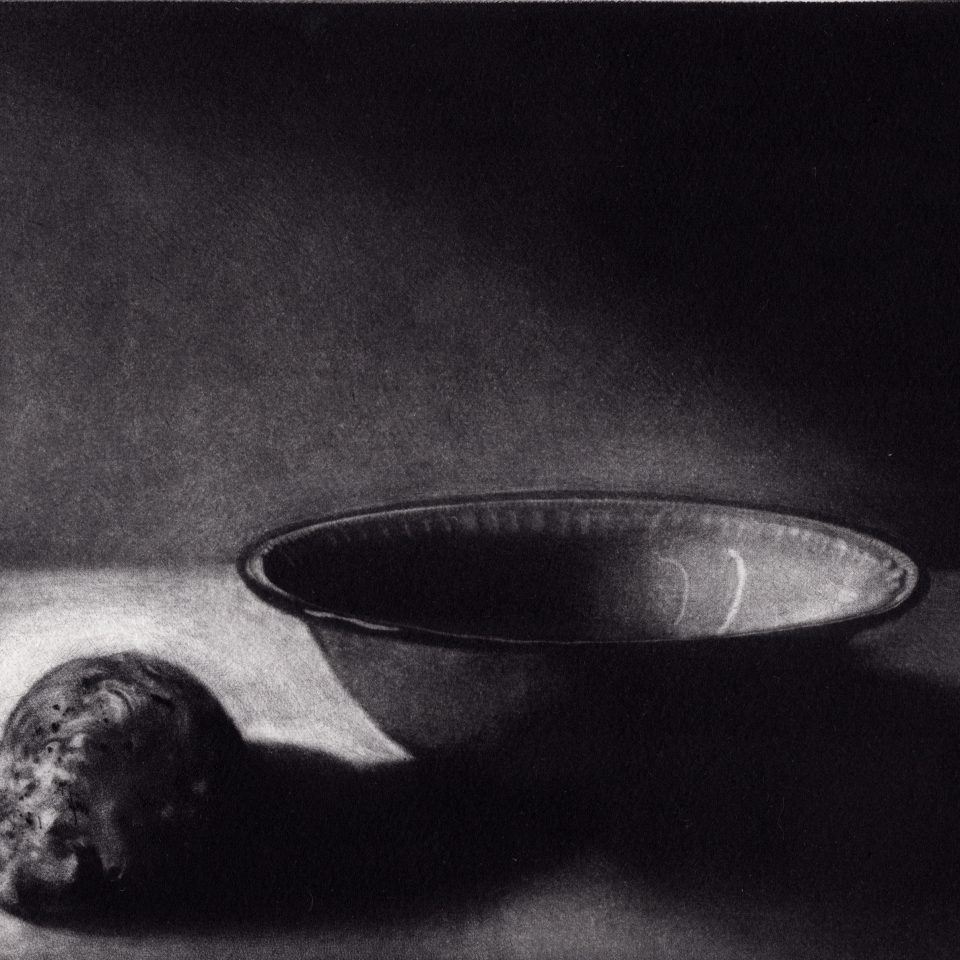
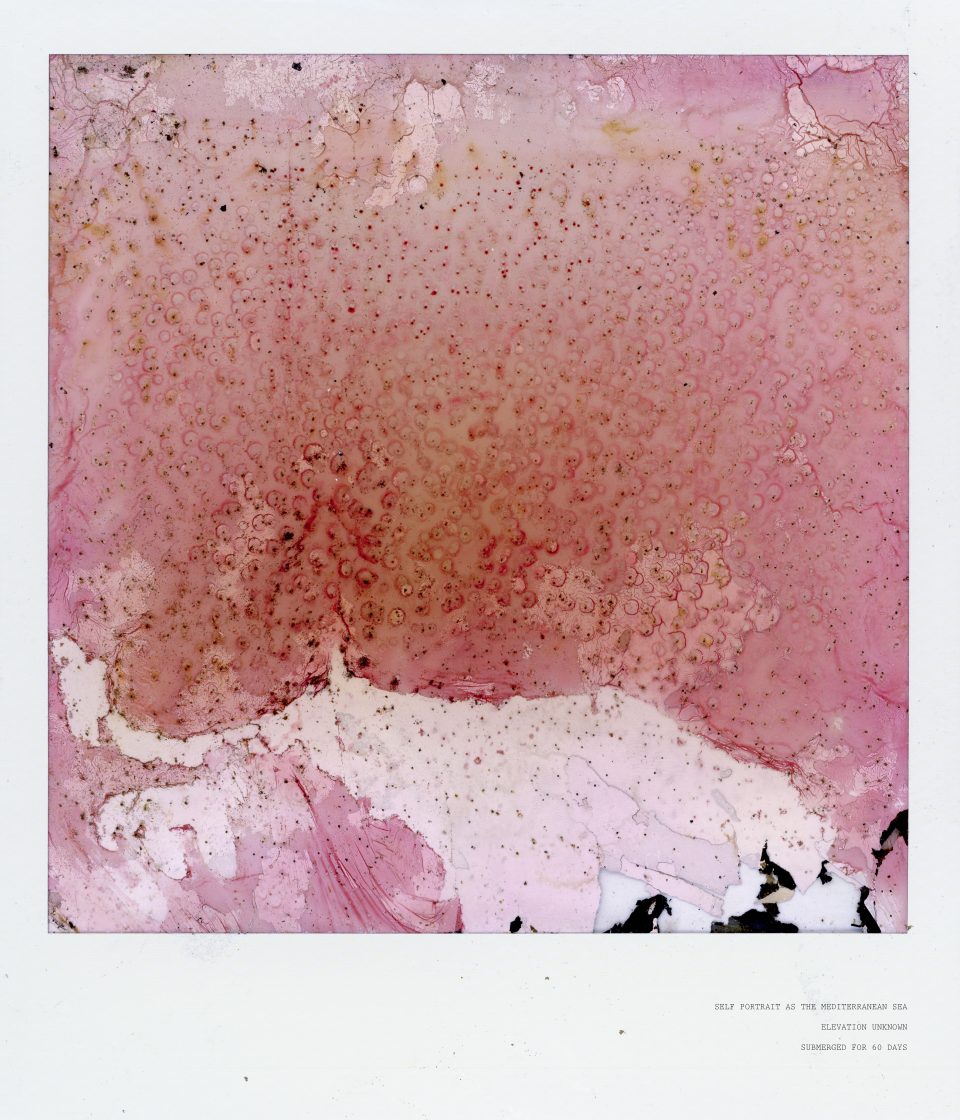
Artwork Courtesy of our featured Artist Hassan Zahreddine