

Beirut often feels like a ghost town. Streets that used to be lined with party-goers and late-diners are now filled with flickering traffic lights and wandering kittens, meowing for attention. This feels even truer when a storm breaks and power cuts across the city. Momentary glimpses of light rumbling through empty building facades. More electricity in the sky, than in the semi-dormant city below. Motorways empty, bar the solitary sleepless taxi driver gliding through traffic lanes, listening to Fairuz.
We laugh at how empty and dystopian it all feels—how a city still clinging to a past before wars and financial crashes, once romanticised as the Paris of the Middle East, now struggles to move into the future. It lives in a perpetual state of limbo. But it is November: the euphoria of the summer has faded, and the winter diaspora has yet to return. It hasn’t rained in months, and the calm, elated messages I receive from people tell me the storm is warmly welcomed. A collective sigh of relief in a city that always holds its breath. Alhamdulillah, they say for the drying crops. Finally, life can grow again.
I’ve stayed in Beirut several times since 2019, working as a multimedia journalist, documenting eruptions of life before the revolution, and the broken aftermath that followed the port blast and prolonged financial crash. I grew up between London and the south of France—summers shaped by slow mornings, long meals, and swimming in the Mediterranean, so Lebanon felt eerily familiar. But I’m also of mixed Italian, Vietnamese, and Swedish heritage, and I’m often mistaken for Lebanese. Foreign journalists warned me when I first arrived that locals get upset if you live here and don’t speak Arabic, yet if you do, you’ll be suspected of being a spy, so there’s no winning or beating the allegations.
Inside buildings, I watch the thunder rupture the sky in purple constellations every ten seconds. The fleeting lights recall something else, something darker: airstrikes that sink into your soul and stir your stomach. But unlike most people in this city, I have not experienced living through war, carpet bombings, or port explosions. I can only imagine what it’s like, from stories I’ve read or that friends have told me. Though I was already used to arak as we have pastis; used to watching sunsets by the sea, and bougainvillea spilling colour on the streets, I was not used to long power cuts, nor Israeli surveillance drones buzzing loudly overhead.
I wonder what it must feel like to watch the sky breathe fire from a balcony. I think of neighbours being bombed. Tetas brushing their hair as their antique mirrors shatter across the dressing table. Teenagers scrambling for their dusty diaries under the rubble. While all you can do is watch Al Jazeera on TV, anxiously waiting for WhatsApp voicenotes to be sure your friends and family are safe.
I think about how deep the bonds created by shared trauma go, how attached you become to the lover holding you tight on the living room couch, telling you this will pass as you feel the floor grumble together, or the friend you smoke a cigarette with on the kitchen counter, sharing a silence louder than bombs. You text that person from another neighbourhood you barely know deep into the night, sharing live news updates and slurs against oppressors, that tend to start with fuck or kess emmo and end with Israel. You become close to the whole building, neighbourhood, city.
But even in the same city, and certainly the same country, some are more immune to violence than others. “Save-yourselves-first” slogans come before cries of solidarity. “Think of others,” I remember Mahmoud Darwish says. But I also recall how George Orwell wrote that “all animals are equal, but some animals are more equal than others.” I think of those who won’t ever experience a fraction of the horrors others endure in their day-to-day, and how times of crises tend to bring out more inequalities, egos, and prejudices. The more diverse a society, the more this applies, as Christian landlords reject renting rooms to displaced Alis or Mohammeds, in fear their buildings will become targets for Israeli attacks.
But still, even drivers of convertible cars in Lebanon live closer to war and the possibility of becoming refugees than some of the poorest communities in Europe. Even within a single place there are countless ways of experiencing reality. After all, why begrudge a Lebanese pushed abroad, who posts romantic pictures of the Corniche al Manara on Instagram, captioned: “I miss you. I’m sorry.” A heartbreak of leaving one’s homeland that scatters across continents. A never-ending struggle against giving in to nostalgia.
My friend tells me how the windows of her family flat were blown apart in the August 4 explosion, shards scattering across the apartment. A big boom that still reverberates in so many bodies. “And they weren’t even close to the port,” she says. Another friend goes: “We don’t speak about that day.” But everyone remembers where they were and what they were doing. There was a before and an after August 4, 2020, in Beirut. Now we live in the post-memory years, where trauma is dormant, but never absent. A city in perpetual recovery.
I remember driving around in a taxi with a journalist friend on another gloomy night. We passed a neighbourhood where only one building was lit, glowing like a lonely lantern. I asked him why that building alone had electricity, and whether these things can be controlled, or if they’re just random. He said that building always had power because a government minister lived there. And that encapsulated the Lebanon of today.
But the louder the thunder, the deeper the wounds, the sweeter it feels to smoke, drink, and dance the night away. To talk until sunrise about cinema, poetry, or festivals in faraway countries. To imagine a better world. “We now love much deeper than we used to. And we express it much more often too,” a friend tells me about what’s changed in recent years. And the warmer it feels to walk the length of the Corniche, that familiar coastal boulevard that feels almost connected to the ones in Marseille and Alexandria. The Mediterranean Sea fuses these spaces, as your senses sit with the passing waves, the boats of fishermen, and the starlings in the sky—flying in unison beyond the last borders. In these fleeting moments, all your worries seem to disappear, and you feel yourself become one with the birds. You close your eyes, and lose yourself to the perfumes of petrichor hitting the drying pavement. Sun streams through clouds on a quiet morning. It follows a storm that felt like a purge on a searching city.
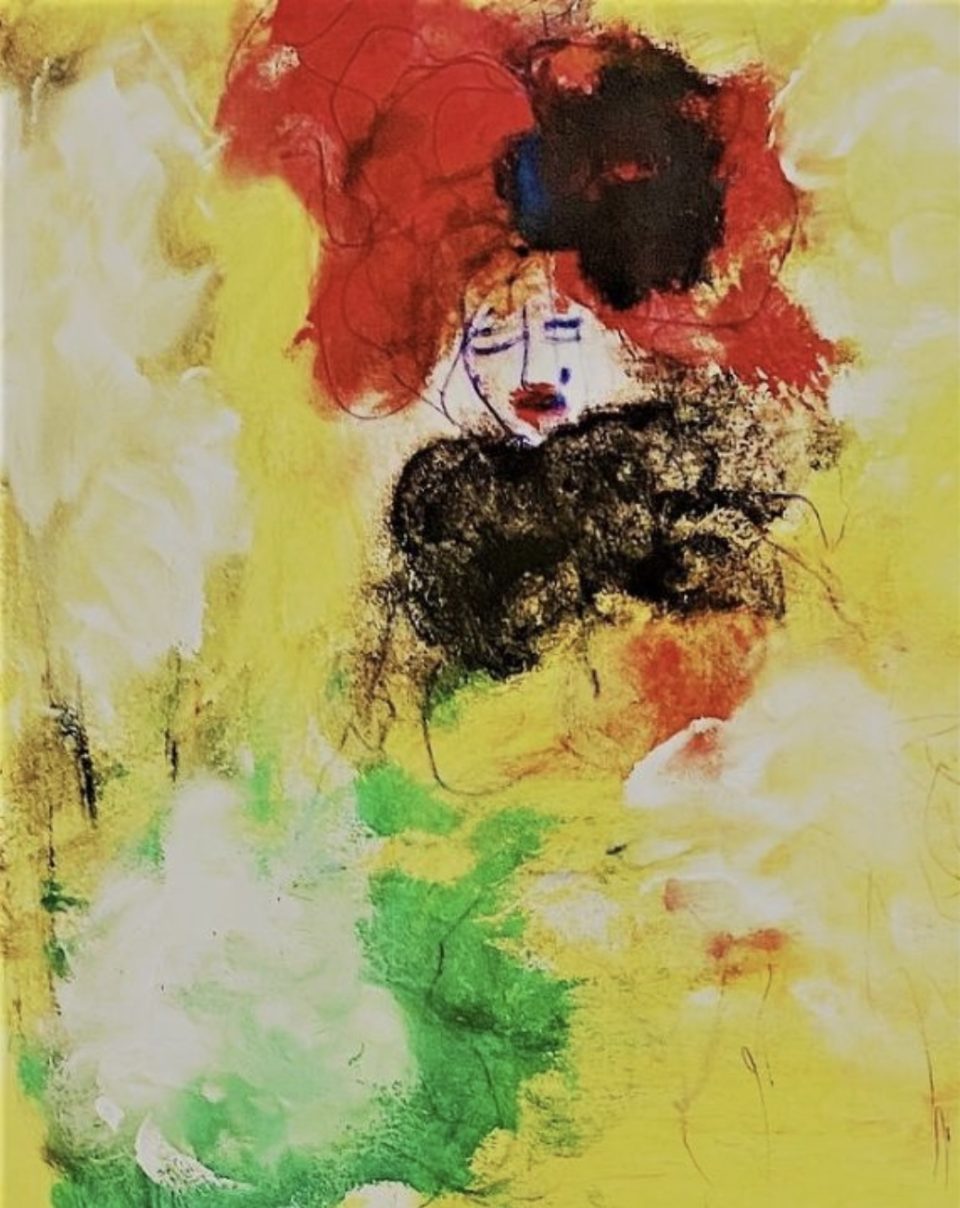
Artwork courtesy of our featured artist Ernest Williamson III, PhD