



Essay One: Where the Story Begins
Academic research has always held a special place in my heart. It isn’t merely a requirement, a box to check or a stage I’m obliged to complete—it’s a choice born out of a genuine desire for knowledge—a passion for asking questions, proving a thesis, and conducting thorough research to uncover what others may have missed or overlooked, or maybe even a completely new approach, a different way of seeing things.
I have always believed that behind every so-called truth lies a deeper story, and that every historical account hides untold narratives between the lines waiting to be discovered. Motivated by my interest in the humanities—and more particularly in women’s stories and struggles—I decided to focus on these themes for my master’s research. As a journalist, I wove together my vocation with my convictions—and that is how I discovered a constellation of women journalists whose impactful roles weren’t just as reporters—they bent history’s arc.
After extensive research into each of these women, I was drawn to Dr. Doria Shafik—not because the others were any less committed or influential, but because I found her story had been deliberately erased. Hers was a legacy that deserved to be brought back to light and shared with the world.
In the silence surrounding her, it felt only natural that Doria Shafik would spark my curiosity. Everything about her was incomplete, uncertain, and whispered in hushed hallways. More closed doors and lingering questions, than clear facts and answers. Choosing her as the subject of my master’s thesis wasn’t a casual decision, but rather an attempt to understand, to uncover, and perhaps reintroduce a name that deserved to be revisited, with clarity and justice.
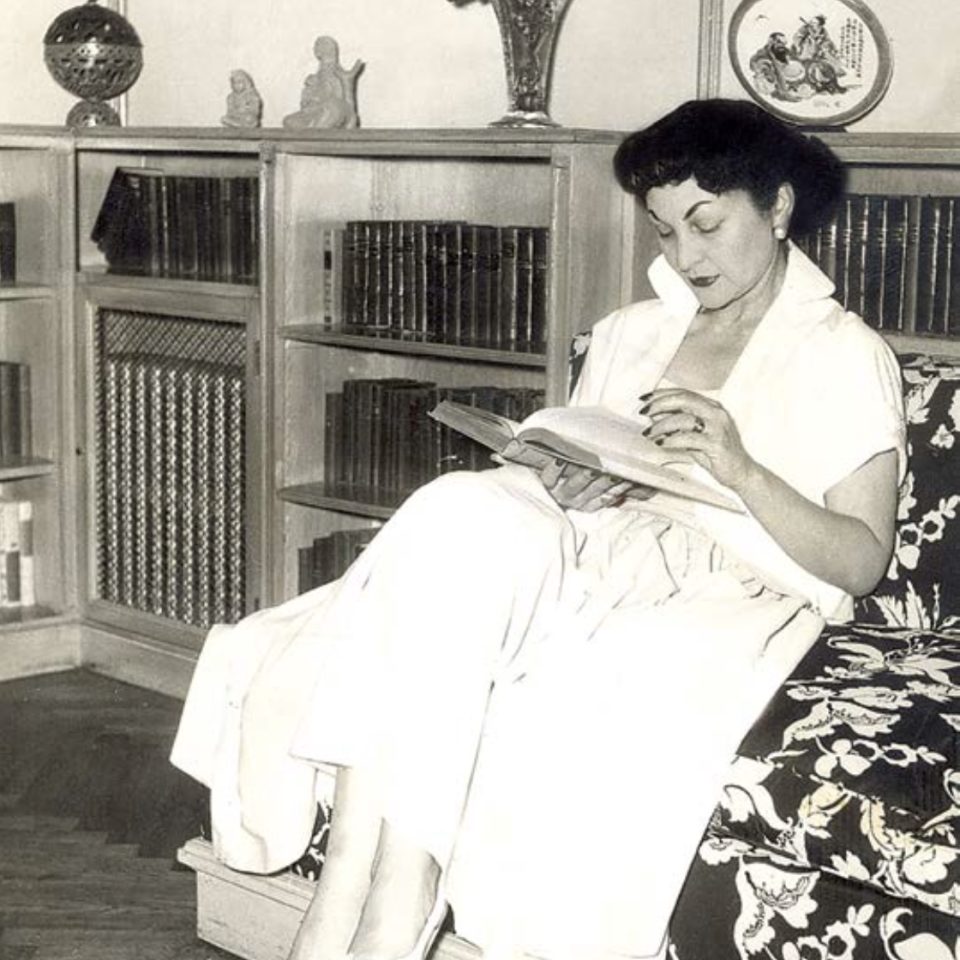
Doria Ahmed Shafik held a PhD in Philosophy from the Sorbonne University in France. She was a trailblazer in every sense—not just a journalist, intellectual, and political activist—but one of the first Egyptian women to claim a place at the center of public life, rather than remain on its margins. A pioneering feminist in both Egypt and the Arab world, she founded Bint al-Nil—Daughter of the Nile. What began as a women’s magazine evolved into a union, and after the 23rd of July 1952 Revolution, took its final shape as a political party. She trained all-women military units that joined the Suez Canal liberation movement. She led protests that stormed the Egyptian Parliament in 1951, demanding women’s constitutional right to vote. She even carried out a blockade of the British-owned Barclays Bank, an imperialist arm of power and economic domination. She staged sit-ins, hunger strikes, acts of civil disobedience again and again—relentless in her beliefs about what was right—by travelling the world to advocate for her cause and her vision. Her voice carried across borders, unquiet, and fierce.
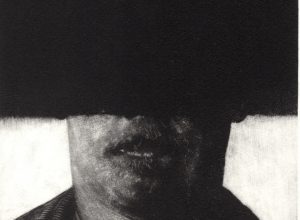
She was there—then suddenly, she was gone.
A woman who moved through the public sphere with a bold voice—only for her voice to be pulled from the air—silenced, as if it had never existed at all.
No definitive life portrait remains, no complete narrative—just scattered fragments and a faint trace left in the corners of our collective memory.
She gave generously, sacrificed deeply, and stood by her beliefs until the very end. In my series of essays—which this is the first—I never claim she was right or wrong. I simply tell the story that was buried for far too long—decades.
I’m excited to share what I uncovered through my research journey, which I chose with full intention, driven by a passion that time couldn’t dim, and a curiosity that refuses to fade.