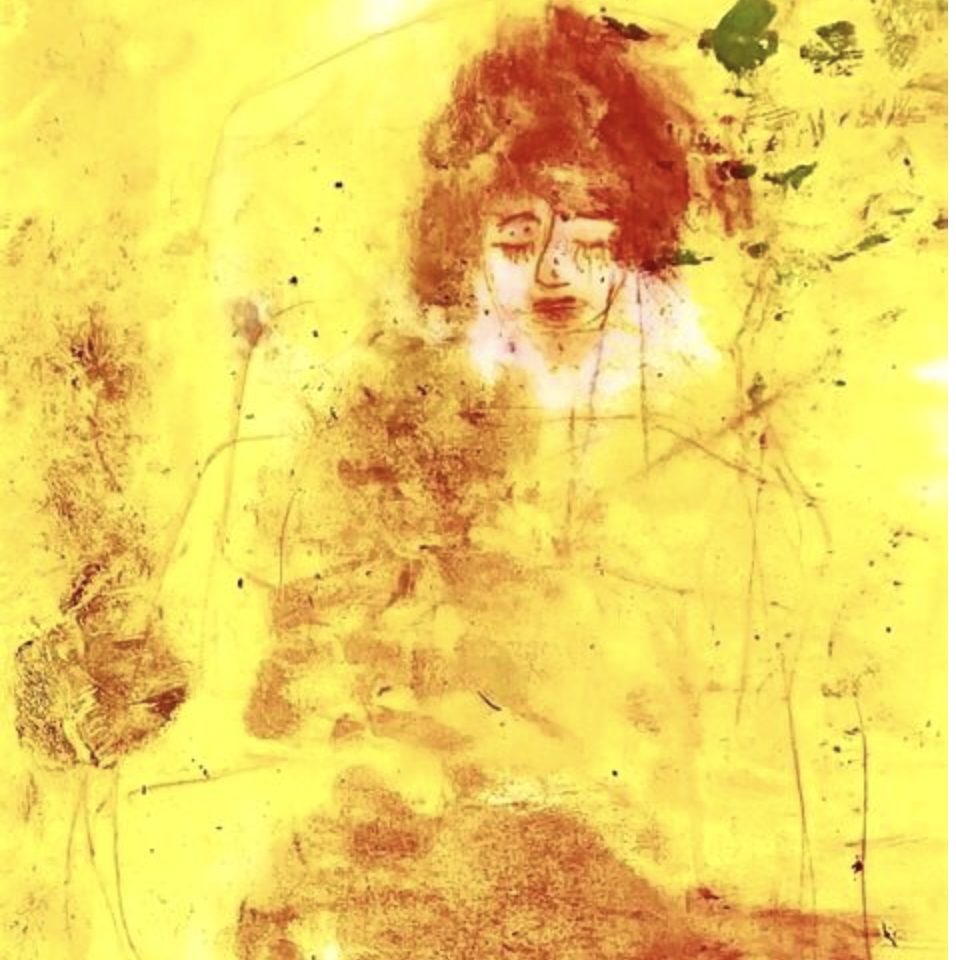





Lobna lived as if apologizing to the world for her presence in it.
In her movements, her stillness, and her interactions with others, she seemed like a letter of apology disguised in human form. When walking, she apologized to the road for every step she took. When sitting at home, she apologized to it for taking up space. And when she opened her eyes in the morning, she asked forgiveness from sleep for abandoning it, and from the new day for being a little late to catch up with it at sunrise.
She grew up with a deep feeling that she was imposing on others merely by being alive, and that she must make it up to them. Except that a profound hesitation had always shackled her and prevented her from settling on the best way to do so. It was a hesitation that, if you ever saw her heading toward you, would leave you not knowing whether she truly meant to approach or was thinking of fleeing in the opposite direction at the first opportunity.
Despite having the grades to study engineering at a university outside Cairo, she enrolled in the Faculty of Education, History Department, at Cairo University—because her mother did not want her little girl far from home. And she herself did not object, since she had never imagined, even in her wildest dreams, becoming a field engineer or designing a building that might actually be built. The thought that she had similarly never imagined herself as a history teacher recounting ancient events and their lessons is superfluous here, for Lobna never thought beyond staying by her mother’s side.
Her mind, accustomed to solving mathematical equations and understanding the laws of physics, barely retained any historical events; it kept confusing the ruling families of ancient Egypt with the Ptolemaic kings and made little distinction between Napoleon’s siege of Acre and the Crusades. But she was relieved, because her mother had spared her the burden of making such a fateful decision, and she did not care much about the justifications her mother offered to convince her, such as how graduates from the Faculty of Education were automatically employed upon graduation, and how teaching was a more suitable vocation for girls. So, when the automatic employment benefit was revoked just one year before her graduation, she did not grieve as one might expect, but consoled her mother that her fortune would come in due time.
Deep down, she felt a cautious happiness, because her entry into the job market would be delayed without her having to seek it. Yet she felt a profound sense of guilt when she sensed her mother’s sadness and disappointment.
The mother passed away, and the house was left empty for Lobna—as each of her married sisters was occupied with her own home and children—so she lived on her memories. Whenever loneliness overwhelmed her, she would recall the familiar hubbub that habitually filled the place during holidays and special occasions. She even recalled her mother’s scolding when she made a mistake, which she had often done.
As for the father, his presence in her memory was usually accompanied by silence, as if speech had been alien to him. She did not recall his voice, nor any specific expressions he used. She always recalled him still, gazing intently at the chessboard laid before him until he decided on his next move. When she longed for him, she placed the chess pieces in front of her and contemplated them absently, trying to remember moves her father had tirelessly tried to teach her, in vain, one summer vacation after another. She gazed at the king and the queen and the bishop for some time, as if each piece would tell her, if she looked at it long enough, how it moved on the board. It occurred to her that she could play against herself to pass the time that stretched endlessly before her, but the wasteland of oblivion lay in wait for her.
Because of the many years separating her from her older sisters, she lived as if she were an only child and had learned from an early age to entertain herself. But something was now keeping her from being her old self.
This issue stressed her out, so she bit her nails, rubbed her face with her palms, then tried, fruitlessly, to occupy herself with something else. She pushed the chessboard aside and counted down the days remaining until she received her father’s pension. As much as this monthly appointment weighed heavily on her, she returned from it refreshed, having bought groceries and treated herself to sugarcane juice and pistachio ice cream, a monthly ritual that delighted her for a fleeting time, before it quickly turned into a state of guilt, because her mother, who had passed away five years ago, was not sharing the moment with her.
In an attempt to overcome the pangs of guilt inside her head, Lobna vowed secretly to visit the family’s burial grounds soon and distribute “Mercy and Light” loaves of bread in her parents’ memory.
In an episode of boredom, she opened YouTube, and from among the fragments of the many songs buzzing in her head, none of which she could recollect in full, she chose to listen to Umm Kulthum’s “Al-Hob Kollo.” After the song finished, a motivational video about how to attract happiness and success appeared on her screen, featuring a blond woman speaking in a soft whisper, a wide, inextinguishable smile plastered on her lips, as if someone were pointing a gun at her from off-screen, threatening to kill her if she did not remain perpetually cheerful.
Lobna recalled a movie she had watched on one of the TV channels some time ago, about female robots programmed for constant obedience and cheerfulness, and it occurred to her that this blond woman must be a robot of an advanced type, since it was impossible for a human being to remain laughing, displaying ceramic teeth of dazzling whiteness, around the clock.
Lobna paid attention to the words of the happy robot, and she found that it was talking about the necessity of thinking positively and being mindful of our thoughts and our words, since “one’s fate is tied to what they say.” She liked the talk, despite her reservations about its source. It appealed to her that a person could shape their world through what they thought and what they said. And she told herself: “Why not? I’ll give it a try; perhaps it will work.”
The next day, she welcomed the morning in her usual way, staggering between her desire to apologize to the sleep she had just woken from and the day whose secrets were hidden from her. But her staggering was now joined by an unexpected visitor: a fragile smile that vanished as quickly as it appeared. She had decided to summon happiness and success into her life, and she was not going to allow a pessimistic thought or a negative word to prevent her from achieving her goal.
She summoned all the things and ideas that brought her joy. She drew the white curtains to control the light pouring in from outside, put on some relaxing music, and stretched out on the living room sofa, seeking to unwind. In the first few minutes, it all felt easy, and she had no doubts about her success. But after fifteen minutes, some menacing concerns began to invade her mind in the form of questions: What would she do if her household funds ran out before she collected the next monthly pension? What if the plumbing broke, or one of the electrical appliances failed? How would she tell her sisters that she no longer wanted to have their children over when they were busy, as she could no longer tolerate their mischief and noise? She remembered that prices were soaring, whereas the pension remained as it was, and that if she did not find an additional source of income, she would soon be unable to afford her basic needs.
This issue bothered her for a few moments before she succeeded in banishing the negative thoughts. She took a deep breath and remembered what the cheerful-for-no-apparent-reason woman had whispered about the necessity of being thankful and holding onto positivity. She was about to succeed in her endeavor, if not for a monotonous knock on her front door. First, she ignored it, but when it persisted unabated, she was compelled to answer it. And as she had expected, the wrinkled face of her elderly neighbor appeared before her, asking for a children’s Aspocid tablet.
Lobna examined her, waiting for the usual look of dissatisfaction to appear on her face, even though it was the woman who always sought her out, asking for a tablet of aspirin, ibuprofen, or any other painkiller. The wait was not long, and the neighbor glared at her with resentment. She ignored the spiteful look and informed the woman that she had no medicine at the moment. The woman did not give in and asked instead for two cloves of garlic, so the young lady had to bring her a whole bulb. The neighbor took it from her hand, turned around without thanking her, and merely offered a prayer for her mother’s soul in a ringing, annoying voice. Lobna understood it as a reproach directed at her and translated the woman’s prayer as such: “May Allah have mercy on you, kind mother who never denied me anything… If only you could see your daughter’s stinginess and malice!”
Guilt gnawed at Lobna’s heart, and she considered calling her neighbor and telling her she would head to the nearby pharmacy to buy the needed medicine, but an inner whisper restrained her. She bit her tongue and remained standing until the neighbor, who was always in a foul mood, closed her apartment door.
Lobna went back inside, every notion of gratitude and positive thinking having vanished from her mind, and overcome by the thought that such things were perhaps not meant for her, but for people like the YouTube woman, with her ceramic teeth of dazzling whiteness and her oily smile. A woman who surely did not have a constantly grumpy neighbor, and whose quiet day was surely not disrupted by the voices of street vendors from the forever-busy street.
Immediately, she began counting the things ruining her life: her loneliness; her futile search for a way to increase her income, since the rising cost of living was devouring her father’s pension faster than before; the constant noise in her neighborhood, which had been peaceful in the past; her married sisters chasing her with all sorts of tasks, without ever thinking of visiting her, except when they needed to leave their children in her care.
She almost succumbed to gloom when the joyful face of the robot slipped back into her mind. Instead of resenting the insincere joy and the dazzlingly white teeth, she was suddenly struck by the feeling that she owed life a debt that could never be repaid. And that, despite this impossibility, she must seek to repay it, since she was not one of those spongers who would evade paying what they owed. On the contrary, since childhood, she had fulfilled her duties to the best of her abilities and only inquired about her rights when she found no other way.
And her feelings of constantly falling short did not negate these truths. She found solace in this position also in the belief that it could not have been any other way, that she was trying her best, but perfection belonged to God alone. She considered documenting her good deeds and personal qualities as a defense mechanism against discouragement, but was kept from doing so by her feeling that this would be an act of boasting, neither suitable nor becoming of her. This inspired a contrasting idea—one that she perceived as a restraint upon herself and a reminder to keep any hint of arrogance in check.
She contemplated the walls of the house, then brought out the family photo albums. She chose a photo of herself crying at her tenth birthday, her face and her rosy dress stained with chocolate cake, and hung it opposite her favorite sofa in the living room. This was no fleeting memory; it had been etched in her mind by a sharp slap from her mother, punishment for ruining the cake and soiling her dress. After that, she had stopped eating chocolate altogether and rarely ate cake of any kind. When she wanted to celebrate, she bought a basbousa with cream from Mandarine Koueider, ate a morsel as soon as she returned home, and then forgot about the rest for days in the refrigerator.
In addition to the birthday photo, she hung others, all of them preserving moments of sadness or failure. And she wondered, as she did it, about her mother’s mysterious passion for documenting such moments. She thought hard to recall similar incidents from her past, and what she could not find documented by the camera, she immortalized in random sketches and phrases written in thick markers on cardboard.
When she finished, she stepped back and stood, out of breath, contemplating the photos, sketches, and cryptic words hanging on the wall. She was pleased that they told a story only she could decipher. And even if someone were to find a thread connecting them, their deeper meaning would remain elusive. This delighted her, though she did not understand how the memory of these failures could stir such anxious joy within her, nor how this museum of mistakes was reviving her in a way she had never known before. But it reassured her that she had finally found a way to make her inner world visible.