



Wagner, Howard Shore, and the Long Road Home
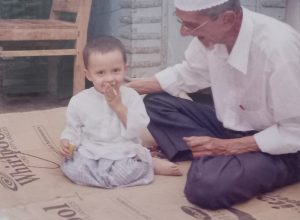
When I was a little boy, sitting alone in the dim quiet of my grandfather’s house, my world was small: four walls, a window, and the slow drift of afternoon shadows. But when I turned on Beethoven, Mozart, or Wagner, something impossible happened. The room stopped being the limit. The notes lifted me up; they carried me beyond the furniture, beyond the street outside, beyond geography itself. Long before music became my work, it became my first escape route, my first proof that “home” can be larger than a place. Music has always been a conceptual and emotional journey for me, and even a physical one that took me from Damascus to Beirut, and then to the United States, and eventually to a harder question: what “home” actually means.
In Damascus, when the uprising began in 2011, the regime answered with fear, arrests, and violence—and a government could decide the shape of your life overnight. I was detained for criticizing the regime. For two weeks, I sat in a cell where time didn’t move—a terrifying silence and uncertainty. I was one of the lucky ones; I walked out. Friends of mine, with bright minds and kind hearts, are still there, or gone entirely—as the country slides deeper into a new era of darkness.
When I was released, I didn’t just want to leave; I had to. I packed my life into a single bag of music sheets and recordings and crossed the border to Lebanon. In Lebanon, from the most ordinary place, I began looking for musicians in streets and cafés, chasing conversations, chasing sounds, trying to build a small dream out of whatever was still possible. Slowly, I formed a fusion jazz band. We played. We moved from corners and small rehearsal rooms into theatres and festivals. Beirut gave me stage lights, friendships, and that particular kind of creative pulse a city can teach you. It gave me my second home. And my first musical birth.
But the situation around Syrian refugees kept tightening, with the pressure growing and the future shrinking again, so I had to leave for the United States. And so I lost my second home again.
The United States wasn’t just a new geography; it was a completely different rhythm. I landed in New Jersey and enrolled at William Paterson University to study jazz—a genre I had loved since childhood. Jazz is the art of displacement. When the chart changes, you don’t stop playing; you improvise. I tried to apply that logic to my life, whether I was playing piano, scoring for the Moscow Metropolitan Orchestra, or working on independent films.
But this expansion created a new kind of distance. In Syria, I had written songs that directly criticized the regime—work dangerous enough to require anonymity. But in America, my work shifted. I made a film about the existential crisis of a clay puppet on a shelf, who asks whether it possesses consciousness. To many back home, this felt like a betrayal. Why worry about the inner life of a puppet when the country is burning?
From that perspective, ‘relevance’ meant remaining a prisoner of the event; art was only valuable if it mirrored the war. But I realized that if I only wrote about the conflict, the conflict still owned my imagination. I began to venture further, moving into complex, dissonant orchestral textures. But this evolution came with a cost. The more I explored these new forms, the more I lost my old circle. I simply wanted to reach a place where the human condition could be explored freely.
Years later, reading Edward Said’s famous essay on exile, I found a line by the 12th-century monk Hugo of St. Victor articulated exactly what I was feeling but hadn’t yet named: “The man who finds his homeland sweet is still a tender beginner; he to whom every soil is as his native one is already strong; but he is perfect to whom the entire world is as a foreign land.”
This foreignness was a choice. The easiest path for an immigrant artist is to sell their exoticism—to perform the role of the ‘troubled Middle Easterner’ for a Western audience. It is a commercially viable costume, a way to turn trauma into a product. I refused to wear it. I didn’t want to succeed by becoming an oddity. More than anything, I just wanted to learn.
But looking back, I see these departures not just as losses, but as movements of a symphony. If Damascus was the static opening, the US became the development section—complex, dissonant, demanding resolution.
***
The Artist’s Real Weather
In 1840, a young Richard Wagner wrote a short fictional novella, “A Pilgrimage to Beethoven,” imagining himself as a teenage boy walking on foot from Leipzig to Vienna just to meet his idol. It isn’t a biographical document; it is a confession disguised as legend. The boy walks through freezing rain and hunger, driven by a stubborn inner rhythm that refuses to turn back. The real subject isn’t travel; it is devotion.
In the story, the boy doesn’t come away with a career tip. He comes away scorched by the proximity to a voice that doesn’t flatter the world. As he says: “I know Beethoven, and that’s enough for my lifetime.” That isn’t fandom. It’s a life being rearranged.
There is a myth that classical music belongs to the elite—that it lives in an ivory tower, detached from the grit of real life. But the truth is, the composers who built this tradition often created from the mud. Mozart died buried in debt; Beethoven fought poverty and deafness; Wagner spent years on the run from creditors—and before he became Wagner, he wrote more commercial work to survive. The music can be intricate, yes—but the lives behind it were often raw, unstable, and brutally human. Art wasn’t born from comfort. It was carved out of necessity.
Wagner spent the rest of his career trying to build worlds where music doesn’t merely accompany drama, but is the drama, where sound carries character, fate, obsession, love, corruption, redemption. His Ring cycle became an empire of recurring musical ideas. Those leitmotifs are woven so densely they form a second, subconscious script beneath the sung one. And behind all the mythology and grand staging was something bluntly human: struggle, stubbornness, survival, love, and risk—the artist’s real weather.
Classical music was never an ivory tower. The tower was built later, by people who misunderstood it and wanted the glow of art without the mess and struggle that made it.
***
The Ghost at the Met
I found myself on my own literal small pilgrimage a few years ago—going to New York City to attend The Flying Dutchman at the Metropolitan Opera.
I’ve always had that childish habit of imagining meetings with heroes. I once dreamed I met John Williams—played on his piano, laughed, made music together—until I woke up. I’ve met Mickey Mouse, too. And I say that without irony: the mind keeps building shrines out of whatever it loves, serious or silly, because wonder is not a rational creature.
So sitting in the velvet darkness of the Met, I half-expected Wagner’s deep haunted stare to be watching from somewhere in the architecture. In a way, it was: Wagner’s eyes were literally there—printed large as part of the production’s imagery—staring out from the world he built, watching the audience watch him.
And then the opera ended. The lights came up. The crowd began to spill into the night. And that’s when I saw someone else.
Walking ahead of me was an elegant man with flowing white hair. He moved carefully, leaning on a cane, almost as if time itself had a tempo and he refused to rush it. I saw only his profile, but my heart jumped. It looked like Howard Shore—the composer who gave a soul to the Shire and a voice to the One Ring.
But I wasn’t sure. It was crowded, and I didn’t want to embarrass myself if it was just a stranger who happened to look like a legend. I needed him to turn around. So, I took a breath and asked the most tactical question I could think of: “Are you a musician, sir?” He paused, turned around, and smiled, like he’d been asked that before. “Yes,” he said. … “You are Howard Shore,” I replied.
We spoke for several minutes as the crowd kept moving around us. We talked about The Flying Dutchman, and then shifted to his own work. I asked him his favourite Wagner opera. “Parsifal,” he said, without hesitation. He mentioned he was working on three new pieces at the time. And when the conversation drifted toward “The Lord of the Rings,” he described his process with a kind of calm pride like someone describing an engineered world.
Doug Adams’s book “The Music of The Lord of the Rings” traces over ninety themes—an enormous body of material, especially for film. Across nearly ten hours of music written over an intensive multi-year stretch, those themes don’t sit still; they shift, darken, warm, fracture, recover. Howard Shore wasn’t writing background music. He was building a second narrative that breathes beneath the first.
Before we parted, I asked if we could take a photo together. He agreed kindly. We took the picture, said goodbye, and walked off in opposite directions. I walked away realizing I hadn’t just met a famous composer, but a continuation of musical history.
***
The Soul of a Character
Why does a musical motif matter? Imagine someone you’ve known a lifetime. You see them as a playful child, then a heartbroken teenager, then a weary adult. Their voice, posture, and speed change—but somehow, you recognize them instantly. Not because nothing has changed, but because something essential persists through the change.
That is what a motif does. It is musical DNA: small enough to be remembered, strong enough to evolve. Once you feel it, it stops being technical and becomes human.
Wagner understood this with frightening clarity. A theme can appear first as heroic brass, and later return broken, slowed, rearranged on low strings. The “person” is still there—but life has happened, so the music carries the scars. It reveals the secrets the characters cannot say.
Howard Shore applied this same logic to the vast geography of Middle-earth, anchoring every culture in a specific sound. The Shire begins as warmth and simplicity—almost folk-like in its innocence. It is the theme of home. But as the journey bends the characters, the music bends with them. The same identity returns in altered colours, carrying nostalgia without comfort, tenderness with a bruise under it. The home is still home, and yet it isn’t.
This is why we cannot separate the score from the story. Shore didn’t just paint the scenery; he gave voice to the invisible. The music becomes the memory of the journey itself—the enduring soul of the character.
***
Two Notes, Many Worlds
Once, I was scoring a sci-fi TV show about an astronaut drifting near a wormhole, cut loose from the coordinates of “home.” The first thing I wrote wasn’t a grand theme. It was just two notes. I didn’t overthink them; they appeared inevitable, almost unchosen—like a birthplace: a set of coordinates you inherit rather than create.
At first, those two notes were soft, sad, and private. They sounded like displacement: a mind floating inside itself. But the story demanded a transformation. As the astronaut realized she could never return to Earth, she faced a final, forced choice: either in the void, or jump into the wormhole—betting on a new universe on the other side.
To match that long sequence of terror and courage, the two notes had to change. They refused to stay small. I forced them into a state of vast complexity—or rather, the story forced me. I expanded that single sad cell into five distinct worlds. I stretched the notes in the strings for the nostalgia of the world she was losing, drove them through the brass for the danger of the event horizon, and finally locked them into kinetic ostinatos for the heroism of the jump. Whether buried in the cellos or soaring in the horns, the identity remained, even as it crossed into the unknown. At the time, buried in the technical work, I didn’t see the obvious parallel. I didn’t realize that by scoring her story, I was trying to resolve my own.
That’s the alchemy of the motif. It isn’t about cleverness; it is about necessity. It is something you build from the materials you were handed. A motif is a seed. A seed becomes a landscape. A landscape becomes a place you can return to when your real life forces you to start again. Two notes can become a land you step into, again and again, until it starts to change what you believe is possible.
***
When All Other Lights Go Out
Distance is not just physical; it is perceptual. When you are drowning in a culture—whether it’s rigid sectarianism in parts of the East or the commodification that saturates much of the West—you can’t see it clearly. You have to step out of the frame to see the picture. My critique of the ‘homeland’ and its surrender to religious violence is not born of hatred. It is born of the clarity that only exile affords.
Walking away from the Met that night, leaving Howard Shore behind, I thought again about Wagner’s imagined pilgrimage to Beethoven—not the miles, not the mythology, but the urgency underneath it. I left Syria, then Lebanon, and I’ve watched what happens when identity hardens into inheritance, and when people turn origins and borders and dogma into cages, and when war makes a home unlivable. So I’m careful with the word home. I don’t mean the accident of birth. I was home, and it didn’t feel like home. I went to other places and, strangely, it did, even if just for fleeting moments. And now I don’t know whether I will ever go back to my birth home in Syria, and I don’t mean it metaphorically.
How do I return to a place where my own people in Suwayda—and minorities of every background—are being persecuted and killed by the thousands? A home where human rights are violated every day, and where ancient history is smashed as pagan idolatry? It is a land where even music—the very architecture of my life—is forbidden as haram, a sin to be silenced.
And then I learned that home is something you build—through curiosity, through work, through openness, through learning, and the stubborn insistence that a human being can belong to something wider than what they were handed.
When I was that little boy in my grandfather’s house, Beethoven’s four notes lifted me beyond four walls into a boundless world. That night under the Met’s golden glow, I felt the same lift—not from fame, not from wealth, not from awards, but from music’s power to carry what can’t be carried any other way.
And that’s when I learned what the little boy I was already knew: music—like life—isn’t a destination. It’s a journey of the mind and heart. And as long as we keep creating, keep listening, and keep insisting on beauty and truth even when the world knocks us off course and leaves us misunderstood or misplaced, then music—and only music—is home.
And I can hear now that little boy I was a long time ago, whispering to me: Music will bring you peace, beauty, and hope… so keep it alive, singing within, and “may it be a light for you in dark places, when all other lights go out.”
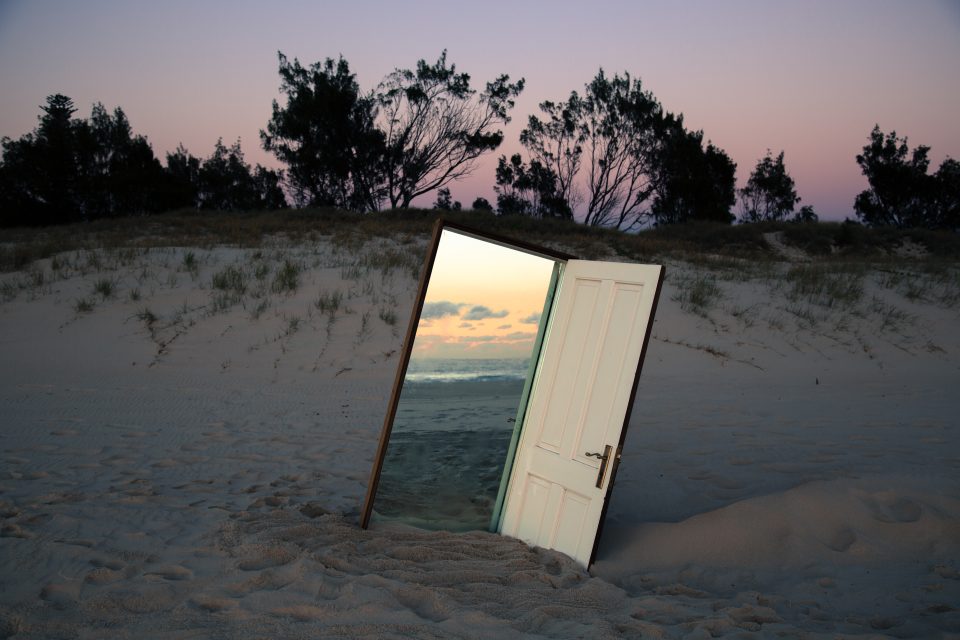
Shirin Abedinirad, Reflective Portal, 2024. Public art, Nanhai District, Foshan, China. Presented at Art Field Nanhai 2024, the work draws on the mirrored architecture of Persepolis and Rumi’s vision of inner illumination — “Go, become the Light” — using polished stainless steel to create an endless passage of reflection, where light, landscape, and self unfold in a continuous meditation on beauty, possibility, and becoming. Photography by Tian Fangfang. Artwork courtesy of featured artist Shirin Abedinirad.