

FROM THE EDITORS
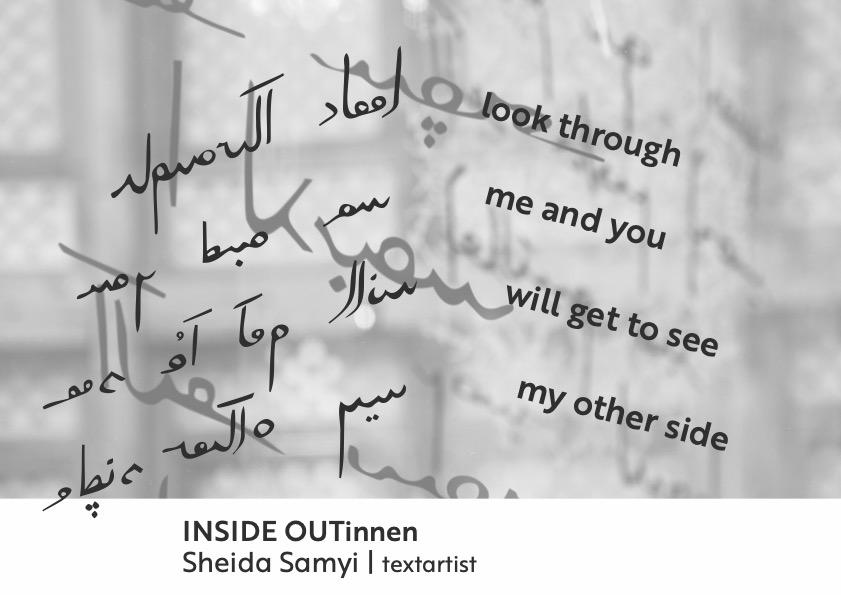
For Sheida Samyi, the act of reading begins with a change in perspective. From DUPLICATENCES, created in collaboration with the poet C. Siegl, to her book art is at its end – art never ends, designed to be read from both sides, Samyi has explored the transformations that occur when we approach words from different angles. In her series Blicklinks and Flying Carpets, reflected words take on new forms, resembling unfamiliar signs and mandala-like patterns. In INSIDE OUTinnen, a Persian-inspired script reveals its English meaning through reflection. For Mirrors, Rowayat’s fourteenth issue, we share Samyi’s reflections on diasporic identity, the dangers of visibility and the fragile idea of home.
Artist’s statement
by Sheida Samyi
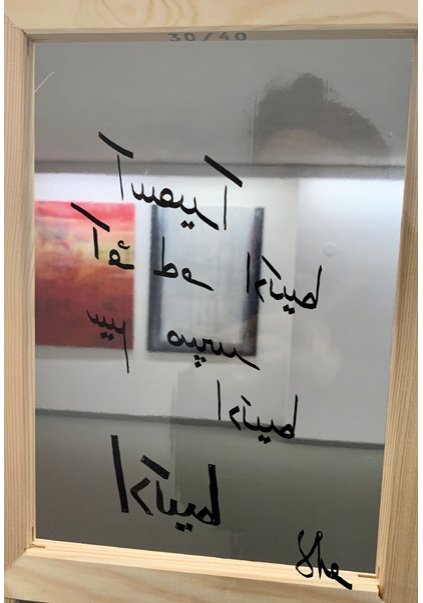
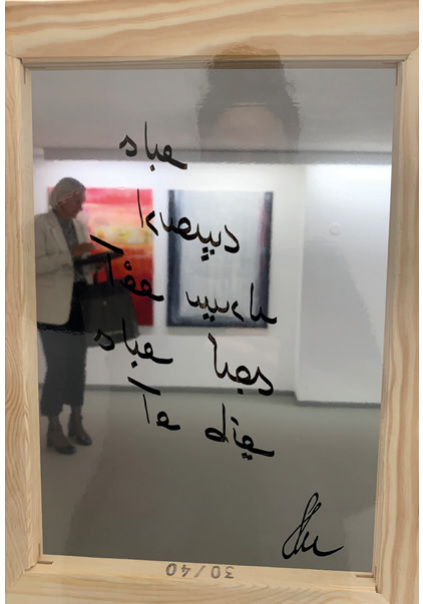
The core of my artistic practice is the exploration of text and script as a site of hybrid identity. As an Austro-Iranian artist born and raised in Austria, my work functions as a constant negotiation between two linguistic worlds and focuses on the mirror as a structural principle: most of my pieces are designed to be readable from both sides. Similar to a visual palindrome, they challenge the direction of reading and the linear progression of time and meaning.
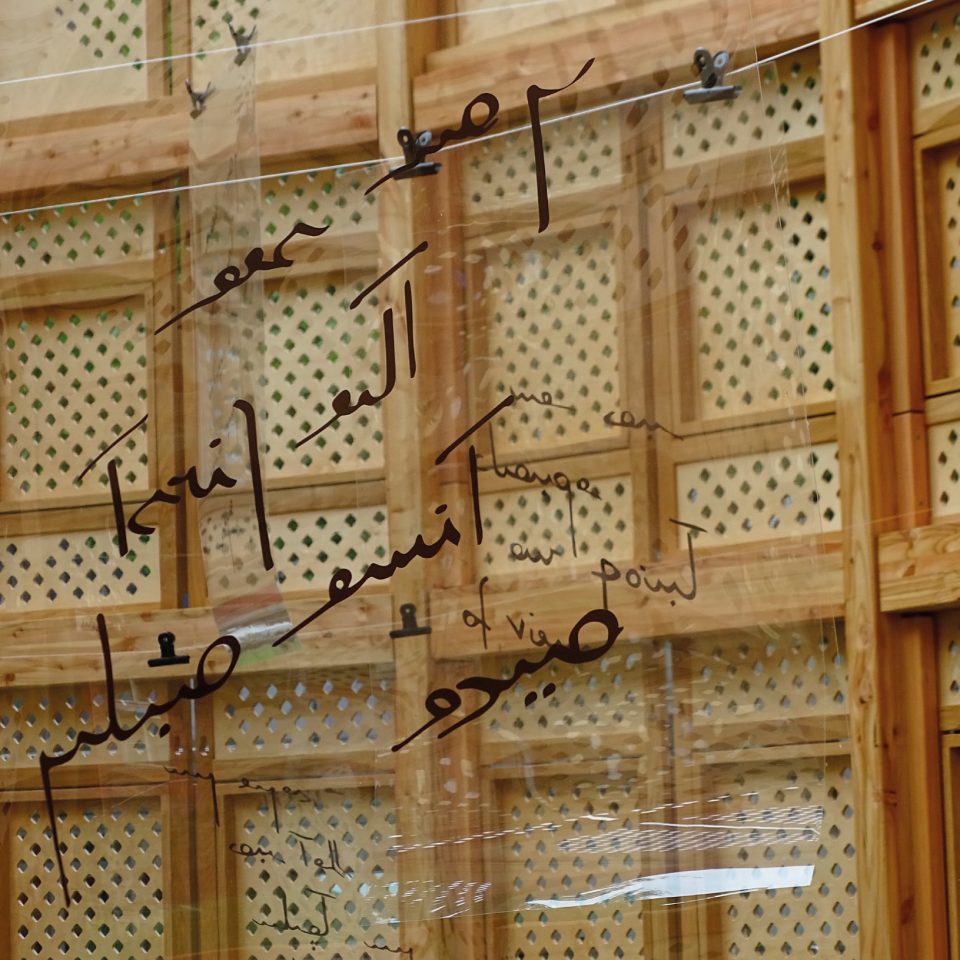
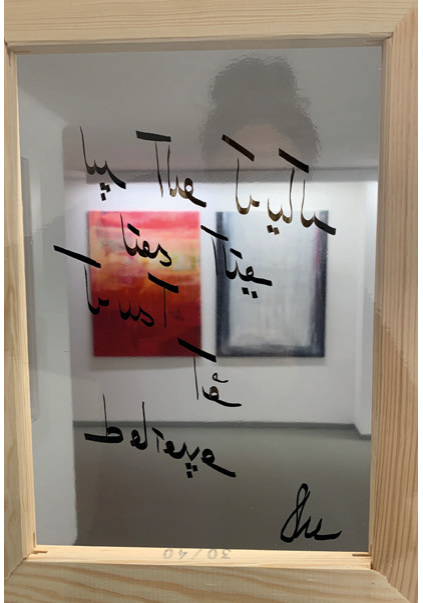
Being conditioned to continually change perspectives, along with my protracted attempts to master the Persian script, led to a hybrid calligraphy — INSIDE OUTinnen — that occupies the threshold between Latin and Persian characters. It remains asemic until it is activated by the viewer’s engagement.
The danger of visibility
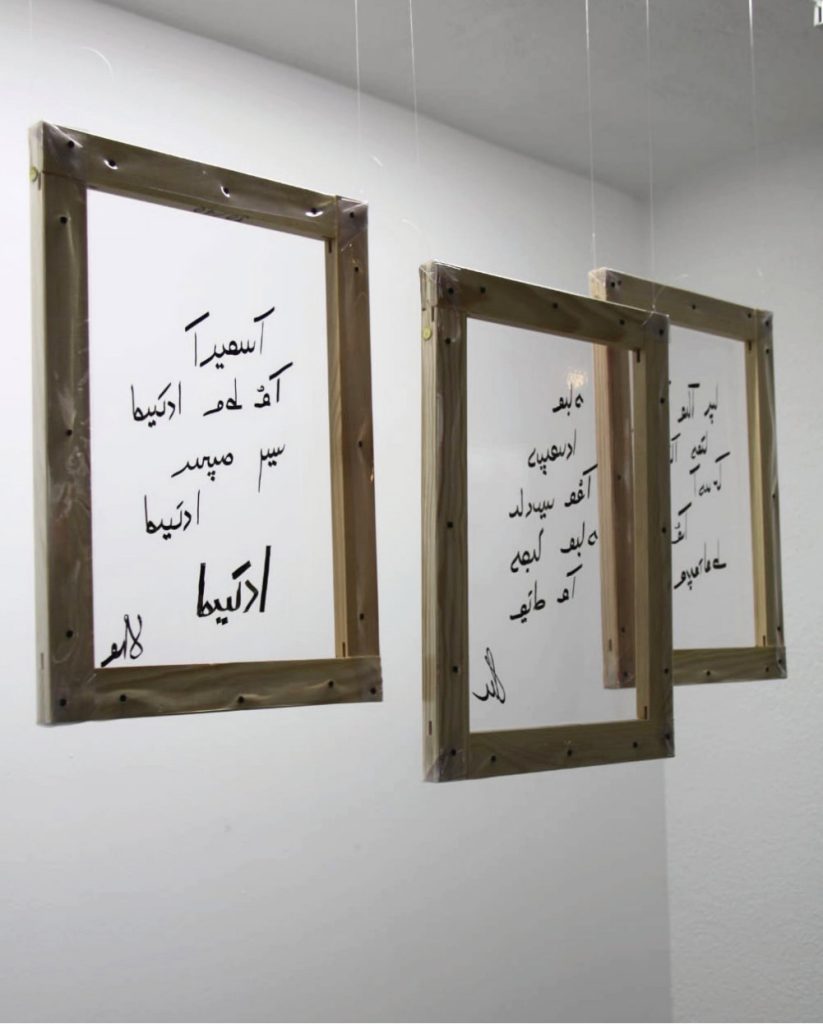
At first glance, the image appears as an illegible, Oriental abstraction. It is a visual stranger. Only through the act of mirroring — either through the transparency of the material or the mental inversion of the viewer — does it reveal its Latin meaning. This process mirrors the diasporic experience: the self is constantly doubled, translated, and occasionally fractured.
In these standalone pieces, the texts speak of the danger of visibility:
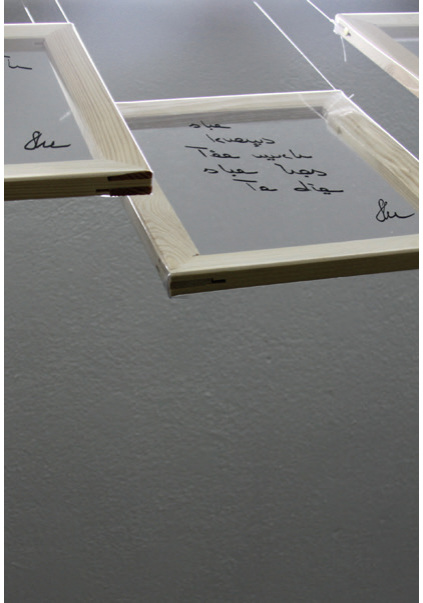
- She knows too much, she has to die
- I want to be kind, my own kind.
- In the truth lies the trust to believe
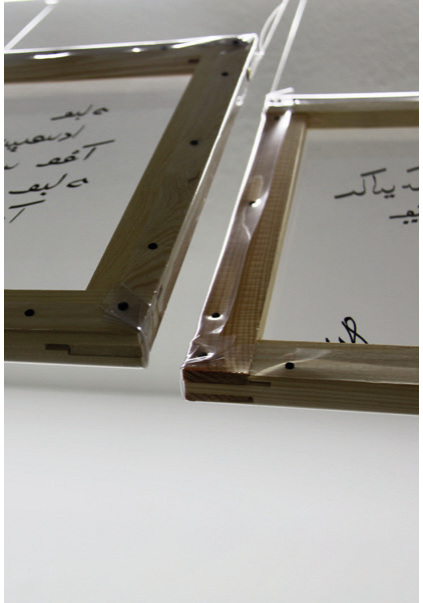
Here, the mirror is a site of surveillance and concealment. The woman who knows too much must hide her identity, letting parts of herself die to survive within the frame. The transparency of the foil acts as a portal — it is a mirror that clarifies and deceives simultaneously, showing the truth only to those willing to look through the surface.
The pavilion
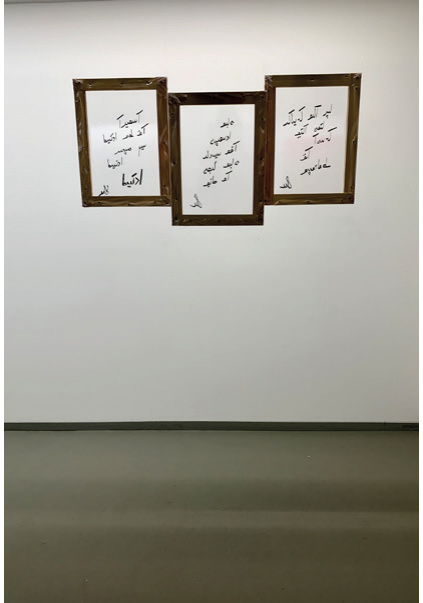
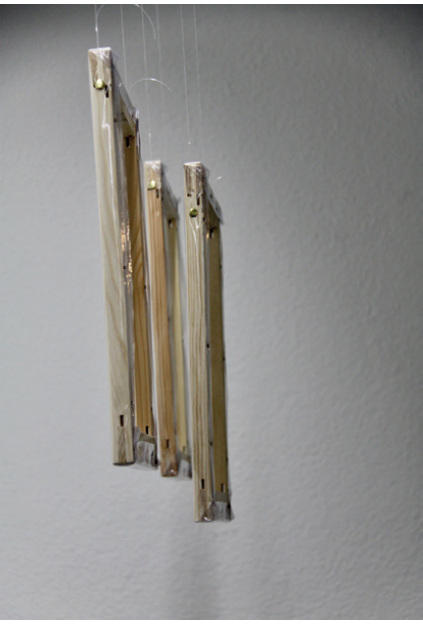
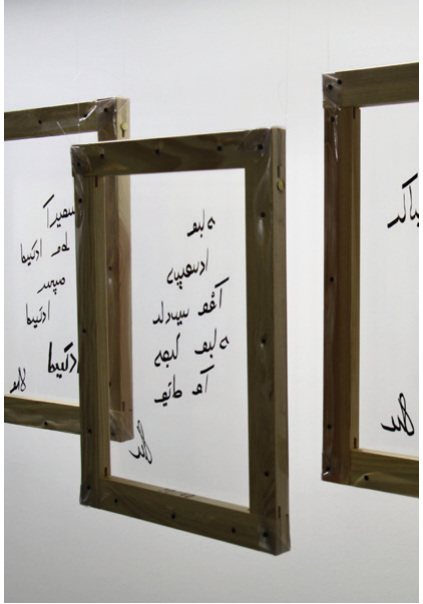
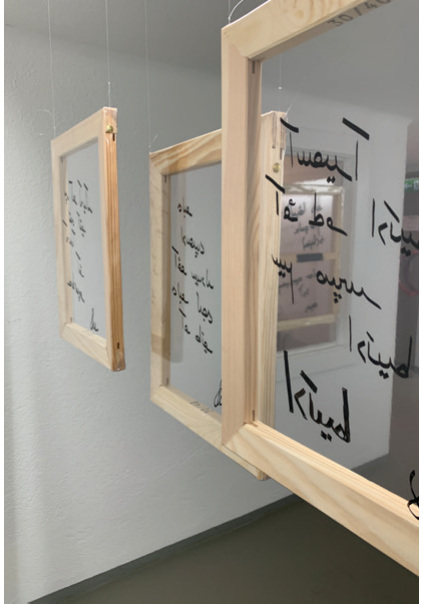
In the expansive installation within the wooden pavilion, the concept of INSIDE OUTinnen evolves into a walk-through experience. The pavilion’s rough, protective lattice structure, reminiscent of Oriental mashrabiyas, enters into a dynamic dialogue with the feather-light, floating lettering.
It is an invitation to recognize that in the diaspora, the truth often lies in the reflection — the part of us that is only revealed when we dare to look through the surface.
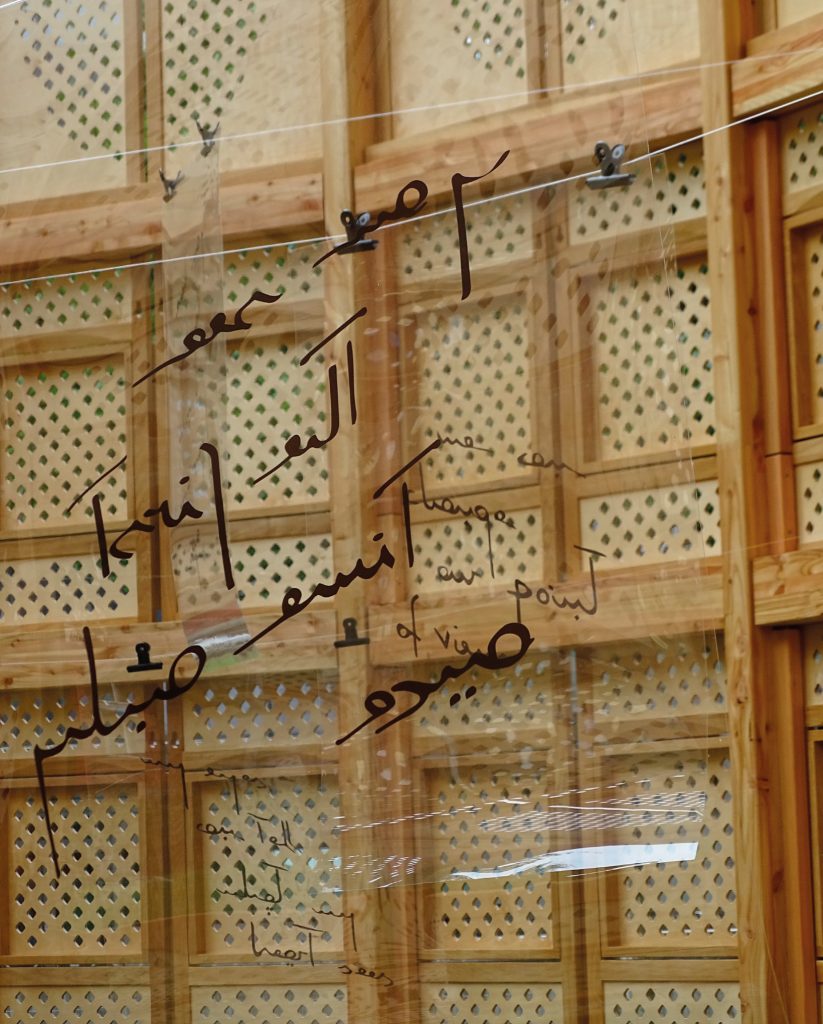
The multitude of sentences (including look through me and you will get to see my other side, looking up keeps the sky from falling down) invites the viewer to physically shift their own perspective. The work uses the space as a metaphor for insight:
Perspective: Sentences like we can change our point of view correspond with the lighting atmosphere of the site.
Immediacy: You see it the first time only once emphasizes the fleeting moment of discovery.
Resilience: The work does not end in the weight of the past, but concludes with an emancipatory gesture: I am done with the things that are over.
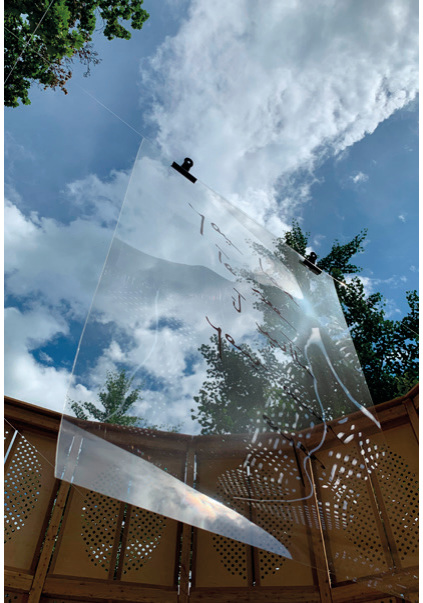
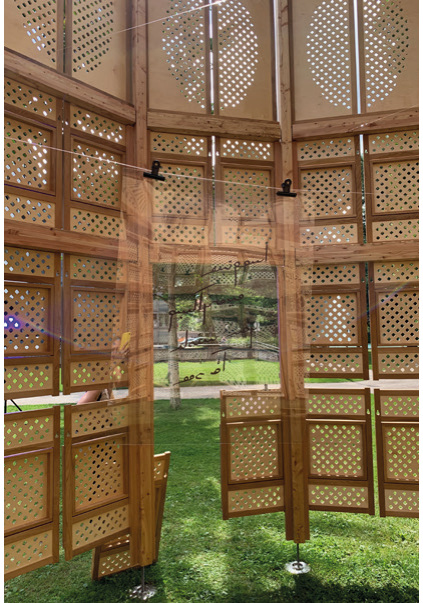
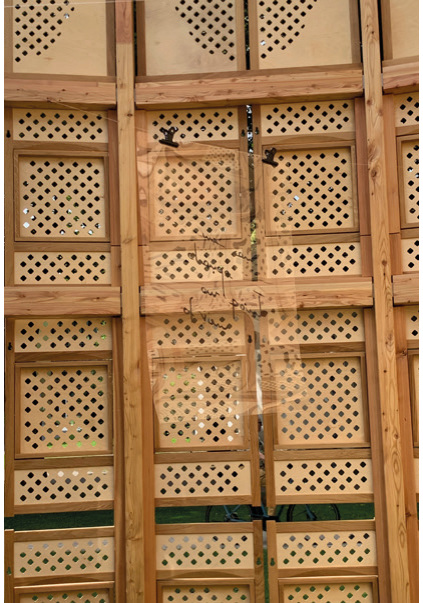
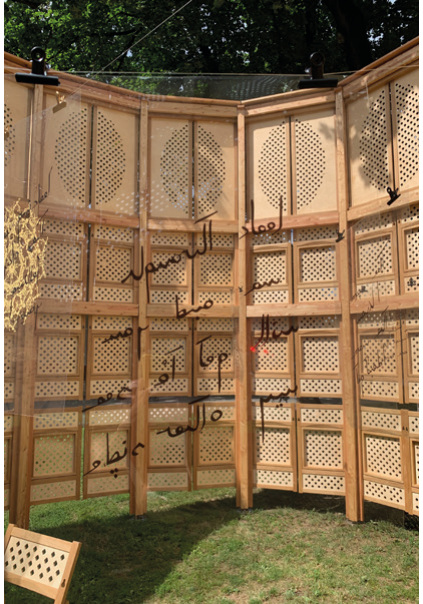
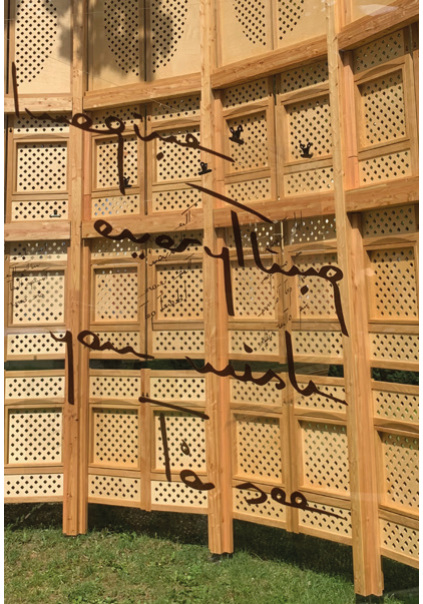
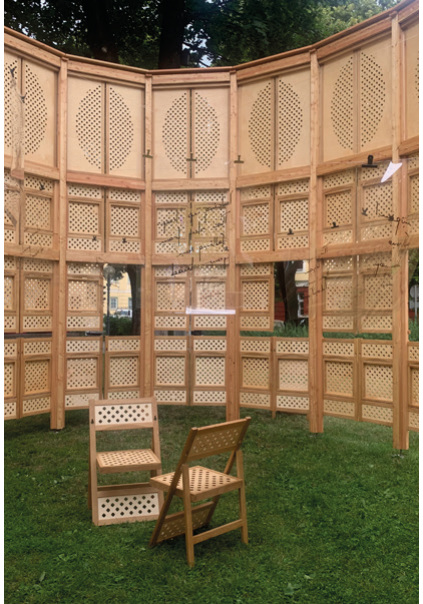
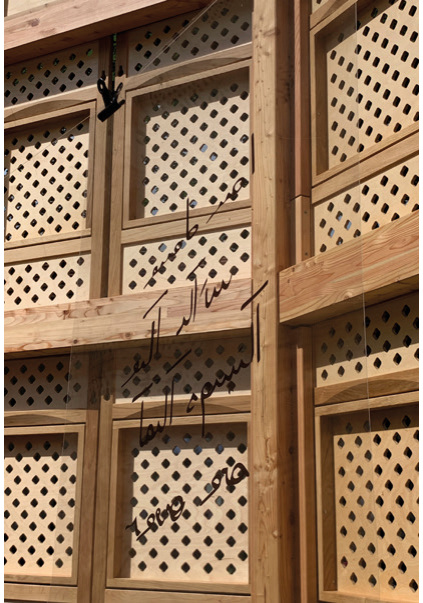
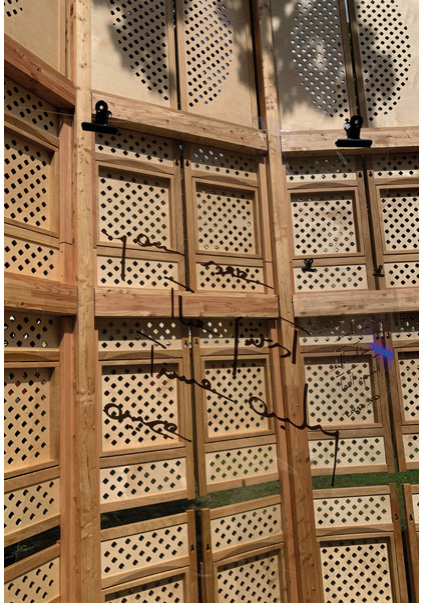
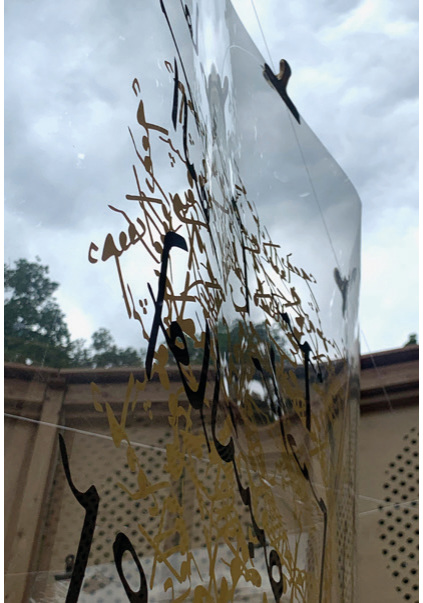
The installation transforms the pavilion from a place of concealment into a space of seeing. It demonstrates that knowledge need not lead to death, but rather that, through seeing through and trusting one’s own perception (my eyes can tell what my heart sees), it can lead to a new form of freedom.
ELEMENTS 4 U
ELEMENTS 4 U is an existential expansion of my long-term project INSIDE OUTinnen. While the original series focused on the linguistic threshold between Austrian and Iranian identity through a mirrored, hybrid script, this new work anchors that diaspora experience in the material reality of the planet and the global refugee crisis. It is a meditation on the four elements — Air, Earth, Water, and Fire — as the origin of life and the site of its potential destruction.
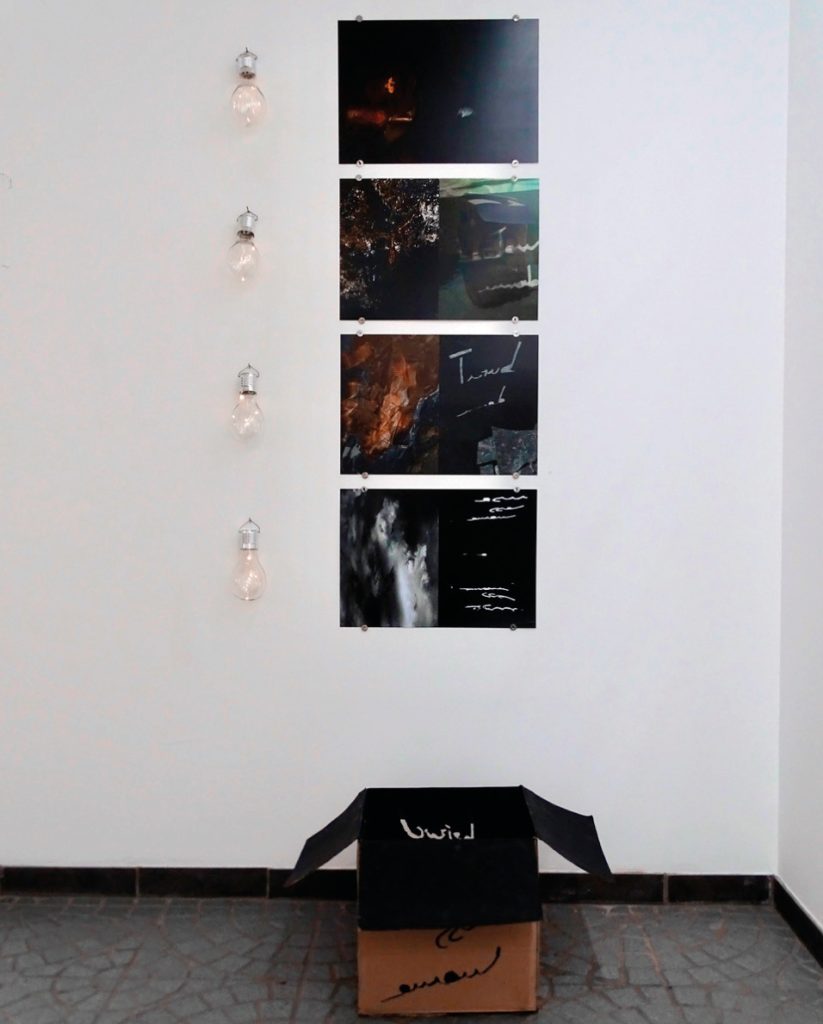
The Cardboard Box: A Portable Home
In this series, a simple cardboard box represents “Home” — a vessel for the displaced, a fragile shelter, and a symbol of our shared planet. The box, like the displaced self, is a “visual stranger,” carrying a message that is initially illegible. Using my signature hybrid script, which appears asemic until mirrored and translated from its Persian-inspired form into English, the boxes hold warnings and testimonies. They are mirrors that refract the viewer’s complicity.
Four Mirrors of Reflection
A crucial element of the installation is the use of solar light bulbs. In the context of a gallery — a space often devoid of natural sunlight — these bulbs function as a ticking clock of visibility. They shine only as long as their stored energy lasts; without the sun to recharge them, they eventually fade into darkness. This reflects the fragility of memory and the exhaustion of the displaced: when the “source” is cut off, the light — the story, the home — is threatened by obscurity.
ELEMENTS 4 U is a mirror that first confuses, then clarifies. It forces the viewer to move from the passive aesthetic of a “foreign” script to the active recognition of a shared crisis. The initial confusion of the asemic script mirrors the confusion of displacement. The eventual clarity of the text is an invocation: it is about the carelessness of humanity and the resilience of life, which “always finds a way — and a place.”
The final reflection is direct: U make the difference. Before the solar light extinguishes and leaves us in the dark, the work asks which side of the mirror you choose to stand on.

AIR | USE LESS HOME not to take our breath
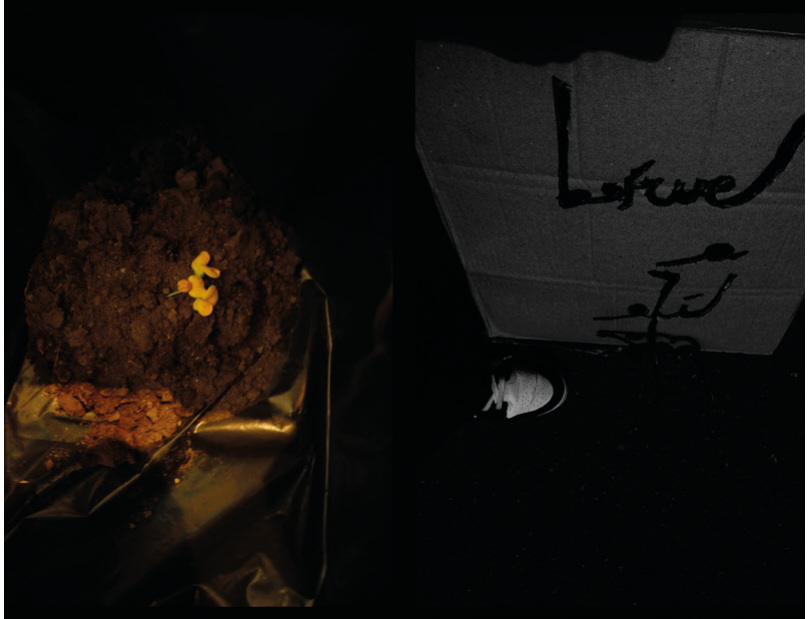
EARTH | BURIED A LIFE A rich pile of soil with small yellow flowers, symbolizing a life overshadowed and nearly forgotten in the “background” of global consciousness.
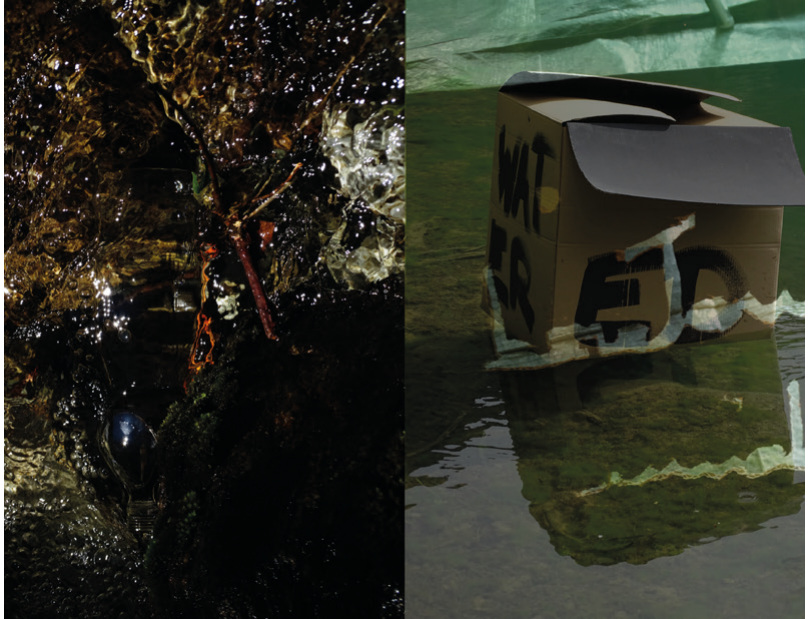
WATER | WATERED DOWN to drown in the dark

FIRE | BURNT DOWN the house not to settle: Intense flames alongside the charred remains of the home — a final, radical refusal to settle for a life in ruins.