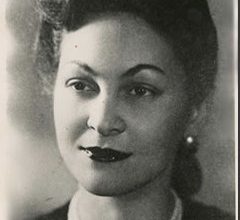


I interviewed Harriet Alida Lye in late May, days before the launch of her latest novel, Motherclown.
Harriet and I first met in 2023 when I took her creative writing course at the University of Toronto. Years of academic research and successive lockdowns had dampened my imagination and will to write. Her class was a delightful re-immersion.
While I had loved novels and telling stories since I was a girl, and had published a handful of poems and essays, I quietly believed writing fiction was for other people. In Harriet’s class, I found the space and courage to write a story that had been simmering in my head since my then-last trip to Tunisia in 2019. That short story, “A Hammam in Sousse,” is being published this summer.
I remember towards the end of term, Harriet told us a story was pouring out of her. Three years later, she is sharing that story with the world.
Motherclown follows Elise, a twenty-one-year-old who leaves her hometown of Niagara Falls, Canada, to move to Paris for a prestigious physical theatre school: Chevalier. Everyone calls it clown school. Her mother, Catherine, a widow and now empty-nester, feels left behind by her daughter’s choice to move abroad. On a whim, Catherine follows Elise to Paris. Elise feels her very personhood is stifled by her mother’s arrival, whereas Catherine thinks she is about to lose Elise forever. Amidst layered resentments and secrets, the two women nurture their respective creative powers and relearn to love the world, and each other, as they grieve their separate and shared losses.
Paris acts as a mirror in this novel. Elise and Catherine each see themselves reflected in the city. When they are elated, the city feels alive; when they are disappointed, it feels dull or even hostile.
When Elise is out with her new school friends, you write: “As they walk, the only things Elise notices are the things that are perfect.” I can exactly imagine a moment like that, when you feel like you are in conversation with the city, that you belong to the city and the city belongs to you.
I want to hear you talk about how Paris reflects hopes, dreams, and even fears, for you personally and for the characters in this book.
I think Paris is a city people come to with a lot of expectations. When you get there, it can feel disappointing. It’s filthy; there are pickpockets.
Unlike New York City, where people go to build or make themselves, Paris is a city you go to find yourself. It has a cultural, historical, and literary past, and people want to find themselves within it. Catherine and Elise both have those same expectations.
People have big expectations of Paris. But expectations are fantasies.
I did not want to write a Paris novel that was touristy. I wanted to write the Paris I knew. The Eiffel Tower appears only once in the novel, in a clearing with brutalist concrete archways, and the people who are around are not really looking at it.
Paris is such a small city. It is also a spontaneous city; the day unfurls in front of you. I wanted to capture that.
I got that unfolding feeling as a reader. The story takes place over a short number of days, but it doesn’t feel that way. The days in Paris feel infinite.
Right. When it is intense like that, it feels like this has always been my world, these have always been my feelings, these have always been my friends. This has always been my life.
The summer camp feeling. The intensity of it.
Totally.
The mother-daughter dynamic is central to the story. In some ways, it’s like a dual coming-of-age. Catherine and Elise act as mirrors for one another.
There is a short chapter early in the book when Catherine is on the plane to Paris. Comparing herself to her daughter, Catherine reflects on how little youth and freedom she had at the same age. We don’t quite believe her when she says she isn’t envious of her daughter (who is already in Paris, pursuing her clown). This scene introduces a really important element in their dynamic: excitement and jealousy.
Yes, Catherine says: “Europe was always for other people… She would never call this feeling envy.”
Catherine goes to Paris to find her past self. She thinks there is this part of herself that she lost when she became a mother that she will now match up with. Which of course, is not something that can happen.
I think envy is really interesting. And a taboo subject. We don’t want to talk about motherhood and envy because it feels like the most natural thing in the world to give your children everything you did not have. People go to other parts of the world to give their kids the opportunities they didn’t have. But, at the same time, it’s really hard to see your kid getting something that you always wanted – especially when that thing is freedom. It’s a very valid feeling.
We see that tension you’re describing early on when Catherine discourages her daughter from leaving Niagara Falls for Paris. The societal expectation may be for kids to detach from their parents and go off on their own at eighteen. Elise is twenty, but still, there is that friction with her mom. At the same time, we see how much Catherine loves her daughter, all she has sacrificed for her, and how she does not want to harm or limit her.
Mom rage is a common theme right now, something moms want to talk about on Instagram, or whatever. But I feel that I haven’t really seen mom envy being a thing people talk about.
I took my daughter Lucy to the Aquarium last weekend. It was Mother’s Day. Lucy is four. She was tired, so we sat on a bench and had a drink. There was this mom there with her three daughters. She was complaining that her daughters were not paying attention to her. She told them: “I thought we were here for Mother’s Day. This was supposed to be for me.” She is at the Aquarium with her young daughters, and she is jealous and angry that they are not paying attention to her. Kids don’t know where to put those kinds of feelings.
The children will think it’s their fault that they have taken something away from their mother. But that is not the sense I got from Catherine. I got the sense that she wants to save Elise, perhaps from the very fate she experienced around her age.
Honestly, I thought something really bad was going to happen to Elise at clown school. When I began to understand what had happened in Catherine’s past, I worried that Elise would face the same thing from her male teacher. I thought: “Oh my God. It’s going to happen again. Oh no.”
In mother-daughter dynamics, I think a lot about inevitability. Are we inevitably going to have the same experiences as our mothers? Become our mothers? But I was wrong. Elise had a different experience than her mother. She had a supportive male teacher. It was not inevitable. [Skip this answer if you don’t want spoilers.]
Yeah. It’s interesting. You saw the parallels between Elise and Catherine, mother and daughter, which is great because the book is full of parallels. You expected that this would be another parallel. But I think what I wanted to do was show motherhood as an anti-parallel, by choice, though, and not by circumstance. When Elise learns she is pregnant, and that it is high-risk, she has to make this really big decision about what she will do next. And as part of that choice, Elise thinks about her mother, how her mother was twenty when she was pregnant with her and how she is twenty now. Elise thinks about what this means for her and what it means for her relationship with her mother.
In those moments when Elise is experiencing a medical emergency, I found it really interesting – even surprising – that Catherine is not there with her daughter. In some stories, pregnancy, pregnancy loss, or childbirth are when mothers and daughters get the chance to put aside their tensions, at least temporarily. But Elise and Catherine do not get that opportunity then.
Right. As a parent, as a mother, the choices that I make in parenting my children are a way of re-parenting myself. And I think that while Elise will never get the chance to do that (or she won’t get that chance right now at least), we get to see how she truly learns to care for herself, how she draws boundaries around who she tells about this, and who she doesn’t tell. It’s a kind of rebellion, actually.
It is a decisive moment when she figures it out herself. In some ways, leaving Niagara Falls, her hometown, and going to clown school is that first detachment, but this is different. This is another kind of learning.
It is. When I was revising this book, I was thinking a lot about what a clown is. What does it look like?
I found that a clown is responding to a situation with authenticity, without a filter. That is what Elise wants. That is what Elise is learning how to do in that difficult experience without Catherine. She learns how to respond with how she really feels. With grief and anger and fear and resentment. All of these feelings.
She is learning how to see the world with accuracy and authenticity. And art too, provides an avenue for that.
She learns that authenticity from a life situation and not just in clown school. Speaking of, I wanted to ask you: how did you first become interested in clown?
So, when I first started writing the novel, clown was not really a part of it. I don’t remember where that part came in. At first, the idea for the novel was about a writer in her early forties who goes to Paris and moves in with her teenage daughter, who does not want her there. I wrote that idea in a virtual Post-it note on my laptop.
It did, however, feel inevitable for a clown to come into the story.
I went to an art high school, and in grade ten, the focus was comedy and part of that was clown. During that time, I was not in school. For nine months, I lived at SickKids (Hospital for Sick Children) being treated for a variant of Leukemia called Natural Killer.
So, I wasn’t there when my class did clown. But when I was at the hospital, there was a therapy clown who would sit with me. She would not talk – she was non-verbal – most therapy clowns are. I think talking might remove the healing aspect because they’d have to talk about your sickness and ask how you are. So, by not talking, you feel safe around this person.
Afterwards, I did a one-on-one workshop on clown back in school. I loved it. That’s where I first learned how to find my clown.
I want to talk more about clown, authenticity, and seeing. The idea of ‘seeing and being seen’ is threaded throughout the book and is certainly connected to the issue’s theme of mirrors.
Of course, seeing and being seen are a big part of Parisian life, culturally and historically (I am thinking about the concept of the flâneur – a detached wanderer and observer of society). However, in those contexts it was not necessarily about authentically seeing and being seen.
Yes. I went back to Paris by myself, about two years ago, when I was revising the novel. I wanted to be able to capture the air of the place. There is a part I wrote on my phone that made it into the novel. It’s that moment when Elise is walking home, and she sees men selling hot corn off charcoal grills and others hawking cigarettes from their coat pockets. They look at her, like she is something to look at, like she is another person, like a painting or a tree. She’s never been looked at that way. She looks right back at these men because she is used to it by then.
In Paris, when I was looked at that way, I thought: “Oh my God, I forgot about that.” The way people look at you is different. It’s a kind of fact-finding. It does not feel sexual or even special. It is not something that is done here unless someone is looking you up and down, analyzing your outfit, your personhood. But it doesn’t feel that way when people look at you there.
We’ve talked about the city as a mirror, mothers and daughters as mirrors for one another, and seeing and being seen authentically through clown. I wonder if there’s one final idea about mirrors or personhood that you’d like to leave us with.
One thing I wanted to explore in the book is the foreignness of the self. And on the theme of mirrors, I was thinking about the scene towards the end of the book, where Elise is walking through the hallway of her clown school. She looks in the mirror, and she looks at her mother’s reflection, and she has the feeling of seeing a stranger. Elise looks different; she feels different. She knows something about life.
Shirin Abedinirad, Reflective Portal, 2024. Public art, Nanhai District, Foshan, China. Presented at Art Field Nanhai 2024, the work draws on the mirrored architecture of Persepolis and the spiritual imagery of Rumi to create an endless passage of reflection, where light, landscape, and self are held in a continuous loop of beauty, possibility, and becoming. Photography by Tian Fangfang. Artwork courtesy of featured artist Shirin Abedinirad.