



What did they think as the boat sailed into the pretty harbor, as their ship docked and out they tumbled, the world’s unwanted—tired, sick and threadbare, their groans carried by the wind,
the salt air clinging to their skin?  Or when they first set eyes on the palm trees rustling along the avenues, the houses of sandstone and limestone peeping through the hills, each brick perfected over centuries to stay put and protect the people inside.
What did they think when their sweaty bodies lined up, and the immigration officer, smiling in his jellaba and keffiyeh, said marhaba and ahlan wa sahlan.

Perhaps the welcome was too hostile, their ears more attuned to welcome, Wilkommen or witamy.   Or perhaps they thought the words that of that unfamiliar tongue gliding with too much sweetness, meant to say, “ Hello, we will behead you in your sleep.”

What did they think of their new booklets, stamped with names that must have sounded sharped edged and strange to the smiling officer in his jellaba and keffiyeh, names like Benzion and Tzila?

And when they broke down the door and entered the foyer of our home, the coolness of polished stone underfoot, the faint smell of spices still lingering in the air, did they admire the cherrywood, the pine, the marble bureaus? Did they think, this is so much better than what was taken from us?

What did they think when they sat for that first meal in my grandfather’s house, the clink of my grandfather’s silverware on plates, the taste of unknown spices hovering on their tongues?

Did they ever stop and wonder what had become of the family of six, who had just fled for their lives, bundled into a car, to escape being beheaded in their sleep?

And when they crawled into beds still warm from our bodies, did sleep come easy, did they sigh and think I can’t believe we got away with it.”
I know you’re thinking the same thing now. I can’t believe they’re letting me get away with it. Again.
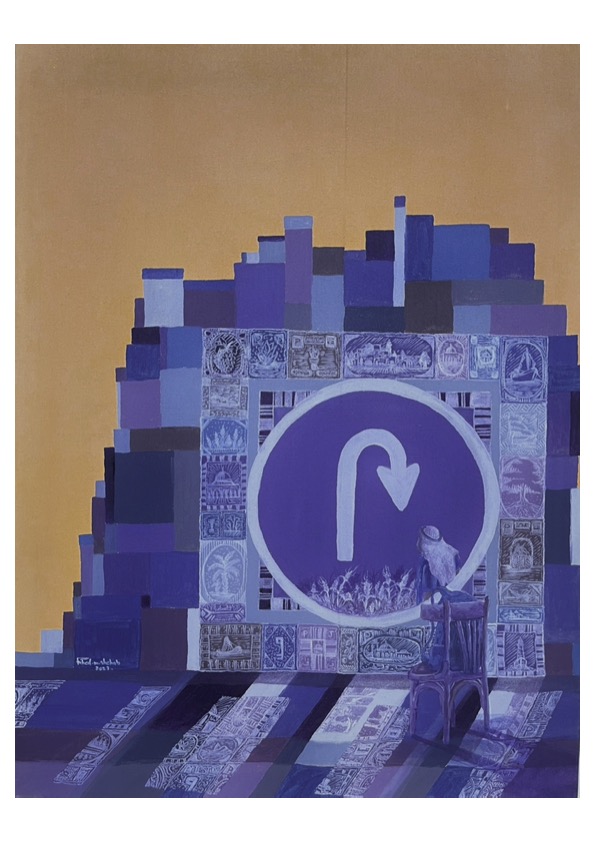
Painting Courtesy of Our Featured Artist Fahed Mohammed Shehab